
Nigeria’s Pulaku Vigilantes Draw Praise for Rescues and Scrutiny Over Abuse Claims
Pulaku, a predominantly Fulani vigilante organisation in northeastern Nigeria, has been credited with helping rescue kidnapping victims while facing disputed allegations of unlawful detention and...


In northeastern Nigeria, Pulaku has become both a valued partner for security agencies and the subject of allegations over how some of its members treat suspects.
Table Of Content
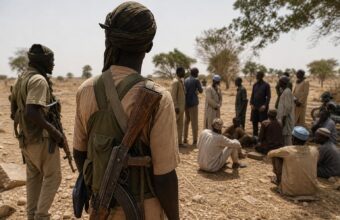
The predominantly Fulani organisation was created as a voluntary response to kidnapping and cattle rustling. Its leaders say it has more than 500 members working across parts of Adamawa State and neighbouring Taraba State. Pulaku is not part of Nigeria’s formal security establishment, but police say the group provides intelligence, helps officers navigate difficult terrain and takes part in joint operations.
Credited with rescuing kidnapping victims
Daniel Musa, a local pastor whose name was changed to protect his identity, said kidnappers abducted him from his home in Adamawa on May 23, 2023. He said he was held for three days while his captors demanded 15 million naira.
Musa said Pulaku members located the camp where he and other captives were being held in the mountains. After an exchange of gunfire, the vigilantes removed the captives’ blindfolds and helped them leave. Police later took the group to headquarters in Yola. The Adamawa State Police Command confirmed Pulaku’s involvement in the operation.
“They saved my life,” Musa said. His church later presented Pulaku with an award.
The Adamawa State Police Command has also said that joint operations involving the organisation disrupted four suspected criminal hideouts and resulted in several arrests. Police said cases involving suspects apprehended during such operations were proceeding through the courts.
Pulaku members conduct patrol drills and carry locally made firearms, machetes and long wooden sticks. In neighbouring Taraba State, police attributed a role to the group in an operation that freed 40 hostages in February 2024.
Disputed account of detention and beating
Haruna Hamza has presented a sharply different account of Pulaku’s activities. He said members arrested him and his eldest son in March 2025 and held them at the organisation’s base in Malkohi, in Yola South Local Government Area.
Hamza alleged that members beat him until he lost consciousness and that he remained detained for two months and one week without being transferred to police custody. “I was beaten into a coma,” he said, describing his account of losing consciousness.
Musa Usman Malkohi, Pulaku’s grand commander, rejected the allegation. He denied that members abused Hamza and said photographs of scars on Hamza’s back showed marks drawn with a marker. “We don’t abuse humans,” Malkohi said. The claim about the scars has not been independently verified.
The Adamawa State Police Command said it had not received a formal complaint from Hamza or his family but was investigating the allegations. The circumstances of Hamza’s detention, what he was suspected of doing and whether he was ever transferred to police custody remain unresolved.
Questions over legal authority
Police say Pulaku members are expected to apprehend suspects and hand them over to the authorities. They are not authorised to hold, interrogate or punish people independently.
Hakeem Abubakar Abba, a legal practitioner in Yola, said no specific federal or state law expressly grants Pulaku independent policing powers. He said its members have no special statutory arrest powers beyond those available to ordinary citizens. Abba also alleged that members sometimes deal with suspected offenders without referring them to the authorities, though the report did not provide case details or court judgments independently confirming that claim.
Pulaku was founded by Fulani community leaders, including the late Alhaji Abdu Bali, who was killed in October 2019 when suspected kidnappers attacked his residence in Lakare, Yola. The organisation says it includes members of other ethnic groups, including Verre and Chamba, and receives support from members, communities and local authorities. The Adamawa State government has provided vehicles, according to the group’s commander.
Community leaders have defended Pulaku’s role while rejecting attempts to associate crime with the Fulani identity. Professor Abubakar Abba Tahir, spokesperson for the Adamawa Emirate, said the cultural concept of pulaaku should not automatically be treated as identical to the organisation’s conduct.
The debate comes as insecurity continues to strain public security in the region. SBM Intelligence recorded 21 kidnapping incidents involving 77 abducted people in Adamawa between July 2025 and June 2026, and four incidents involving 14 people in Taraba during the same period.
Kabir Adamu of Beacon Security and Intelligence Limited said the growth of vigilante groups reflected failures in Nigeria’s public security system. The Adamawa police command said it had organised training for vigilantes and hunters on human-rights violations, extortion and unnecessary demands.





No Comment! Be the first one.