
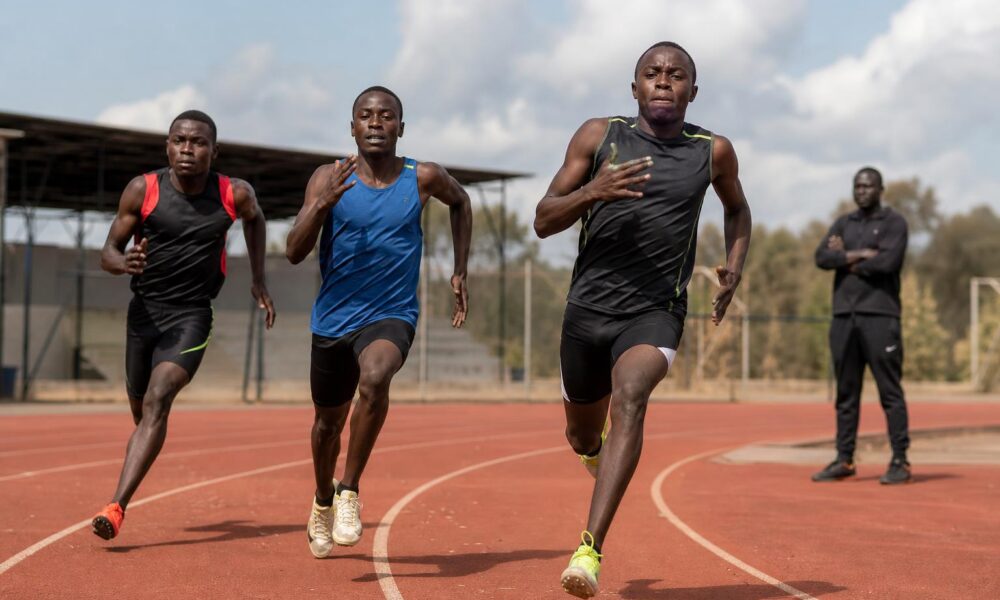
Teenage sprinters Florence Masumbe and Rachid Rochene are preparing to compete for the Refugee Olympic Team at the Dakar 2026 Youth Olympic Games in Senegal, where refugee athletes will participate in the event for the first time.
The pair are among six refugee athletes selected for the Games, which will take place in Dakar from 31 October to 13 November 2026. Both fled instability in eastern Democratic Republic of Congo and now live in Uganda.
From refugee communities to the starting line
Masumbe, 16, has spent much of her life in the Rwamwanja Refugee Settlement in south-western Uganda. Rochene lives in an urban part of the country.
Their selection followed years of work by the Olympic Refuge Foundation and its partners in Uganda, which have used sport to support displaced people and host communities. Their talents were identified through Game Connect, a six-year initiative focused on improving mental health and wellbeing through sport.
Brandon Katura, coordinator of Game Connect, said the athletes had initially taken part in running mainly as a recreational activity or a way to spend their free time.
“Seven months or a year ago, they were probably running for fun, or they came out for trials just to do it as a way of passing time because they were free,”
Katura said the athletes now had wider ambitions, including international competition and educational opportunities.
“Now you find that they are excited, they are looking forward to travelling. They are looking forward to competing with people from other countries. They want to get scholarships for school.”
A wider opportunity for young refugees
The International Olympic Committee and its partners in Uganda contributed nearly $10,000 over the past year to help prepare Masumbe and Rochene for the competition.
Rochene said the opportunity fulfilled a long-held ambition and that he hoped to compete strongly at the Games.
“I feel good, I feel so wonderful. You know, this was a dream since I was young. I wanted to compete with people, to see how I can also do, to also achieve medals. You know, why not also a world record,”
Masumbe said athletics could change her future, help her pursue education and create better opportunities for her family. She also expressed hope that other refugee children would be encouraged by her participation.
“I was so happy to have been selected to go to Dakar. I know if I continue with athletics, it will transform my life and I can get a good school. My family members will also have better opportunities, and even other refugee children will be inspired,”
The Refugee Olympic Team has provided opportunities for people forced to leave their homes to compete internationally. The Dakar Games will extend that initiative to a younger generation.
The International Olympic Committee has promoted the inclusion of displaced athletes through the Refugee Olympic Team over the past decade. The United Nations refugee agency estimates that nearly 118 million people worldwide are forcibly displaced, while refugee athletes continue to face difficulties accessing training, education and the resources required for international competition.




No Comment! Be the first one.