
Forbes Africa Highlights Sierra Leone’s Big Five Economic Agenda
Sierra Leone Vice President Mohamed Juldeh Jalloh has used a Forbes Africa interview to outline the Government’s Big Five agenda and its plans for infrastructure, energy access, investment and...

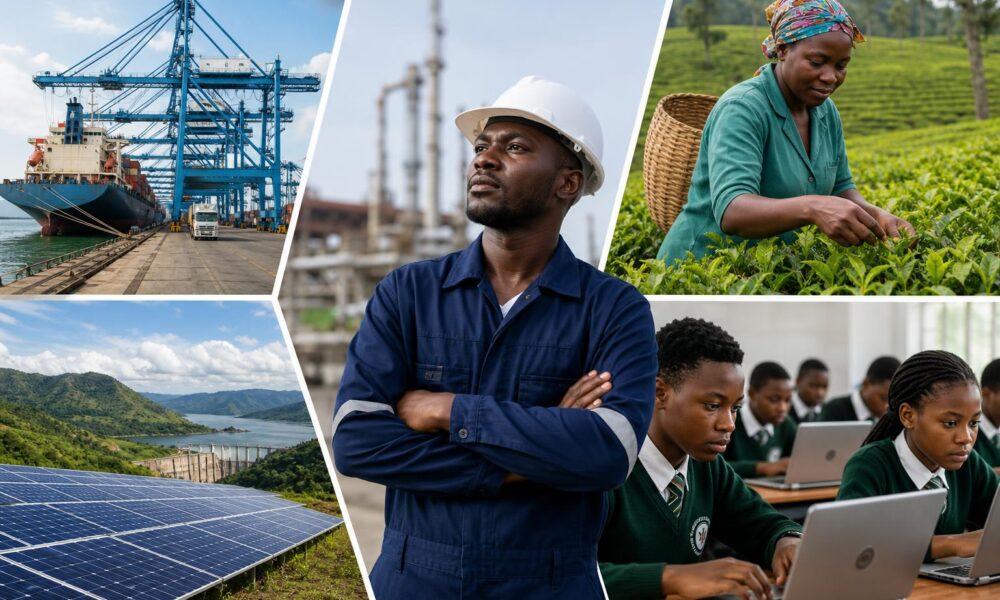
Sierra Leone Vice President Dr. Mohamed Juldeh Jalloh has outlined the Government’s economic transformation priorities in an interview published in the October/November 2026 edition of Forbes Africa.
Table Of Content
The interview, conducted by Penresa for the magazine’s Africa Undiscovered series, was titled “Sierra Leone’s Big Five Strategy for Reform, Infrastructure, and Jobs.” It focused on the Government’s development framework, investment opportunities, infrastructure plans and efforts to expand employment.
The Big Five framework
According to Dr. Jalloh, the Government’s agenda is built around five priorities: Feed Salone, Human Capital Development, Youth Employment, Technology and Infrastructure, and Public Service Reform.
He said the priorities were first set out in the Sierra Leone People’s Party manifesto and later incorporated into the Medium-Term National Development Plan 2024–2030.
The Vice President also described the Office of the Vice President as a coordinating link between government ministries, development partners, local councils and private-sector institutions. He chairs the Inter-Ministerial Committee on Decentralization and Local Governance.
Jobs, skills and investment
Dr. Jalloh identified youth employment as a central concern, noting that more than 70 percent of Sierra Leone’s citizens are below the age of 35. He highlighted Free Quality School Education, the Education Innovation Challenge, technical and vocational training, digital skills programmes, and employment and entrepreneurship initiatives.
He also pointed to the National Youth Employment and Entrepreneurship Fair and the Sierra Leone Innovates Summit as platforms intended to connect young entrepreneurs with opportunities, investors and employers.
The National Investment Board was presented as an institution designed to facilitate investment and improve cooperation between the Government and businesses. Dr. Jalloh said he helped establish the board and serves as its Vice-Chair.
He identified agriculture, clean energy, mining, tourism and digital services as sectors with investment potential. He also discussed the role of women, the diaspora and inclusive national development.
Infrastructure and energy targets
The infrastructure projects discussed in the interview included the Lumley–Tokeh Road, Pendembu–Kailahun Road, Hillside Bypass and the proposed Lungi Bridge. Dr. Jalloh said feasibility studies and partnership arrangements for the bridge were advancing, although no detailed timeline, budget or completion date was provided.
On electricity, the Vice President described the National Energy Compact as targeting an increase in access from approximately 36 percent to nearly 80 percent by 2030. He said the compact also aims to expand generation capacity beyond one gigawatt and deliver more than 720,000 household connections.
Dr. Jalloh further cited the US$480 million Millennium Challenge Corporation Energy Compact, which focuses on electricity transmission, distribution and sector reforms. He said he oversees the compact.
The Vice President said Sierra Leone could offer investors access to a regional market of 400 million people through ECOWAS and the African Continental Free Trade Area.
Focus on delivery
Dr. Jalloh cited declining maternal mortality, increased school enrolment and major energy investments as encouraging developments, while acknowledging that further progress is needed in public services, employment and institutional accountability.
“Leadership today is not about making announcements. It is about ensuring that what is announced is delivered, that investments reach the communities they were designed to serve and that the cumulative effect is felt as a real improvement in the lives of Sierra Leoneans,” he said.
He added: “Technology must translate into opportunity. If it does not create jobs, improve productivity and expand access, it is not transformation; it is activity.”
The interview presented the Government’s plans and the Vice President’s assessments of progress. The stated targets and project advances were not independently verified in the feature.




No Comment! Be the first one.