
Moroccan Hobbyists Balance Metal Detecting With Heritage Rules
Metal detectorists in Morocco describe the excitement of searching beaches and other landscapes, but the activity is subject to restrictions designed to protect archaeological discoveries and their...

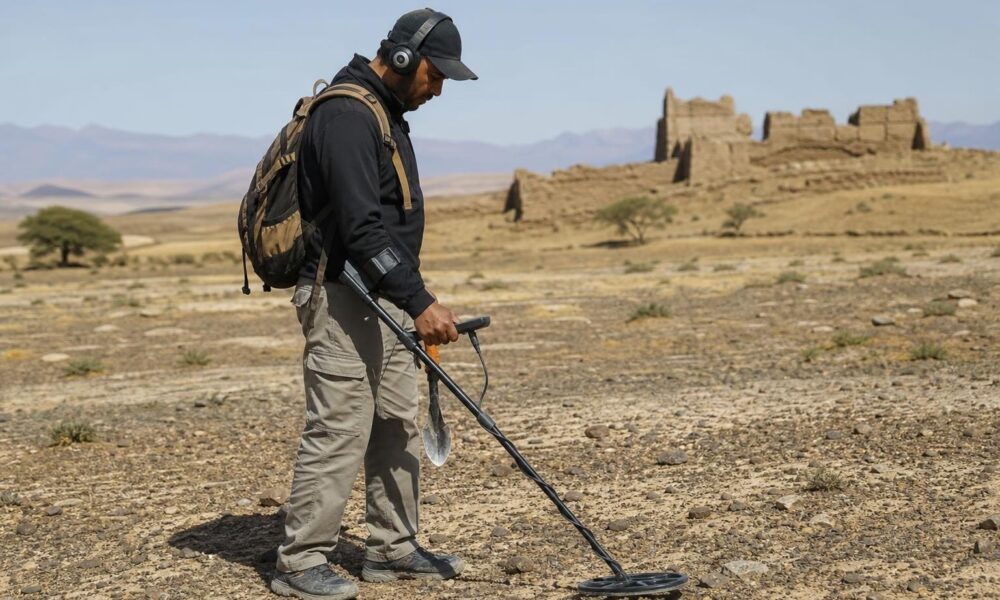
AGADIR, Morocco — For Mustapha Harmouch, metal detecting combines outdoor exploration with the possibility of uncovering something unexpected beneath the sand.
Table Of Content
The 33-year-old content creator searches with a Tianxun TX 850 detector at locations including Agadir’s Corniche. He bought the device online about four years ago, and the activity later became an occasional feature of videos on Stofishing, a YouTube travel and spearfishing channel with roughly 123,000 subscribers.
“The excitement comes partly from not knowing what lies beneath the sand,” Harmouch said, describing the appeal of the hobby.
He typically goes detecting about four times a month and favours Taghazout and Agadir’s Corniche, where he says there is less rubbish for the detector to pick up. His finds have included jewellery, foreign currency, fishing equipment and Moroccan coins.
Coins and uncertain discoveries
Harmouch said his interest in the activity led him to old coins linked to historical periods and places including the Al Haouz region and Fez. He also reported finding 14 Moroccan falus in one location near Sidi Ouassay, about 65 kilometres south of Agadir.
According to Harmouch, the oldest coin in that group dates to 1289 on the Hijri calendar. The dating was not independently verified in the report, and some other coins were too damaged for their markings to be read easily.
He said he keeps the old coins as reminders of his outings rather than treating every find as a valuable discovery. On another occasion, he initially believed he had found a meteorite, but later learned that the object was a common, inexpensive mineral.
“It’s a nice hobby because it’s the kind of exploration where I find something and learn something new,” he said.
Harmouch also said he found a small gold ring in Taghazout and tries to identify and return valuable lost property to its owners.
A hobby with a practical benefit
Other detectorists describe the activity as both recreational and useful for removing unwanted metal from public spaces.
Mohamed Botaib, a former sports coach who is currently looking for work, searches beaches, forests and mountains. His finds have included ordinary coins, Moroccan dirhams and rings.
“Every person has their luck,” Botaib said, reflecting the unpredictable nature of the searches. He added that he and other hobbyists collect pieces of metal and aluminium from beaches and throw them away.
Jalal Zegnoune, a full-time maintenance technician in Casablanca, searches when he has free time or for limited periods in the evening. His detector has produced coins, jewellery, glasses, watches, sardine-can fragments, nails and lost fishing equipment.
Zegnoune said he removes some metal objects because they could pose a danger to people using the beaches. He also described the social side of meeting other enthusiasts and comparing their finds.
Legal and archaeological concerns
The activity operates alongside Morocco’s restrictions on unauthorised archaeological searches. A report by Al Jazeera English said the country’s legal framework for protecting historic monuments, archaeological sites, works of art and antiquities dates to Law 22-80.
The government has reiterated that unauthorised searches on land or at sea are prohibited. Searches intended to locate monuments or movable objects of historical, archaeological or anthropological importance require authorisation. Accidental discoveries are to be reported and should not be damaged or moved unless necessary to protect them.
Harmouch said he respects the law and that members of the Moroccan Association for Research and Exploration Enthusiasts carry identification, avoid private property and heritage sites, and treat detecting as a hobby.
Basma Oumaima, an underwater archaeologist, said the importance of an object may depend on more than its appearance or material value.
“Sometimes something as simple as a fragment of metal, a coin, or a small tool can become important because of where it was found and what was found around it,” she said.
Oumaima added that metal detectors can assist archaeological work when used during properly organised surveys in which each discovery is located, documented and studied in context.





No Comment! Be the first one.