
Supermarket Fridge Attacks Expose Wider Cybersecurity Risks
Cyberattacks on supermarket refrigeration systems in Europe have highlighted how weaknesses in connected devices can threaten businesses, households and critical infrastructure.

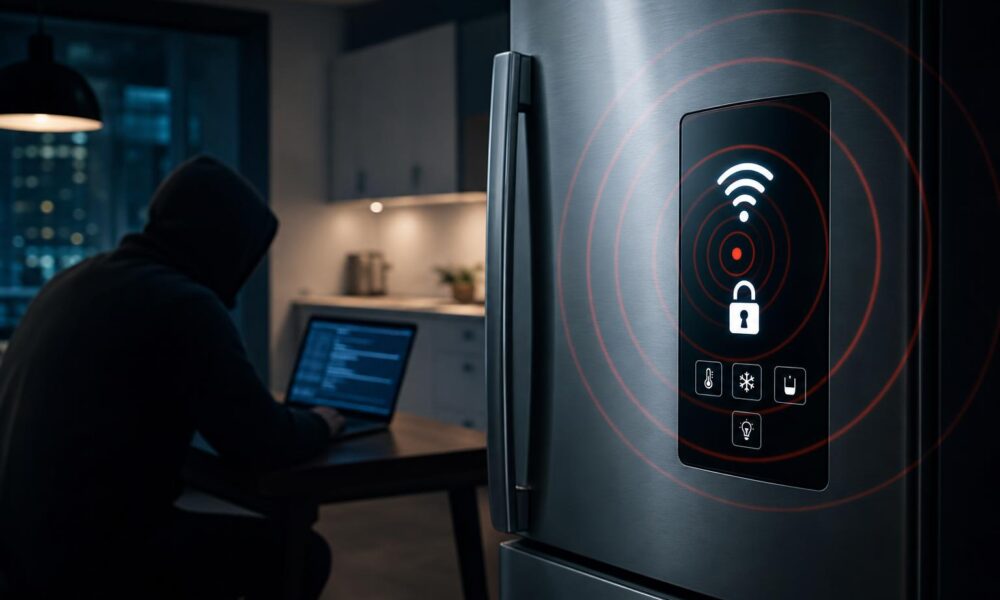
Cyberattacks that disrupted supermarket refrigeration systems in Europe have drawn attention to the wider risks created by internet-connected devices, including household appliances and equipment used by critical infrastructure.
Table Of Content
Attackers reportedly manipulated refrigeration units at about 700 French stores on October 11 and 12, raising temperatures as high as 50C (122F). The attacks sparked fires and spoiled food worth millions of euros, according to the report.
France described the incident as the first large-scale sabotage cyberattack on its soil and blamed it on Shahid Kaveh, identified as a cyberunit affiliated with Iran’s Islamic Revolutionary Guard Corps. That attribution was presented as France’s assessment.
A second wave of suspected attacks was reported on November 2, affecting supermarkets and food businesses in Belgium, Estonia, Finland, Ireland, Italy, Luxembourg, the Netherlands, Portugal and Sweden. The perpetrators of that wave have not been identified.
Connected systems create wider exposure
Supermarket refrigerators and freezers can be operated through internet-connected control panels. Home smart refrigerators may also connect to the internet through Wi-Fi, mobile applications or cloud services.
The supermarket systems were reportedly located using Shodan, a search engine for internet-connected devices. Vincent Strubel, head of France’s National Cybersecurity Agency, said the attackers appeared to have entered through basic security failures.
Once inside, attackers could switch refrigeration units off, raise their temperature or steal account details. A poorly protected refrigerator can also provide a route into other devices on the same network, including laptops and smart locks.
Strubel warned France’s Senate on October 21 that healthcare facilities use similar equipment to store vaccines and hazardous materials. The same types of weaknesses could therefore affect systems beyond retail businesses.
Risks extend to infrastructure
The report cited several other incidents illustrating the potential consequences of attacks on connected systems. Minnesota’s state information technology agency said more than 30 community water systems had been targeted, while officials suspected Iran-aligned hackers.
In the United Kingdom, a small power plant was reportedly forced offline for four days in an incident attributed to Iran-linked hackers. The episode was described in reports as the first successful attack of its kind on UK energy infrastructure.
US agencies have also warned that Iran-affiliated hackers were targeting industrial computer systems. The FBI and the US Cybersecurity and Infrastructure Security Agency previously warned about affected water and wastewater facilities in 12 states.
Other reported vulnerabilities involve consumer devices. Researchers found that more than one-third of applications on LG and Samsung smart televisions could potentially allow strangers to use a household’s internet connection without the owner’s knowledge. A programmer also reportedly gained control of almost 7,000 DJI Romo robot vacuums and accessed live camera feeds, audio and floor plans.
Routers remain a major target because they are continuously connected, according to the report. Weak passwords and devices that no longer receive software updates can leave systems exposed.
Growing dependence on digital systems
Kepios estimated that there were 21 billion short-range connected devices and 5.4 billion long-range connected devices worldwide. Parks Associates said US internet households had an average of about 18 connected devices.
Cyber incidents have also affected financial institutions. Hackers reportedly stole personal data from at least seven South Korean financial firms in late September and early October, affecting about 68,000 people. The Wall Street Journal linked the use of the ARTEX tool to the attack, while CrowdStrike assessed with moderate confidence that it was conducted by a China-based individual.
EuRepoC recorded 4,932 major politically significant cyber incidents between January 2000 and November 2026, although its database represents only a portion of all cyberattacks. About two-thirds of the recorded incidents occurred since 2022, and nearly 40 percent of the targets were state institutions.
Awais Rashid of the University of Bristol said the risk of disruption had increased as infrastructure became more digitised. “The world works because cybersecurity works effectively,” he said.
The UK’s National Cyber Security Centre advises people to disable unused features, including remote camera access. Its Be Ready campaign also recommends keeping three days of water, food, medicine, cash and torches in case essential services are disrupted.





No Comment! Be the first one.