
Cameroon Faces Questions Over Presidential Authority and Succession
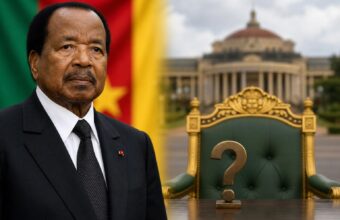
Cameroon is facing renewed questions over who exercises political authority when President Paul Biya is absent and how a future transfer of power would take place.

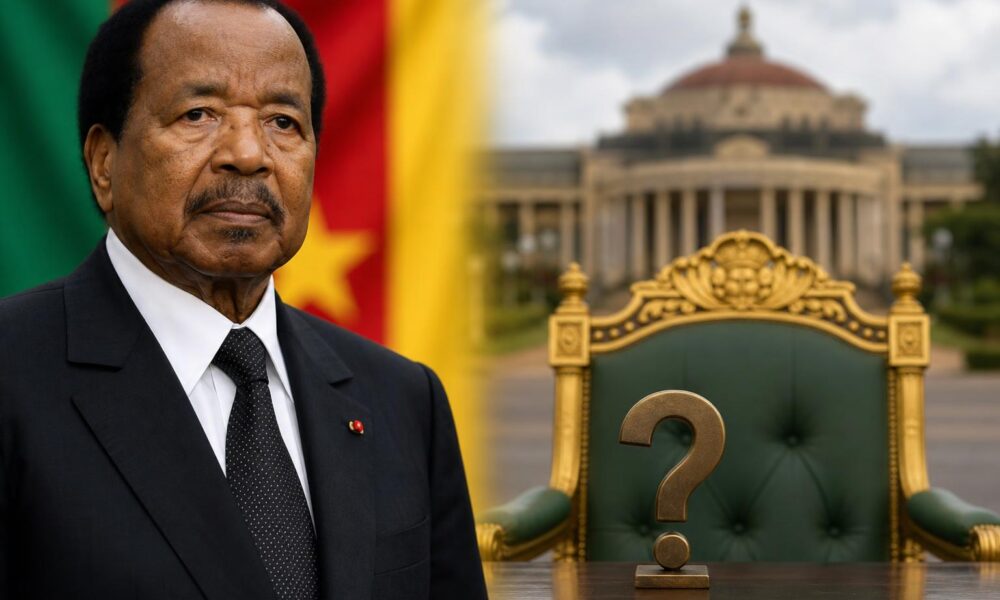
YAOUNDE, Cameroon — Questions about political authority and presidential succession are growing in Cameroon as President Paul Biya’s extended absences from public view prompt renewed scrutiny of the country’s constitutional arrangements.
Table Of Content
Biya, who has governed Cameroon since 1982 and is 93, returned to Yaounde on August 20 after spending more than 10 weeks abroad. His stay in Europe began on June 7. The government has not provided a detailed public account of whether a formal delegation of presidential functions was in place during the absence.
Cameroon’s constitution grants the president broad executive powers, including responsibility for national policy, the appointment of the prime minister and other government members, and command of the armed forces. The prime minister leads the government and directs its activities within the framework of presidential policy.
Unclear scope of presidential delegations
Under Section 10 of the constitution, the president may expressly delegate some functions to the prime minister, other government members or senior administrative officials within their areas of responsibility when he is temporarily unable to perform his duties.
In a separate measure, Biya signed Decree No. 2019/043 on February 5, 2019, giving Ferdinand Ngoh Ngoh a permanent delegation of signature. That authority allows the secretary-general of the presidency to sign certain official documents on the president’s behalf. It does not, however, transfer presidential powers or make Ngoh Ngoh the constitutional successor.
The Prime Minister’s Office describes Ngoh Ngoh’s responsibilities as receiving presidential instructions, monitoring the implementation of presidential decisions and coordinating administrations attached to the presidency.
Reports about the influence of people close to Biya, including Chantal Biya and Franck Biya, remain difficult to establish independently. Neither holds a constitutional executive office. Ryan Cummings, an Africa-focused security analyst, said individuals close to the president may be taking on more tangible roles as questions about the management of power increase, while cautioning that this does not establish who makes specific decisions or under whose authority.
Vice-presidency remains vacant
A constitutional amendment approved on April 14 reintroduced the office of vice president. The president is empowered to appoint and dismiss the officeholder, but no vice-presidential appointment had been publicly announced by November 10.
The revised provisions state that the vice president would assume the presidency if the office became vacant because of the president’s death, resignation or permanent incapacity established by the Constitutional Council. The vice president would then complete the remainder of the presidential term.
If no vice president is available, or the vice president cannot perform the duties, the president of the Senate would serve as interim president until a presidential election is held. The election must take place within 20 to 120 days. If the Senate president is unavailable, the Senate vice president would assume the role according to the Senate’s order of precedence.
Because no vice president has been designated, the succession provisions have not been tested in practice. The amendment has also drawn political criticism. Joshua Osih, leader of the Social Democratic Front, argued during the parliamentary debate that it weakened democratic legitimacy and reinforced the centralisation of power.
Military changes add to scrutiny
Reuters reported on August 4 that three presidential decrees reshuffled senior military leadership. The changes included replacing commanders in four of Cameroon’s five joint military regions, promoting the head of the Presidential Guard from colonel to brigadier general and appointing a new commander for the Rapid Intervention Brigade.
The decrees did not explain the reasons for the appointments. Robert Besseling, chief executive of Pangea-Risk, said the changes may have been partly connected to questions of loyalty and the management of potential threats to the presidency. He described Cameroon’s political scene as suffering from “distinct institutional paralysis.”
Other assessments are less critical. Yaounde-based political analyst Paul Anchang said state institutions continue to perform their functions. Communication Minister and government spokesman Rene Emmanuel Sadi, speaking to RFI, said Biya was entitled to decide when to form a new government.
The presidency did not respond to a request for comment. The uncertainty comes as Cameroon continues to face a separatist conflict in its English-speaking regions and attacks by armed groups linked to Boko Haram in the Far North, making the question of how authority is exercised especially significant.
No Comment! Be the first one.