
Sierra Leone Journalist Joins China Seminar on Political Party Innovation
Sierra Leonean journalist Amin Kef Sesay joined 30 other overseas experts and delegates at a China-organised programme examining governance, development and artificial intelligence.

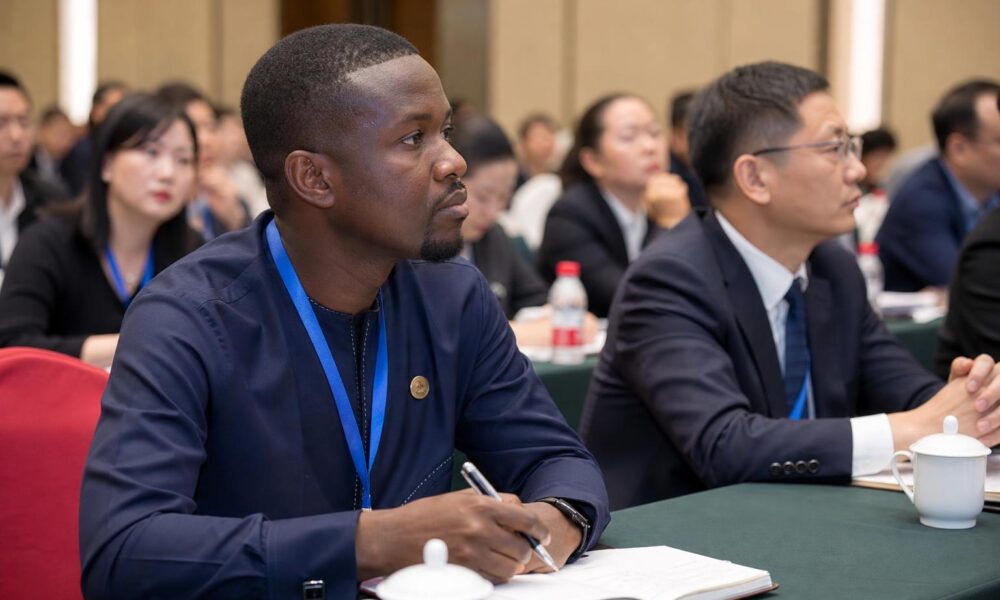
Sierra Leonean investigative journalist and publisher Amin Kef Sesay took part in an international seminar in China focused on the theoretical and practical innovation of political parties.
Table Of Content
The programme, organised by the International Department of the Central Committee of the Communist Party of China (IDCPC), brought together 31 overseas experts and delegates from 24 countries. Activities were held from 9 to 13 November across Yan’an and Xi’an in Shaanxi Province, and Nanning in the Guangxi Zhuang Autonomous Region.
The programme examined the Communist Party of China’s governance philosophy, its people-centred development approach, theoretical innovation and the continuity of its founding aspirations and mission.
Sessions and field visits in Yan’an
Delegates attended a formal exchange session at the China Executive Leadership Academy Yan’an on 9 November. The session was chaired by Wang Jigang, the academy’s vice president, while Li Shufeng, its executive vice president, and Ali Salum Hapi, head of the international delegation and a senior official of Tanzania’s Chama Cha Mapinduzi, delivered addresses.
Wang Tao also gave a lecture on the CPC’s original aspiration, founding mission and people-centred development philosophy. According to data presented during the lecture, China’s rural population living below its official poverty line fell from nearly 99 million in 2012 to zero by the end of 2020. The figures were reported as part of the presentation and were not independently verified in the source report.
The group visited Liangjiahe Village, where Xi Jinping is reported to have lived and worked from 1969 to 1975. Delegates examined the village’s transformation and what the visit presented as the practical application of people-centred rural development.
On 10 November, the delegation visited the Yan’an Revolutionary Memorial Hall, the Yangjialing Revolutionary Site and Baota Mountain. The Yangjialing site was identified during the programme as the venue of the CPC’s Seventh National Congress.
Meetings in Xi’an and Nanning
In Xi’an, the delegates held a high-level meeting with senior Shaanxi provincial leadership and visited the Chanba Cross-border E-commerce Industrial Park, Shaanxi Vocational and Technical College and cultural heritage sites. A banquet was also hosted for the international participants.
The programme later moved to Nanning, where the delegation visited the China–ASEAN Artificial Intelligence Application Cooperation Centre, Panlong Community and Qingxiu Mountain. The centre showcased artificial intelligence applications in agriculture, healthcare, education, manufacturing, mining, logistics and cross-border trade.
Delegates also held a high-level meeting at Liyuan Resort with Wang Xinfu, deputy secretary of the CPC Guangxi Zhuang Autonomous Regional Committee, and other Guangxi and IDCPC officials. Discussions covered governance, poverty reduction, media and public communication cooperation, digital governance, agriculture, education, infrastructure, technology and trade. A second banquet was hosted in Nanning.
Sesay said the practical use of artificial intelligence across several sectors could offer relevant lessons for African countries, including Sierra Leone.
“What stands out is how artificial intelligence is being applied as a practical solution across agriculture, healthcare, education, mining and public services, not merely as a concept,” he said. “China’s people-centred approach and its cooperation model with ASEAN countries offer useful lessons for African countries, including Sierra Leone, especially in technology transfer, capacity building and vocational training.”
He added that artificial intelligence should support journalism through research and data analysis, while journalists remain committed to accuracy, ethics and independent verification.
Calls for continued exchange
Sesay described the programme as educational and inspiring and advocated sustained knowledge-sharing, journalist exchanges and institutional partnerships beyond the seminar. He also said relevant experiences could be adapted to Sierra Leone’s priorities in agriculture, mining, healthcare, education and media development.
Ali Salum Hapi said China’s development had changed over time while the CPC’s founding aspirations and people-first governance philosophy had remained consistent.
Litvak Nikolay, a professor of philosophy and doctor of sociology at Moscow State Institute of International Relations, said direct interaction with local people and observation of development had deepened his understanding of the CPC’s governance philosophy.


No Comment! Be the first one.