
Pope Leo XIV Visit Highlights Zaña’s Afro-Peruvian Heritage
Pope Leo XIV’s visit to Zaña in northern Peru highlighted the town’s Afro-Peruvian history and cultural diversity, with Indigenous and Afro-Peruvian groups gathering near its main church.

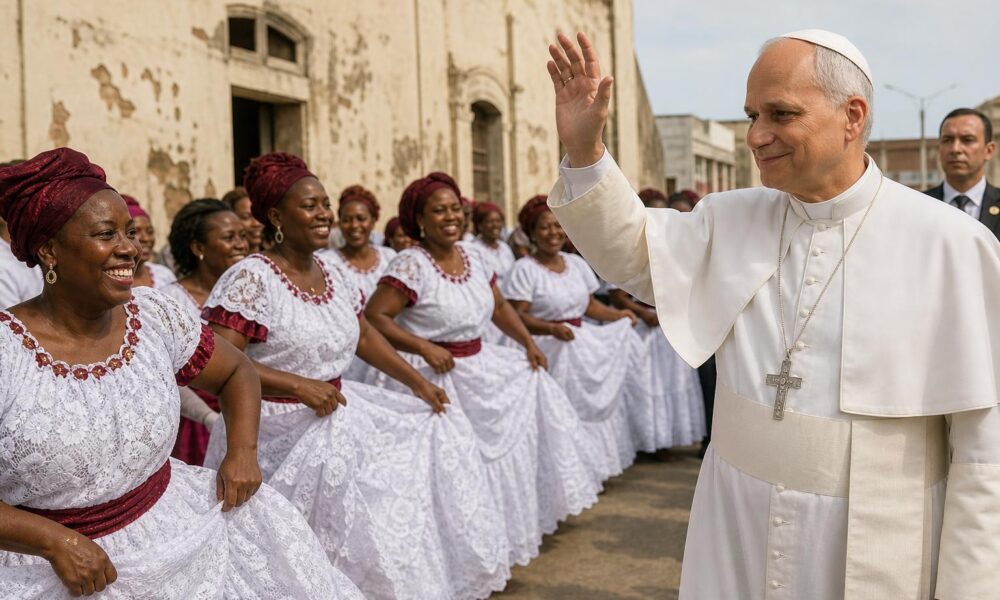
Pope Leo XIV’s visit to Zaña in northern Peru has drawn international attention to the town’s Afro-Peruvian heritage and multicultural identity.
The town, in the Lambayeque region, is regarded as an important center of Afro-Peruvian memory. Residents, community leaders, Indigenous delegations and Afro-Peruvian groups gathered in front of Zaña’s main church during the visit.
Delegations from the Indigenous communities of Incahuasi and Cañaris joined Afro-Peruvian groups from the surrounding area. Their presence reflected the cultural diversity that forms part of Zaña’s identity.
A town shaped by African heritage
Zaña’s history is closely connected to the legacy of African descendants brought to the region during the colonial era. That history is preserved at the Afro-Peruvian Museum, whose artifacts and historical displays document the enduring presence and contributions of African-descended communities.
Street murals and welcome banners displayed across the town also reflected local pride in Zaña’s African roots. The visit placed that heritage before a wider international audience.
Leo XIV was already familiar with the Lambayeque region. Before becoming pope, he frequently visited the area while serving as a local bishop.
Recognition for a multicultural community
Residents and community leaders welcomed the pope’s recognition of Zaña’s multicultural identity. According to the account of the visit, they viewed his presence as a milestone for visibility and inclusion.
Zaña is also closely associated with Saint Toribio de Mogrovejo, a 16th-century archbishop who defended the rights of local communities during Spanish rule. His connection to the town adds another dimension to its religious and historical importance.
The gathering brought together elements of Zaña’s African, Indigenous and Catholic heritage, while highlighting the continuing importance of cultural recognition in the community.




No Comment! Be the first one.