
Dry conditions deepen Kenya’s milk shortage and drive up prices
Prolonged dry conditions in Kenya have reduced milk production, disrupted deliveries to processors and pushed prices higher in parts of Nairobi.

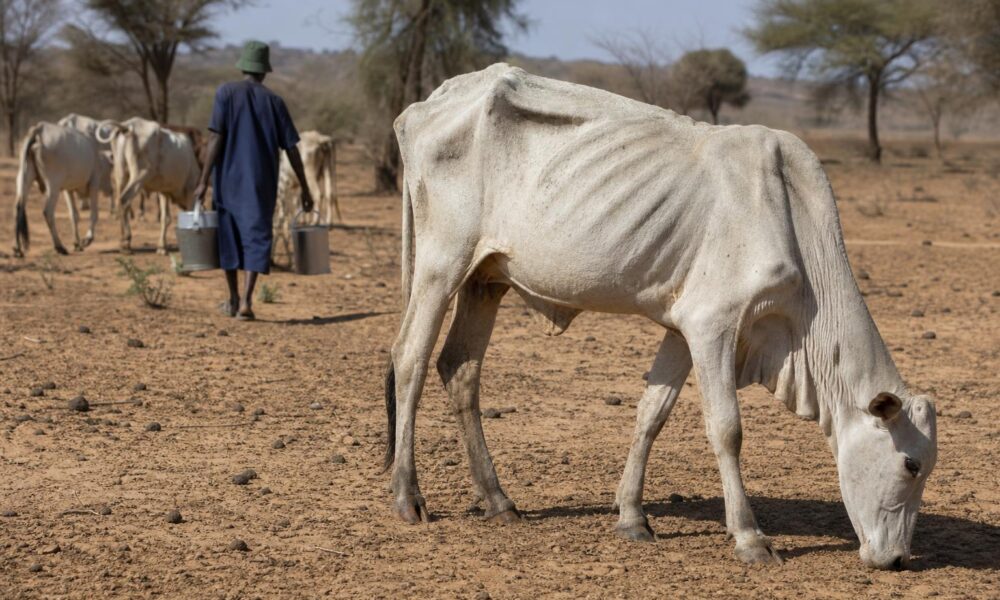
Prolonged dry conditions are reducing milk production in Kenya, disrupting deliveries to processors and raising prices for consumers and businesses.
Table Of Content
Farmers and pastoralists are facing shortages of pasture, fodder and water, affecting animal productivity across dairy-producing areas. Kenya’s Agriculture Cabinet Secretary Mutahi Kagwe said the conditions were largely responsible for the current pressure on milk supplies.
Farm output falls in Kajiado
Dairy farmers in Kajiado County said production had fallen sharply during the previous three months. Jennifer Leshinka, a farmer in Bisil, said her daily output had dropped from 120 litres to 50 litres.
She said the cost of keeping animals fed had also increased as natural grass became less available.
“I supplement the little natural grass with several bales of hay to feed my animals, which has become expensive. A bale of hay is currently retailing between 100 and 150 shillings [$0.77 to $1.15], yet it cannot sustain a mature animal for a day,” Leshinka said.
Jeremiah Ole Ncharo, the Kajiado County executive committee member responsible for cooperatives, said at least five major women-led dairy cooperatives had reported a 50 percent decline in deliveries from their members during the dry period.
Jackson Sinkeet, a farmer who supplies raw milk to hotels across the Nairobi metropolitan area, said falling yields had made it difficult to meet orders, including those from customers prepared to pay more.
“The animals’ milk yield has dropped significantly. I am unable to supply my customers, who are willing to pay higher prices, because the milk is simply not available,” Sinkeet said.
Prices and supplies under pressure
In Nairobi, some established 500ml milk brands were selling for between 79 and 89 Kenyan shillings, while some neighbourhood shops charged as much as 100 shillings for the same quantity. New brands were available on supermarket shelves at about 65 shillings per 500ml packet.
Joram Kamau, a Nairobi hotelier, said businesses were spending hours queuing at major processors’ depots to obtain rationed milk. The disruption has affected farmers, cooperatives, processors, hotels, retailers and consumers.
Kagwe said Kenya’s national milk production had nevertheless risen from 4.64 billion kilogrammes in 2021 to 5.52 billion kilogrammes in 2025. Formal deliveries also increased from about 802 million litres to 1.01 billion litres over the same period.
More recent deliveries have weakened. The average monthly formal delivery in 2025 was 83.45 million litres, compared with 74.09 million litres in September. The average gross producer price stood at 53.88 shillings per litre in July, up from 49.58 shillings in 2025.
Government market surveillance for the week ending October 30 indicated a slight improvement in the availability of UHT milk across most parts of Kenya. Fermented milk, butter and cheese were generally reported to be available at normal stock levels during that period.
Government outlines response
The government said it would continue monitoring production, processor stocks, producer prices and retail prices. It is also facilitating regional transfers of milk and dairy products, particularly within the East African Community, and encouraging processors to collect more milk from farmers and cooperatives.
Planned measures include expanding fodder production and conservation, continuing a subsidised artificial insemination programme and distributing milk coolers to organised farmer groups. The restructuring of New KCC is also expected to improve services for producers and consumers.
The government is exploring the possible introduction of Indian water buffaloes, subject to veterinary and import requirements, breed and source identification, and an initial assessment of adaptability and productivity. Kagwe said the proposal should be viewed as a medium- to long-term opportunity rather than an immediate answer to the current shortage.





No Comment! Be the first one.