
Sierra Leone Launches AgriConnect Compact to Strengthen Food Security and Jobs
Sierra Leone has launched the AgriConnect Compact, a multi-partner framework aimed at increasing agricultural productivity, improving market access, mobilizing private investment and creating jobs by...

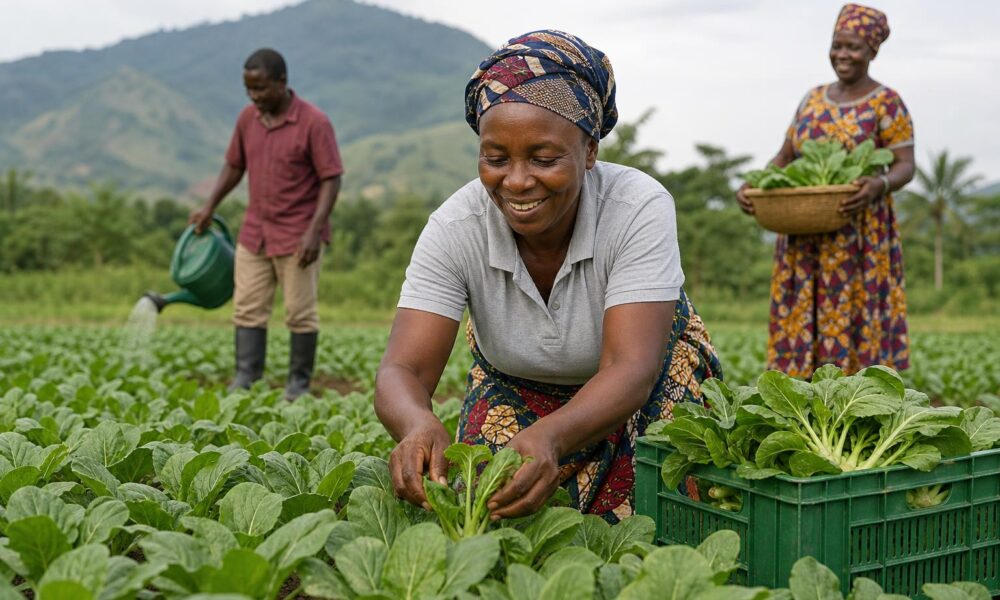
Sierra Leone has launched the AgriConnect Compact, a national framework designed to improve food and nutrition security, raise agricultural productivity, create jobs and attract private investment to priority value chains.
Table Of Content
The initiative was launched on 17 November 2026 by the Government of Sierra Leone with support from the World Bank Group and development partners. It is intended to help move farmers from subsistence production towards commercially viable agriculture.
Focus on productivity and markets
The Compact prioritizes rice, maize, cassava, cocoa, oil palm and poultry, building on the Government’s Feed Salone Strategy. Its agenda includes expanding irrigation and climate-smart farming practices, strengthening farmer organizations and connecting smallholder producers with structured markets and processors.
The framework is organized around three areas: improving productivity, resilience and market integration; creating a stronger policy and regulatory environment for agribusiness; and expanding agricultural finance and private capital.
Planned measures include a national digital farmer registry, expanded small-scale irrigation, rehabilitation of rural feeder roads, reforms affecting seeds and fertilizer, stronger land-tenure arrangements and warehouse receipt systems. The Compact also includes matching grants and de-risking instruments intended to support agribusinesses.
Targets for 2030
By 2030, the Compact aims to improve food and nutrition security for one million people, provide one million farmers with productivity and market-access services, and support the creation of approximately 120,000 jobs through increased production, processing and agribusiness development.
Achieving those objectives is estimated to require $1 billion in financing between 2026 and 2030, or about $200 million annually.
Agriculture contributes an estimated 25% to 30% of Sierra Leone’s gross domestic product and supports the livelihoods of between one-half and two-thirds of the population, according to the source document. However, only about 15% of the country’s 5.4 million hectares of arable land is cultivated.
Production remains largely rain-fed and weakly connected to markets. The sector also faces inadequate infrastructure, limited access to inputs, low processing capacity and exposure to climate shocks.
Government and partner coordination
The Ministry of Agriculture and Food Security will lead implementation alongside the Agricultural Sector Working Group. The group includes development partners, private-sector representatives, farmer organizations and local councils.
The Compact is supported by the African Development Bank Group, the International Fund for Agricultural Development, the Islamic Development Bank and the World Bank Group, including the International Finance Corporation.
“The AgriConnect Compact is our shared roadmap for turning Sierra Leone’s agricultural potential into real results: more food on our tables, more income for our farmers, and more jobs for our young people,” Agriculture and Food Security Minister Dr. Henry Musa Kpaka said.
Kpaka also said the Government was committed to a private-sector-led and government-enabled transformation, working with development partners and businesses to deliver the agenda.
Robert R. Taliercio, World Bank Group Division Director for Ghana, Liberia and Sierra Leone, said the country had the land, water and people needed to feed itself and compete in regional markets. He described AgriConnect as a framework that brings policy reform, public investment and private capital together, with smallholder farmers and agribusinesses at its center.
The broader AgriConnect initiative is a World Bank Group program that aims to help 300 million smallholder and family farmers access services, markets and finance by 2030. It is implemented in partnership with the African Development Bank Group, IFAD, the Inter-American Development Bank, Google and Bayer.




No Comment! Be the first one.