
Planned AGOA cuts put focus on Africa’s continental trade ambitions
The Trump administration plans to end South Africa’s and Rwanda’s eligibility for AGOA from January 1, 2027, prompting renewed debate over Africa’s dependence on unilateral US trade preferences.

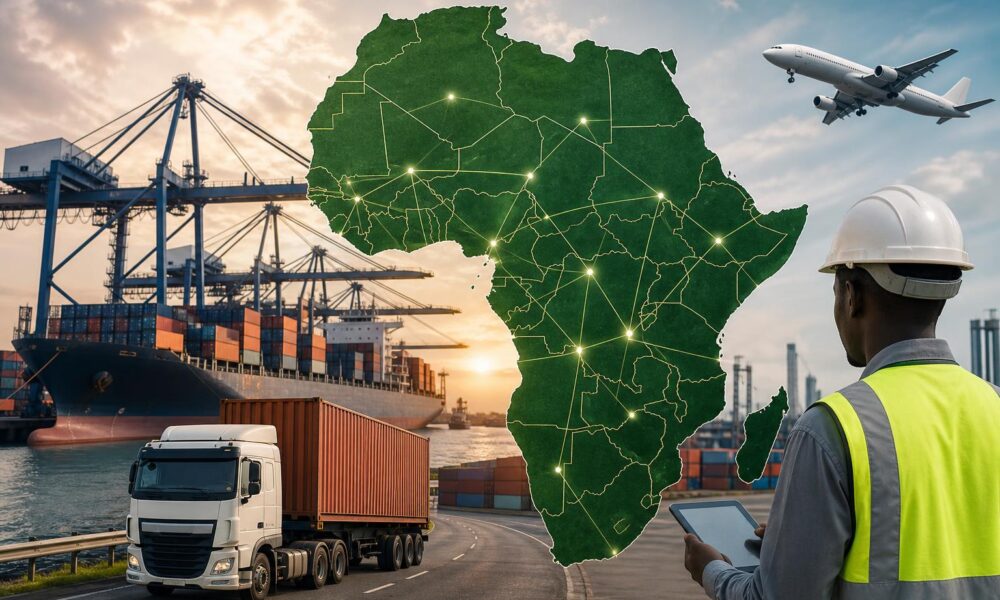
The planned removal of South Africa and Rwanda from a major US trade preference programme has highlighted the uncertainty facing African exporters and renewed calls for stronger continental economic integration.
The Trump administration announced on November 2 that the two countries would lose eligibility for the African Growth and Opportunity Act (AGOA) from January 1, 2027. The source does not establish whether the proposed terminations have been formally completed.
AGOA currently covers 33 eligible sub-Saharan African countries, allowing them to send thousands of products to the US market without duties. The programme was designed to promote economic growth, expand trade with the United States and encourage economic and political reforms.
South Africa is described as AGOA’s largest beneficiary. However, the source says many other eligible countries have struggled to make full use of the preferences. It also cites Ethiopia’s suspension from the programme in 2022 as an example of the potential impact, saying the move contributed to the loss of thousands of garment-sector jobs.
Trade exposure and political uncertainty
An analysis by the chief executive of Nigeria-based Alafarika for Studies and Consultancy argues that the planned exclusions expose the vulnerability created when African economies depend on trade benefits that can be withdrawn by a foreign government.
The author says the decision was influenced by geopolitical considerations and argues that Washington’s strategic interests can outweigh AGOA’s stated criteria. The analysis discusses South Africa’s relations with China and Russia, as well as allegations concerning Rwanda’s support for the M23 rebel group in the conflict in the eastern Democratic Republic of the Congo. Those allegations are not independently verified in the source.
The source estimates that AGOA initially supported more than 300,000 direct jobs and 1.3 million indirect jobs across Africa. A 2024 report by the US Trade Representative, as cited in the analysis, put two-way goods trade between the United States and sub-Saharan Africa at $47.5 billion in 2023. Imports under AGOA and the Generalized System of Preferences accounted for $9.7 billion, including $5.5 billion in non-oil imports such as apparel and agricultural products.
The Congressional Research Service, also cited by the source, reported that US imports receiving AGOA duty-free treatment fell from $7.9 billion in 2024 to $5 billion in 2025. An analysis by the German Institute of Development and Sustainability found that the share of US imports from sub-Saharan Africa benefiting from AGOA and the Generalized System of Preferences declined from more than 80 percent in 2008 to about 24.7 percent in 2021.
AfCFTA presented as alternative foundation
The analysis urges African governments to accelerate implementation of the African Continental Free Trade Area, which was signed under the auspices of the African Union in Kigali, Rwanda, on March 21, 2018. The agreement entered into force on May 30, 2019, and trading under it began on January 1, 2021.
The AfCFTA seeks to create a unified market covering more than 1.3 billion people and a combined economy valued at more than $3.4 trillion. It aims to progressively remove tariffs on 90 percent of tariff lines and is presented as a way to reduce the continent’s exposure to external trade shocks.
Intra-African trade currently represents an estimated 15 to 18 percent of Africa’s total trade, according to the source. The agreement is intended to encourage regional value chains and local manufacturing rather than continued dependence on exports of raw materials.
Supporting systems are also being developed. The Pan-African Payment and Settlement System, launched on January 13, 2022, enables banks and financial institutions to process cross-border transactions in African currencies, reducing reliance on foreign currencies such as the US dollar.
The AfCFTA Adjustment Fund is intended to help developing countries and small and medium-sized enterprises adapt to the single market. Its financing requirement is estimated at between $8 billion and $10 billion. The AfCFTA Secretariat also signed an agreement in August 2026 to modernise and digitise customs systems.
The analysis concludes that Africa’s economic future should not depend on policy changes by successive foreign administrations, and calls for the removal of trade barriers, closer regulatory coordination and investment in cross-border infrastructure.






No Comment! Be the first one.