
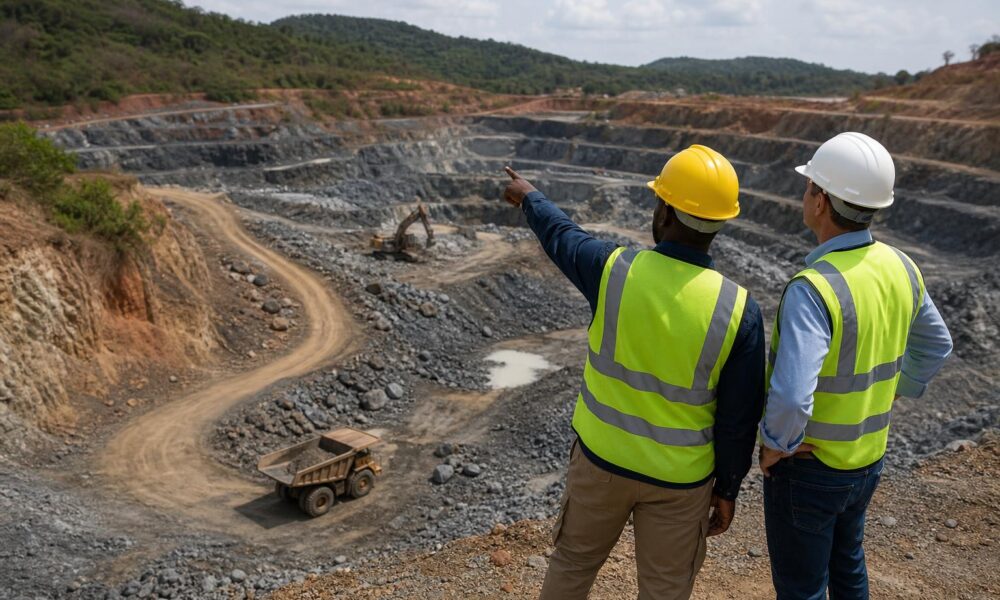
Kenya has selected US consortium Frontier Minerals as the successful bidder for a proposed critical minerals project at Mrima Hill in Kwale County, according to the Ministry of Mining.
Table Of Content
The planned development on Kenya’s coast would include a mine and processing complex focused on niobium and rare earth elements. The ministry described the award as a possible “gateway to meaningful local partnership and strict regulatory compliance.”
RareX, the Australian bidder, told AFP it would challenge the decision, alleging irregularities in the bidding process. The reported allegations have not been independently established, and it is not clear from the available information whether the company has formally filed a legal challenge.
Mineral potential and local concerns
Mrima Hill is regarded as a potentially significant source of niobium and rare earth elements. Reports have placed the potential value of deposits at more than $60 billion, although experts involved in the tender process said that figure remains unconfirmed.
The site is also a 390-acre forest that contains sacred shrines belonging to the local Digo ethnic community. It has long supported farming and other livelihoods in the area.
Local residents have expressed concern that mining could result in evictions or leave communities without a share of any future benefits. The available information does not set out arrangements for relocation, compensation, local ownership or benefit-sharing.
Previous dispute over the site
Mrima Hill has been at the centre of earlier disputes over its mineral resources. In 2013, the Kenyan government revoked a mining licence held by Cortec Mining Kenya, citing environmental and licensing irregularities.
Cortec later alleged in court that the licence was withdrawn after the company refused to pay a bribe to then-mining minister Najib Balala. Balala denied the allegation.
Jacob Juma, who headed Cortec Mining, was shot dead in his car in May 2016, on the day he filed legal submissions concerning the alleged bribe. Cortec subsequently lost several legal efforts seeking compensation.
Kenya seeks to expand mining sector
Kenya imposed a temporary ban on new mining licences in 2019 amid concerns about corruption and environmental degradation. The government has since sought to attract investors by promoting reforms, tax breaks and improved transparency.
It has set a target of increasing mining’s contribution to gross domestic product from 0.8 percent to 10 percent by 2030.
The ministry’s announcement identifies Frontier Minerals as the successful bidder, but the available information does not provide the project’s financial terms, ownership structure, duration or timetable. It also does not establish whether construction or mineral extraction will proceed.






No Comment! Be the first one.