
Sierra Leone Education Minister Calls for Greater Investment in Teachers
Education Minister Conrad Sackey has made teacher investment Sierra Leone's implementation priority following the launch of a Mastercard Foundation report in Accra.

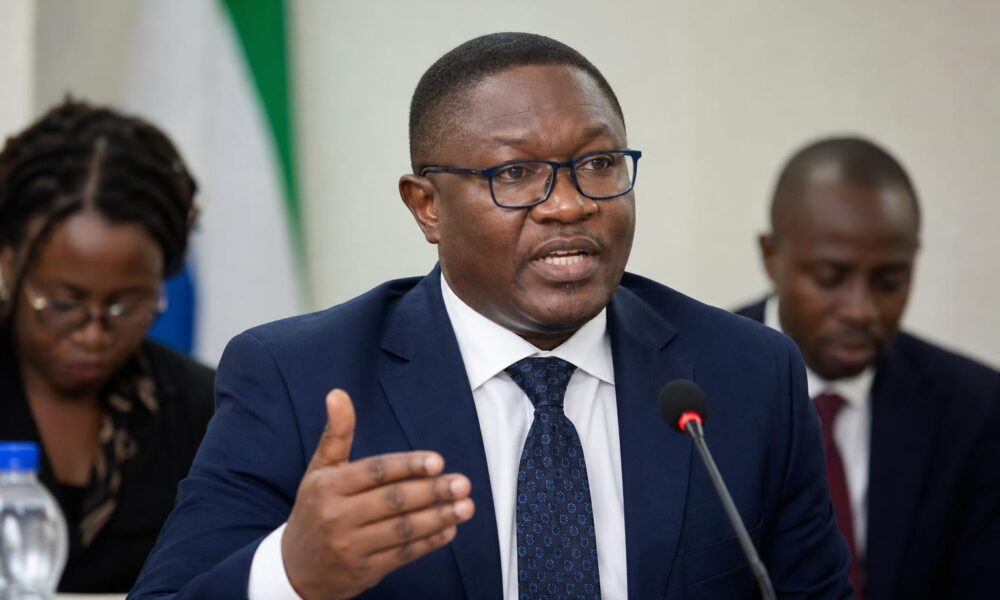
Sierra Leone’s Minister of Basic and Senior Secondary Education, Conrad Sackey, has identified investment in teachers and the wider education workforce as the country’s priority for implementing recommendations from a new Mastercard Foundation report.
Table Of Content
Sackey made the remarks on Tuesday, November 24, 2026, during a high-level Ministerial Leadership Dialogue at the Labadi Beach Hotel in Accra, Ghana. Themed “From Evidence to Implementation,” the meeting marked the launch of the report, Secondary Education in Africa: Expanding Pathways to Work, Livelihoods and Lifelong Learning.
Five Rs framework
Asked which of the report’s six recommendations Sierra Leone would prioritize, Sackey selected Recommendation Four, which focuses on teachers and the education workforce.
“I think you cannot achieve quality in education without teachers,” Sackey said.
He outlined a Five Rs framework for strengthening the teaching profession: Recruit, Reward, Retain, Reassess and Retire. The approach includes bringing more people into teaching, improving remuneration, protecting teachers’ welfare and wellbeing, recognizing continuous professional development in salary-scale placement, and making appropriate provisions for teachers approaching retirement.
Sackey also expressed a desire to increase the number of teachers on the Government payroll and ensure that teacher deployment reflects the staffing needs of schools. Sierra Leone currently has teachers on the Government payroll as well as volunteer teachers whose remuneration is supported through Government subsidies provided to schools.
Pay and professional support
Under the Reward element of the framework, Sackey said the Ministry was engaged in negotiations with the Teachers’ Union. He also advocated greater recognition of teachers’ professional development and stronger support for their welfare.
The minister’s focus on the teaching workforce was linked to his previous experience as Chairman of the Teaching Service Commission. The source also states that he comes from a family background spanning four generations of teachers.
Regional teacher shortage
The Mastercard Foundation report estimates that Sub-Saharan Africa will require an additional 10.7 million secondary school teachers by 2030 to achieve universal secondary education.
Sierra Leone is among eight countries featured in the report’s case studies. The Accra dialogue brought together Sackey, Ghana’s Minister of Education Haruna Iddrisu, Liberia’s Minister of Education Dr. Jarso Jallah, Rwanda’s Minister of Education Joseph Nsengimana and Dr. Martha Muhwezi, Executive Director of the Forum for African Women Educationalists.

No Comment! Be the first one.