SLYDCL Urges Review of Sierra Leone’s 2008 Drug Law
SLYDCL has renewed its call for reforms to Sierra Leone’s National Drugs Control Act of 2008, arguing that the country’s drug policy should better balance enforcement with treatment, rehabilitation...
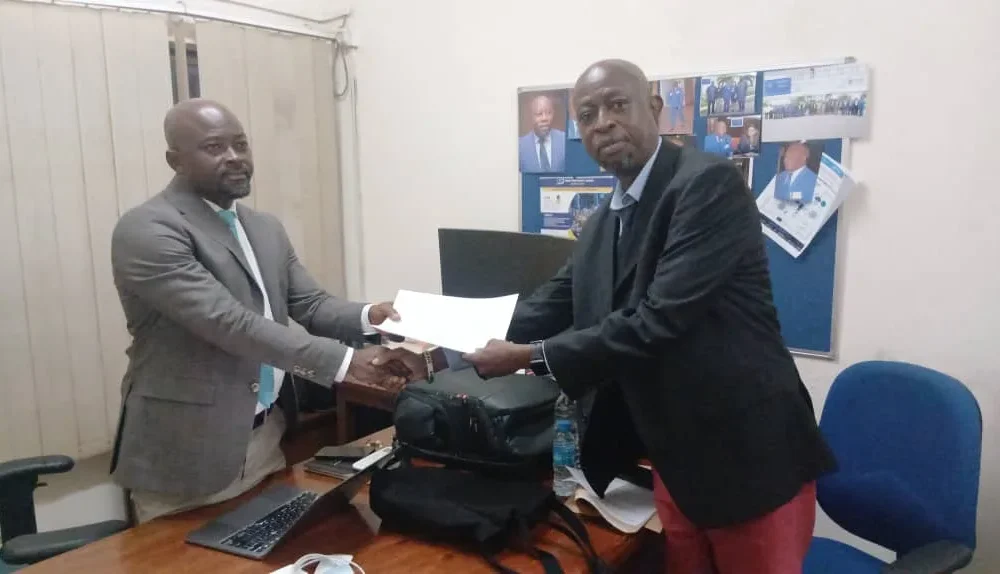
Social Linkages for Youth Development and Child Link (SLYDCL) has renewed its call for a review of Sierra Leone’s drug laws, presenting a 15-page policy brief to newly appointed National Drug Law Enforcement Agency (NDLEA) Executive Director Prince Bull-Luceni.
Table Of Content
The organisation made the presentation during a courtesy visit to Mr Bull-Luceni’s office. The delegation, led by SLYDCL Executive Director Habib T. Kamara, also congratulated him on his appointment as head of the NDLEA.
Prince Bull-Luceni was appointed Executive Director of the agency on August 11, 2026. He previously served as the NDLEA’s Deputy Executive Director.
Call for legal and policy reforms
SLYDCL said its policy brief focuses on reviewing the National Drugs Control Act of 2008. The organisation said reforms should strengthen provisions covering prevention, treatment, rehabilitation, harm reduction, recovery and social reintegration.
According to SLYDCL, the brief identifies areas where reform is needed to help Sierra Leone’s legal and policy framework respond more effectively to the country’s changing drug situation.
The organisation said the current law remains an important basis for tackling illicit drug trafficking and organised drug-related crime. However, it argued that changing circumstances require a review of the approaches set out in the legislation.
The Act provides a prison sentence of not less than five years for unlawful buying, selling, possession, control or use of drugs.
Concerns over criminal and treatment provisions
Campaigners cited in the policy discussion have raised concerns that the existing legislation does not adequately distinguish between people who use drugs and those involved in manufacturing or trafficking illegal substances.
They also argue that possession and personal use are placed within the same criminal framework as broader drug offences. In their view, the tension between punitive provisions and treatment-focused measures has made it harder to establish an effective and balanced drug-control system.
Part IV of the Act provides for treatment and rehabilitation through treatment assessment panels, treatment orders and the suspension of penalties. SLYDCL’s reform proposal calls for these and related measures to be strengthened within a broader public-health and human-rights-centred approach.
Changing drug situation
The executive summary of SLYDCL’s policy brief says Sierra Leone is facing a wider range of unpredictable substances, including a synthetic-drug crisis associated with Kush. It also points to expanding efforts in treatment, rehabilitation, harm reduction, HIV prevention, overdose prevention and community-based services.
“Sierra Leone’s drug situation has changed substantially since 2008. The country is now confronting increasingly diverse and unpredictable substances, including the synthetic-drug crisis associated with Kush, while also expanding efforts around treatment, rehabilitation, harm reduction, HIV prevention, overdose prevention and community-based services,” the summary states.
SLYDCL is a civil society organisation working to combat drug and substance abuse. It provides medical care, rehabilitation support and education to young people and children affected by drugs, while promoting evidence-based and public-health approaches to prevention and control.
The organisation said it remains committed to working with the NDLEA to address drug-related challenges across Sierra Leone. The source material does not state Prince Bull-Luceni’s response to the policy brief or whether the agency has accepted any of its recommendations.





No Comment! Be the first one.