
Tunisia Replaces First-Offence False-News Jail Terms with Fines
Tunisia has amended Decree 54 to replace a five-year prison sentence for first-time false-news offences with fines, while rights groups continue to demand wider reforms.

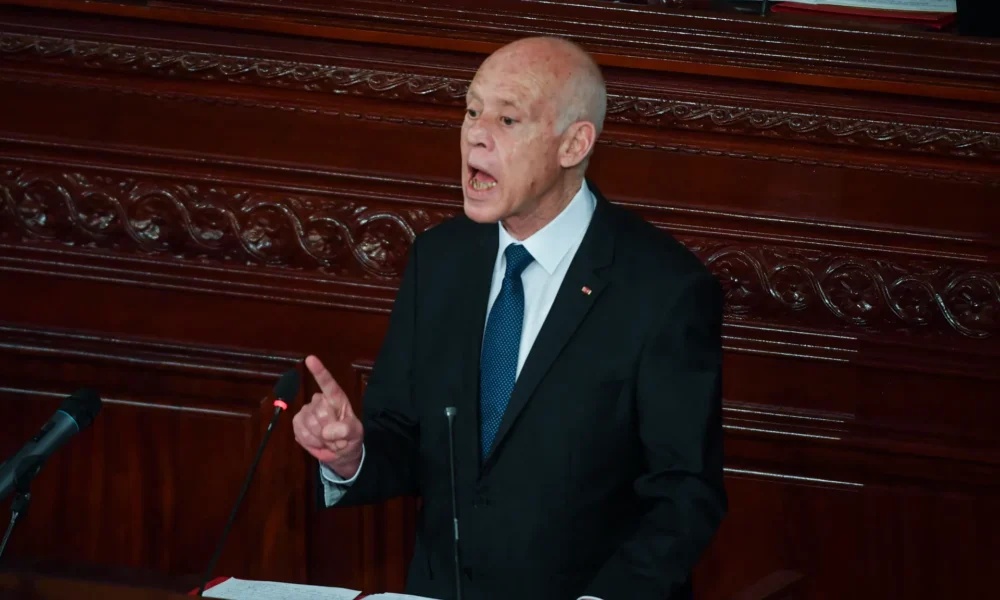
Tunisia has amended its cybercrime legislation to replace prison terms with financial penalties for people convicted of certain first-time false-news offences, but rights and media-freedom advocates say the change does not resolve wider concerns about the law.
Table Of Content
The amendment to Decree 54 took effect on Wednesday. It sets fines of between 10,000 and 20,000 Tunisian dinars, equivalent to about $3,370 to $6,740, for a first offence involving the spread of false news and related violations. Previously, such offences could result in a five-year prison sentence.
Repeat offenders may still face imprisonment. The supplied information does not specify the amended penalties for every category covered by the decree.
Critics seek repeal of the decree
Decree 54 continues to cover the electronic dissemination of false or allegedly doctored information, personal data and untrue allegations in circumstances including stirring up hatred, inciting attacks, defamation, reputational damage or material and moral harm.
Rights and media-freedom advocates have described the amendment as insufficient and called for broader changes, including repeal of the decree. Said Benarbia, the Middle East and North Africa director of the International Commission of Jurists, called the penalty reduction a “positive development” but said Tunisia should end abusive prosecutions and release people arbitrarily detained under the law.
Benarbia has described Decree 54 as “one of the potent tools of oppression used by the government to crush dissent, crack down on civic space and arbitrarily restrict the freedom of expression in the country”.
Rafik Abdessalem said the decree had been used “to silence every voice critical of the regime”. He described the amendment as a reduction in punishment without a change to what he called the law’s repressive and punitive character.
Lotfi Hajji, head of Al Jazeera’s bureau in Tunisia, said civil society groups and the journalists’ union want the decree scrapped so journalists can instead be judged under Tunisia’s 2011 press freedom law. The European Parliament has also called for its repeal and characterised the decree as “a tool to interfere with fundamental freedoms”.
Journalists and activists prosecuted
The National Syndicate of Tunisian Journalists documented hundreds of journalists, bloggers, opposition politicians, lawyers and activists tried under Decree 54 since 2022. It recorded 14 prosecutions of journalists between April 2025 and April 2026, including six cases brought under the decree.
One prominent case involves lawyer and columnist Sonia Dahmani. She received a two-year sentence for criticising conditions in Tunisian prisons during a radio interview in May and has been charged under Decree 54 in five cases. She had earlier received an 18-month prison sentence after criticising President Kais Saied’s policies in 2024.
Another case concerns Saber Ben Chouchane, who received a death sentence in proceedings that included charges under Decree 54 and other censorship laws. The specific legal provisions supporting that sentence were not identified in the supplied information.
Pressure over civil liberties
President Kais Saied issued Decree 54 in September 2022, making the electronic dissemination of falsehoods an offence. The government has defended the measure as necessary to protect people and public order and to address online crime and disinformation.
Criticism of the decree forms part of broader concerns over democratic backsliding and political repression under Saied. He suspended parliament and dismissed the government in 2021 before ruling by presidential decree. A new constitution was put to a referendum in 2022.
Civil society groups led by Tunisia’s largest labour union announced plans for a nationwide march over restrictions on civil liberties shortly before the amendment took effect. Abdessalem said popular mobilisation had forced the government to back down, while acknowledging that the amendment appeared intended to make Tunisia’s political image “less bleak”.






No Comment! Be the first one.