
Somalia Rejects Any Israeli Presence as President Raises Berbera Concerns
Somali President Hassan Sheikh Mohamud says his country will not accept an Israeli presence and alleges plans involving a naval base and airport access in Berbera.

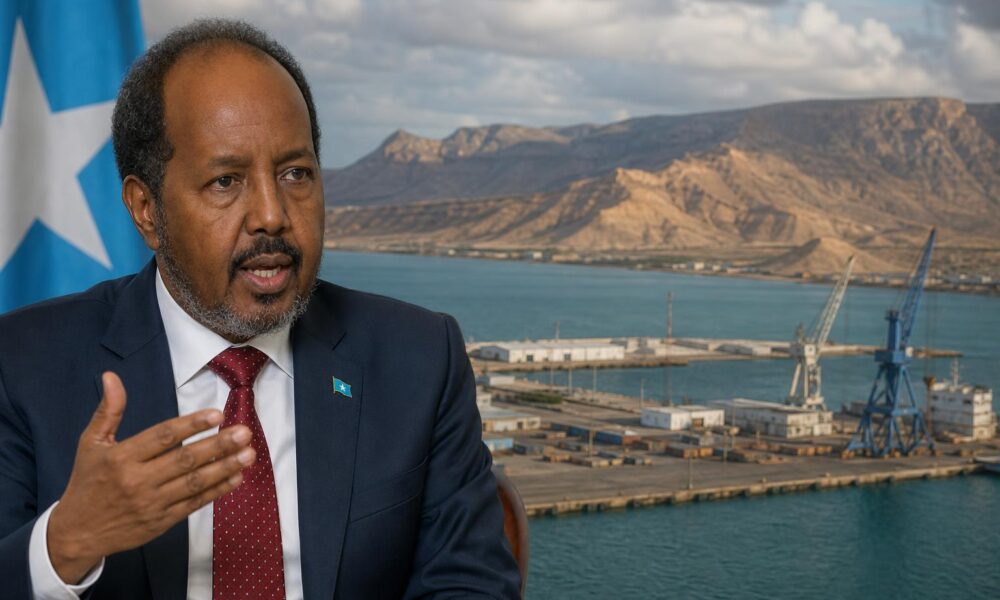
Somalia will not accept an Israeli presence in the country, President Hassan Sheikh Mohamud said in an interview with Al Jazeera, adding that Mogadishu would resist efforts to draw it into conflicts in the Middle East.
Table Of Content
Mohamud alleged that Israel was planning to establish a naval base in Berbera and use the city’s airport. He said he believed the reported plans were intended to bring Israel closer to the Gulf states and Iran, and linked them to what he called the “Greater Israel” project.
The allegations were presented as claims by the Somali president and were not independently verified in the source. The report did not include a response from Israel.
Dispute over Somaliland
Berbera is a port city on the Gulf of Aden in Somaliland, a self-declared republic in northwestern Somalia that Mogadishu continues to claim. The city lies across the water from Yemen and near the Bab al-Mandeb strait, a major maritime passage.
Mohamud criticised Israel’s recognition of Somaliland in December. Somaliland declared independence from Somalia in 1991 and has governed itself separately for more than three decades. According to the source, Israel’s move made it the only country to recognise the territory.
The Somali president described Israel as a “destabilising force” that does not comply with international law. He also said Somalia would overcome what he characterised as challenges created by Israeli actions.
Relations with Ethiopia
Mohamud said relations between Somalia and Ethiopia were good. He added that Mogadishu did not object to Ethiopia obtaining access to the sea through an agreement allowing it to use Somali ports for economic purposes.
Ethiopia has been landlocked since Eritrea became independent in 1993 and relies largely on Djibouti’s ports for trade. Somalia had condemned a January 2024 memorandum of understanding between Ethiopia and Somaliland on sea access, describing it as a violation of Somali sovereignty. The two countries later agreed to ease tensions.
Security and regional tensions
Mohamud said the United States remained Somalia’s strongest partner in the fight against terrorism. He also said Al-Shabab no longer had a presence in major cities and therefore could not take control of Somalia. The group, which emerged from the Islamic Courts Union, controls territory in parts of southern and central Somalia and has carried out attacks in Mogadishu and neighbouring Kenya, according to the background information accompanying the interview.
The president accused Yemen’s Houthis of destabilising the region and disrupting navigation through the Bab al-Mandeb strait. The Houthis have previously imposed a blockade on Israel-linked ships in the area, while Yemeni government forces have held frontline positions and claimed to have inflicted heavy losses on the group.
Mohamud’s comments came as he sought to outline Somalia’s position on developments around the Gulf of Aden, Somaliland and the wider Middle East. He said Somalia would not accept an Israeli presence “under any circumstances” and would resist attempts to involve the country in regional crises.

No Comment! Be the first one.