
Conflicting Claims Follow Reported TPLF Offensive in Northern Ethiopia
Ethiopian officials and the Tigray regional government have offered opposing accounts of renewed fighting in northern Ethiopia, including reports of clashes and suspended flights.

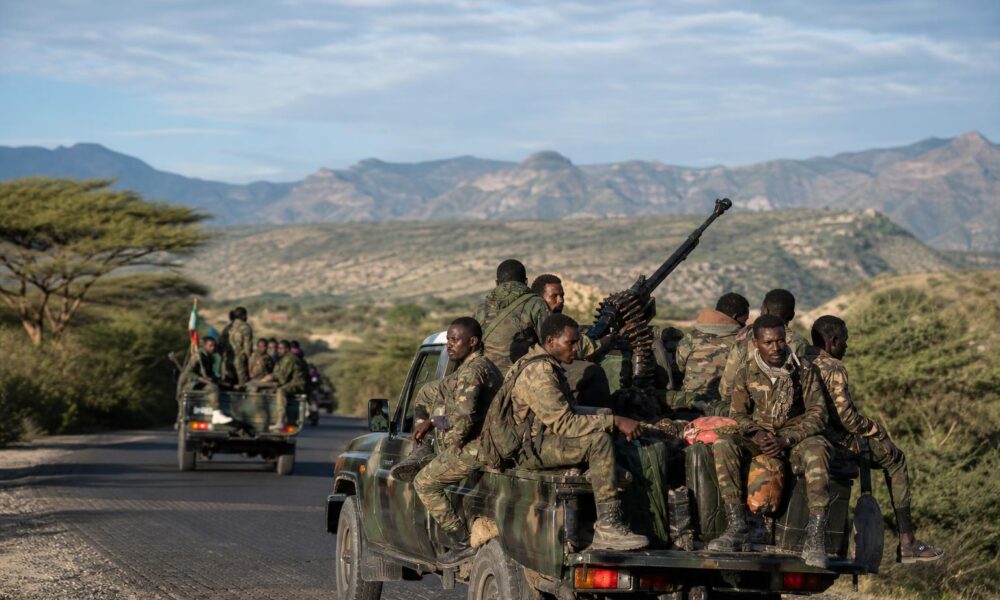
Competing accounts have emerged over renewed fighting in northern Ethiopia, after officials reported a Tigray People’s Liberation Front (TPLF) offensive against federal positions and the seizure of federally controlled airports in Tigray.
Getachew Reda, an adviser to Prime Minister Abiy Ahmed, said in a post on X that the TPLF had launched an “all-out offensive” in the Afar and Amhara regions. He also said Tigrayan forces had taken control of federally operated airports in Tigray, resulting in the suspension of flights to and from the region.
The reported airport seizures and military developments have not been independently confirmed. The extent of any TPLF control over the airports, as well as the duration of the flight suspensions, was not specified.
Opposing accounts of the fighting
The Tigray regional government rejected the description of its actions as an offensive. In a statement posted on Facebook, it accused federal forces of carrying out intensive bombardments using aircraft, drones and artillery.
The regional government said the Tigray army had been ordered to respond to what it called an invasion and had entered a defensive battle. Its account directly contradicts the federal government’s version of events, which blamed the TPLF for initiating the fighting.
Humanitarian workers cited by AFP reported clashes in parts of Afar, including Abala and Erebti. Two residents cited by Reuters said federal forces were firing heavy weapons from a camp in Lalibela, in Amhara. Reuters also reported, citing government and diplomatic sources, that Tigrayan forces were fighting alongside the Fano militia in Amhara.
Concerns over wider regional impact
The developments follow an announcement by the TPLF that it had formed an alliance with six other armed groups across Ethiopia to seek the removal of Abiy Ahmed’s government. Billene Seyoum, a spokesperson for the prime minister, told Reuters that members of the alliance had worked together for some time with financial backing from Eritrea.
Eritrea has repeatedly denied similar accusations. Alan Boswell, the International Crisis Group’s Horn of Africa director, warned that alleged Eritrean support for the TPLF could contribute to a broader regional conflict. He said Eritrea was also close to the Sudanese army and that relations between Ethiopia and the Sudanese army had deteriorated.
“So this is all becoming one big regional mess, and it could get very, very ugly if we don’t see de-escalation,” Boswell said.
Ethiopian President Taye Atske-Selassie Amde told the United Nations General Assembly in New York that Ethiopia had shown “immense restraint” and made progress with neighbouring countries despite foreign interference. He urged what he called “forces of destruction and mayhem” to respect the right of people in the Horn of Africa to live in peace and prosperity.
The TPLF governed Ethiopia from 1991 to 2018 before being sidelined after Abiy took office. A civil war from 2020 to 2022 ended with the Pretoria Peace Agreement. African Union estimates put the death toll from that conflict at about 600,000.
Fano, which supported the federal government during the previous war, turned against it in 2023 in an ongoing armed conflict. The region has yet to recover fully from the earlier fighting, and about one million people remain displaced.



No Comment! Be the first one.