
Bio Urges Africa to Build Strategic Agency Amid Global Disruption
President Julius Maada Bio has called on African countries to respond to global disruption with greater strategic independence, stronger institutions and coordinated investment in technology,...

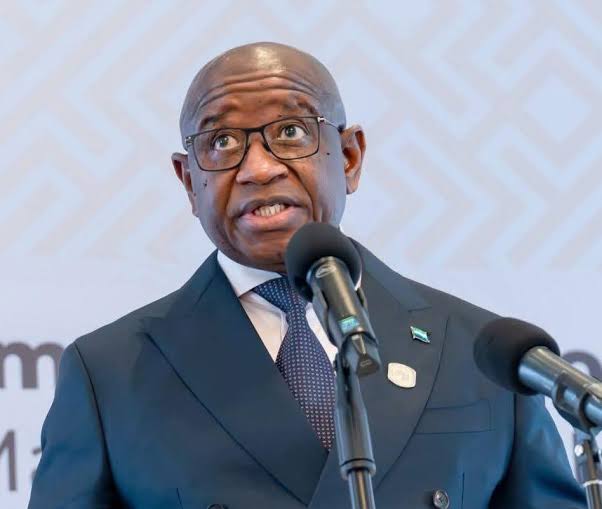
President Julius Maada Bio has urged African countries to approach a period of global disruption with greater strategic agency, arguing that the continent must make deliberate choices rather than remain shaped by decisions made elsewhere.
Table Of Content
Bio delivered the presidential lecture, titled Africa in an Age of Disruption: Power, Agency and Strategic Choice, at the University of Cambridge during the Africa Together Conference 2026. Faculty members, students, members of the African diaspora and other African leaders, scholars, innovators, researchers and professionals were among those addressed.
Institutions and leadership
Drawing on Sierra Leone’s experience, Bio said institutional collapse, social division and national recovery had shaped his understanding of leadership, citizen resilience and the importance of strong public institutions.
He said he led Sierra Leone’s transition from military rule to democratic governance in 1996, after nearly three decades of autocratic rule. He also described the country as emerging from crisis, institutional fragility and underinvestment when his government came to office in 2018.
Bio said the quality of institutions, the resilience of citizens and the clarity of leadership help determine whether countries withstand crises or are overwhelmed by them. “Power is easiest to seize when institutions are weak,” he said, while also stressing the discipline needed to limit the use of power.
He identified democratic fragility, unconstitutional changes of government, violent extremism, disinformation, economic shocks and climate insecurity among the pressures facing West Africa. In that environment, he said, legitimacy is one of the most important forms of strategic power.
Sierra Leone’s policy experience
Bio presented measures taken by his government as examples of efforts to strengthen national resilience. He said Sierra Leone abolished school fees and introduced the Free Quality Education Programme after 2018, while also expanding healthcare services and strengthening maternal and child health systems.
He further cited the Feed Salone Programme, investments in technology and infrastructure, youth employment initiatives, women’s empowerment and reforms to public services.
Bio said African leaders must remain accountable to their citizens while also confronting injustices in the international system. He argued that Africa’s greatest strategic danger was entering an age of disruption without the ability to make and implement its own choices.
Technology, trade and climate
The president identified technology and digital sovereignty, economic transformation, and climate change and resilience as three strategic areas for Africa.
On artificial intelligence, Bio said Africa’s central problem was not a lack of talent, but insufficient scale, investment and strategic coordination. He called for greater support for digital literacy, research institutions, ethical governance and innovation ecosystems.
He also argued that the continent could not industrialise its future through extractive models inherited from the past. Instead, he said, African economies should move from the export of raw materials towards value addition, supported by regional integration and implementation of the African Continental Free Trade Area.
Addressing climate change, Bio said Africa contributes the least to global emissions while experiencing a disproportionate share of climate-related shocks. He called for delivered climate financing, meaningful debt restructuring, trade arrangements that reward value addition and a genuine African role in global economic rule-making.
Role of universities and the diaspora
Bio urged universities, women, young people, the African diaspora and international partners to contribute to Africa’s future. He encouraged the University of Cambridge to deepen partnerships with African universities as co-creators of knowledge.
He also called on the African diaspora to use its skills, networks, capital, credibility, mentorship and investment to support development across the continent.
Concluding his address, Bio framed Africa’s choice as one between shaping disruption and merely experiencing it. “The question is whether Africa will move as an Author or as an Observer,” he said.


No Comment! Be the first one.