
University of Lagos report urges environmental damage to be included in African reparations
A University of Lagos report submitted to African Union reparations bodies calls for colonial-era environmental destruction to be assessed as part of reparations claims.

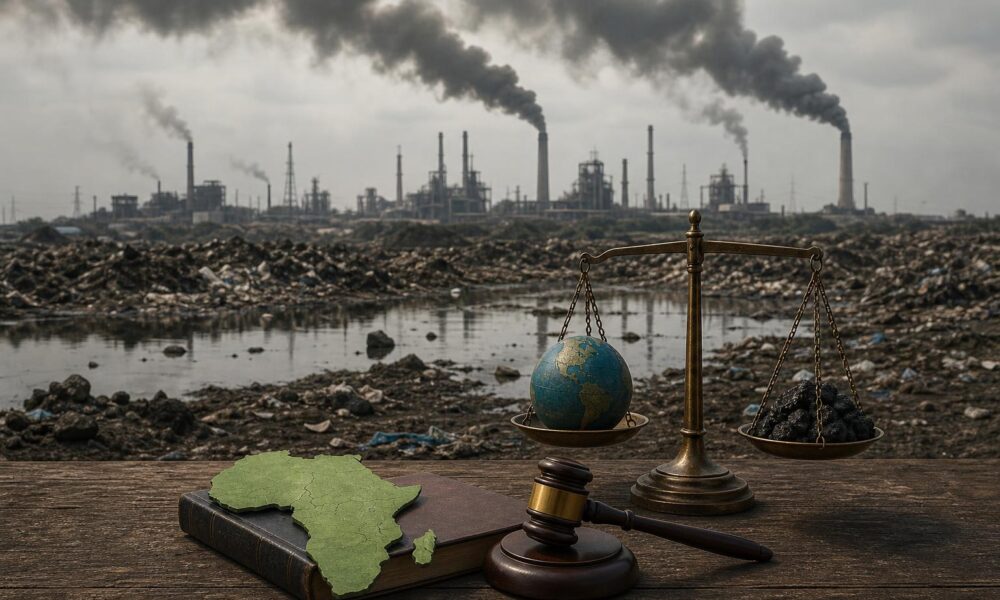
A University of Lagos report has called for the environmental damage associated with British colonial rule in Africa to be considered separately in reparations discussions.
Table Of Content
Titled CO2lonianism, Ecocide, Reparations, the report was presented at a press conference at the University of Lagos on August 28, 2026. It was subsequently submitted to the African Union’s Committee of Experts on Reparations and Legal Reference Group on Reparations.
The two African Union bodies are described as operating under the bloc’s Decade of Justice and Reparations, which runs from 2026 to 2035. Their responsibilities include developing a harmonised method for assessing reparations claims and advancing a common African position.
Valuing colonial-era ecological harm
The report argues that ecological damage caused by colonial rule should be treated as a distinct category of harm, separate from the damage associated with the transatlantic slave trade and other forms of colonial exploitation.
Professor J. G. Nkem Onyekpe, the report’s lead author and head of the Department of History and Strategic Studies at the University of Lagos, said applying valuation methods across the full period of colonial rule and all affected African states could produce a figure in the hundreds of trillions of dollars, or potentially more.
Onyekpe also said comparable valuation exercises had previously been attempted. He cited a peer-reviewed estimate from 2022 that placed the value of resources appropriated from the global South through unequal exchange at more than $10 trillion per year in 2015.
“The report documents that valuation exercises of comparable ambition and scale have already been attempted successfully,” Onyekpe said.
The report’s projected figure is presented as an estimate rather than an independently verified assessment. The source material does not provide a country-by-country valuation or identify the 2022 study cited by Onyekpe.
Examples of environmental and livelihood impacts
The study discusses a case in Kanungu District, Uganda, involving land degradation, farmer livelihoods and deforestation. It reports a statistical association between land degradation and farmer livelihoods, recording a Spearman’s r of 0.530 with a significance level of p < 0.01.
According to the report, local respondents identified deforestation as the main driver. Local officials and farmers also attributed hunger, famine-related resource constraints and insufficient food to the environmental conditions described in the case.
The authors argue that the continuing effects of ecological damage should be linked to broader questions of justice, including Africa’s vulnerability to climate-related pressures.
“Colonial reparations cannot stop at counting the lives taken, the people enslaved, the resources extracted and indigenous survival altered,” said Ogunlade Olamide M., associate director at CAPPA NGO. “The ecological destruction that made those systems possible and whose consequences continue to shape Africa’s climate vulnerability today, must be recognized as part of the debt owed to African peoples.”
International legal context
The report also points to legal and institutional developments since 2021, including discussions around ecocide and environmental claims. It references a working legal definition of ecocide adopted by an Independent Expert Panel, as well as related instruments associated with the Council of Europe and European Union. A proposal concerning ecocide is also before the International Criminal Court, according to the report.
The study cites the Certain Phosphate Lands in Nauru case before the International Court of Justice as an example involving environmental devastation linked to colonial-era phosphate mining. Dr Karibi-Whyte, a legal expert familiar with the report, said the case demonstrated that environmental claims by formerly colonised states have a foundation in international law.
“The Nauru case proves that such claims are not merely theoretical but are grounded in established international law,” Karibi-Whyte said.
The report further notes that the African Union declared 2025 the Year of Reparations and that, in July 2025, it decided to establish an ad hoc committee on the classification of massive ecosystem destruction as a crime.
Its authors hope the study will help frame environmental repair as part of restorative justice for Africa and encourage the inclusion of colonial-era ecological costs in future reparations discussions.





No Comment! Be the first one.