
Kamara Detention Raises Due Process Questions After Supreme Court Proceedings
Questions about due process, impartiality and proportionality have followed the reported detention of former Attorney-General Joseph Fitzgerald Kamara during Supreme Court proceedings on 8 October...

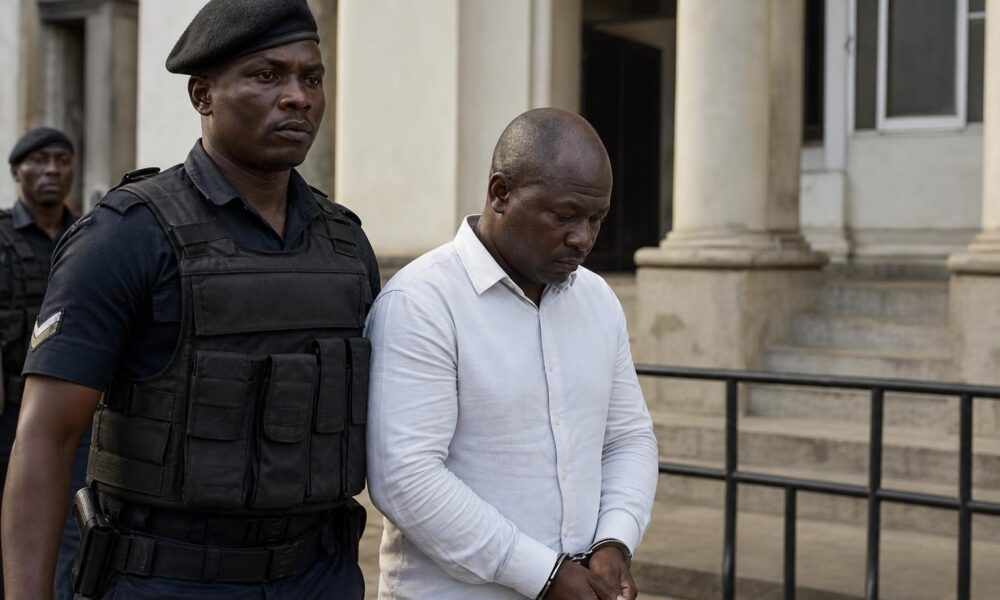
The reported detention of former Attorney-General and Minister of Justice Joseph Fitzgerald Kamara during Supreme Court proceedings has prompted questions about the process followed before he was taken into custody.
According to a report by The Sierra Leone Telegraph, the incident occurred on 8 October 2026 during proceedings concerning the Constitutional Amendment Bill. The events followed remarks Kamara made during the court proceedings on 7 October.
The report said Kamara was required to apologise and retract the remarks. On 8 October, he apologised and indicated that he retracted his statement if it had offended the Chief Justice and the Bench.
The Chief Justice, Justice Komba Kamanda, considered the apology inadequate, the report said. Kamara was then ordered to remove his wig and proceed to the dock.
After reportedly removing his wig and preparing to comply, Kamara was ordered to be taken by police to Pademba Road Correctional Centre.
The report quoted Kamara as saying, “My Lord, tell me what you want me to say and I will say it.” It said Justice Kamanda responded, “Am I the one to tell you what to say?” Kamara later said, “I am entirely in your hands.” Before leaving, he reportedly told members of the Bar: “Members of the Bar, I’ll be back.”
Questions over the contempt process
The Sierra Leone Telegraph said the sequence described in its report did not visibly demonstrate a distinct contempt hearing, a finding of guilt or an opportunity for Kamara to defend himself against the allegation. It cautioned, however, that this did not conclusively establish that no legally sufficient proceedings had taken place.
The complete official court record would be required to determine what proceedings occurred, whether a formal finding of contempt was made and what legal basis, duration and recorded form the committal order had.
The report noted that the Supreme Court has authority to punish contempt, but that the power must be exercised in accordance with Sierra Leone’s law and Constitution. It cited Section 120(5) as empowering the Superior Court of Judicature to commit people for contempt, and Section 17(1)(c) as permitting deprivation of liberty in execution of a lawful superior court order made on grounds of contempt.
It also referred to Section 23, which protects the right to a fair hearing, and to Order 51 of the High Court Rules 2007. The report said those rules address contempt proceedings, including applications supported by affidavit and contempt committed in the face of the court, while noting that they do not automatically govern Supreme Court proceedings.
Impartiality and possible remedies
Contempt committed in the presence of a court may be dealt with through an expedited procedure, according to the report. However, it said a summary process does not mean an arbitrary one. A fair process ordinarily requires the alleged misconduct to be identified, an opportunity to respond, an impartial determination and a lawful order setting out any punishment.
The report also raised the principle nemo judex in causa sua—that no person should be a judge in their own cause—because the alleged contempt was directed at the Chief Justice personally. It said this could raise apparent-bias concerns, while not establishing that Justice Kamanda was legally required to recuse himself.
The detention therefore raised questions concerning due process, impartiality and proportionality, the report concluded. It also stressed that an unlawful or procedurally defective judicial order would not, by itself, establish the criminal offence of abuse of office.
Possible remedies identified in the report include discharge or variation of the committal order, bail or interim release, constitutional redress, habeas corpus, review or setting aside of the decision, and consequential relief where legally justified. The appropriate remedy would depend on the full court record and the fact that the order originated from the Supreme Court.

No Comment! Be the first one.