
Namibia’s Foot-and-Mouth Outbreak Puts Farmers, Meat Trade Under Pressure
Namibia is tightening controls after foot-and-mouth disease was confirmed in the //Kharas and Zambezi regions, while temporary European Union restrictions add pressure to farmers, vendors and meat...

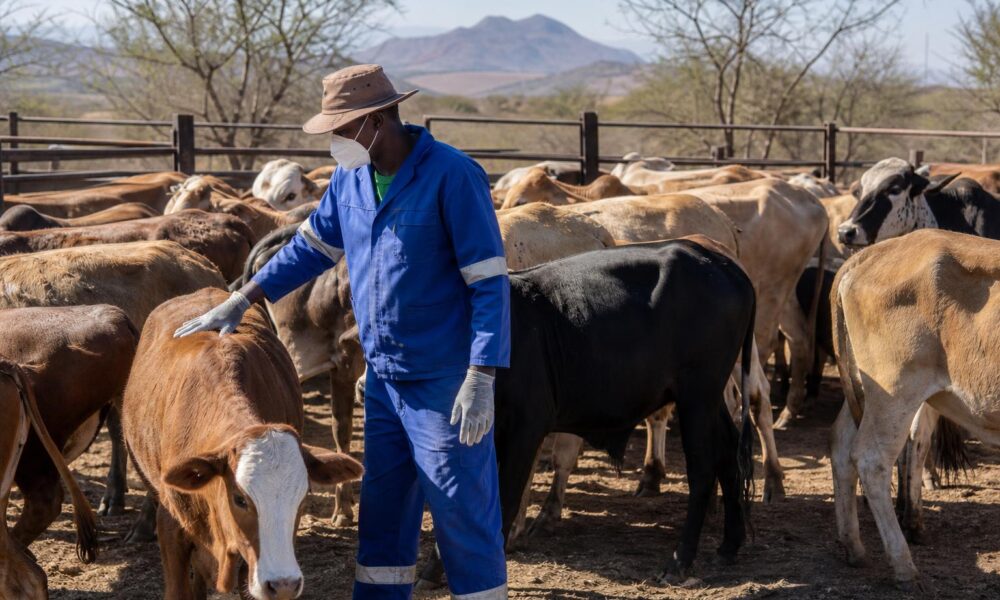
Namibia is strengthening its response to foot-and-mouth disease after outbreaks were confirmed in the //Kharas and Zambezi regions, disrupting livestock movement, meat supplies and export activity.
Table Of Content
The Directorate of Veterinary Services confirmed the disease on a commercial farm in the Karasburg State Veterinary District on September 23. Laboratory tests later confirmed infection among cattle at Kalala Island, in the Kabbe constituency of the Zambezi Region, on October 7.
Authorities have introduced surveillance operations, roadblocks, movement controls and emergency vaccination. The government has also begun construction of a veterinary cordon fence along the Orange River in the //Kharas Region and is pursuing additional containment measures in high-risk areas.
There is no established evidence that the outbreak in Zambezi spread directly from //Kharas. Authorities have intensified surveillance and begun tracing livestock movements that took place before the outbreaks were detected.
EU restrictions affect authorised export zone
The European Union temporarily suspended entry of specified fresh meat products from cattle, sheep and goats, along with certain products from other farmed and wild hoofed animals originating from Namibia’s previously authorised NA-1 export zone.
The measure also covers specified processed products, including biltong and jerky. It is not a blanket suspension of all Namibian meat imports. Some processed products may still qualify if they meet prescribed risk-reduction treatment requirements, while eligible fresh-meat consignments certified before September 23 may enter during a 90-day transitional period under applicable controls.
Namibia’s livestock exports are an important part of its economy, and the restrictions have added to the financial strain caused by domestic movement controls. Marianne Pretorius, head of communications at the Namibia Agricultural Union, said the measures were difficult but necessary and had the organisation’s support.
“For farmers in the //Kharas region, the impact is immediate and severe, but this is not only a //Kharas problem. When export markets close, every livestock producer in the country feels it,” Pretorius said.
Businesses report shortages and falling earnings
The outbreak has affected meat vendors at Windhoek’s Single Quarter market, where closures, reduced supplies and slower trading have been reported. Francisco, a vendor at the market, said the disruption came at a particularly difficult time for sellers.
“We had to close the market for several days. It was just before the weekend and month’s end. That’s when we need the money the most,” he said.
Another vendor said higher meat prices and difficulty obtaining supplies were reducing earnings. Some premium beef products were also unavailable at a supermarket butchery in Okuryangava.
Enrico De Azevedo, a supermarket store manager, said consumers had responded to concerns about supplies by buying unusually large quantities of meat. He compared the behaviour with panic-buying during the COVID-19 pandemic and warned of serious consequences for export-focused businesses.
“For those in the export business, this will have grave implications,” De Azevedo said.
Residents in Windhoek have also expressed concern about the effect on household food supplies and prices. Meat remains a staple for many consumers, while vendors say prolonged restrictions could threaten their livelihoods.
Farmers and processors absorb the impact
Government figures show the scale of the veterinary response has continued to change as inspections and testing expand. President Netumbo Nandi-Ndaitwah said that by October 5, surveillance teams had recorded 127 positive cases across 15 farms and inspected 29,313 animals on 68 farms. A ministry update covering October 6 reported 129 positive animal samples, 17 confirmed infected farms and inspections at 72 of 81 targeted farms.
At Kalala Island, 20 cattle showed clinical signs that prompted investigation. All 12 samples collected there tested positive the following day, according to the Katima Mulilo State Veterinary Office and the Central Veterinary Laboratory in Windhoek.
The Meat Corporation of Namibia reportedly placed about 400 production workers on three weeks of special leave with full pay. The arrangement was due to be reviewed on October 23, with workers’ return dependent on guidance from veterinary authorities. Meatco also reportedly paid N$31 million, about US$1.8 million, for cattle delivered to its Windhoek abattoir between August 29 and September 11.
Gert Engelbrecht, a farmer from Aranos, said movement and market restrictions were putting pressure on producers even when their herds had not been infected. He said farmers were working with veterinary authorities to control the disease and restore Namibia’s disease-free status.
The duration of domestic trading restrictions and the timing of restored market access remain unclear. The future effect on other export markets and trade arrangements is also not yet established.

No Comment! Be the first one.