
Africa’s Energy Wealth Contrasts With Widespread Electricity Gaps
Africa possesses major oil, gas and critical-mineral resources, but electricity access remains sharply unequal, according to an Al Jazeera visual explainer published during African Energy Week in...

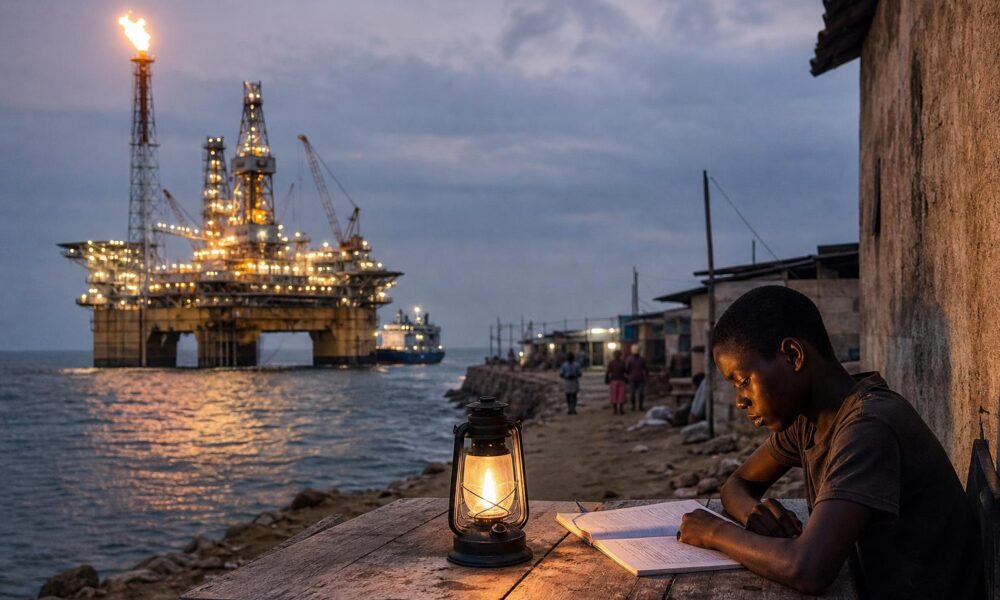
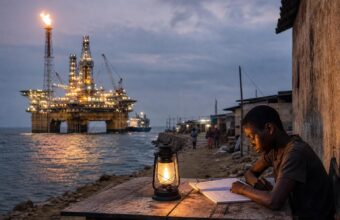
Africa’s extensive reserves of oil, natural gas and critical minerals stand in stark contrast to continuing electricity shortages across much of the continent, according to an Al Jazeera visual explainer published in the context of African Energy Week in Cape Town.
Table Of Content
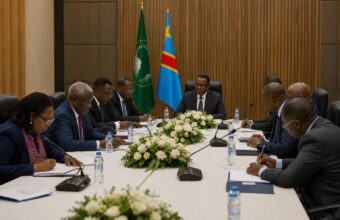
The conference, which runs until October 16, brings together energy ministers, investors and oil executives. Its focus includes investment in oil and gas, energy finance and efforts to end energy poverty.
Large oil and gas reserves
Africa holds approximately 125 billion barrels of proven crude oil reserves, equivalent to 7.2 percent of the global total. Proven reserves refer to oil that has been discovered and can be commercially extracted using existing technology, although it remains underground.
Libya has the continent’s largest proven oil reserves, estimated at 48.4 billion barrels, followed by Nigeria with 36.9 billion barrels. Together, the two countries account for nearly 70 percent of Africa’s proven reserves. Algeria has 12.2 billion barrels, Angola 7.78 billion, South Sudan 3.75 billion and Egypt 3.3 billion, according to the report.
Nigeria was Africa’s leading oil producer in 2024, contributing about 23 percent of the continent’s output. Algeria and Angola each accounted for approximately 17 percent, giving the three countries a combined share of 56 percent. Africa’s five largest producers represented more than 80 percent of its oil production, while the continent contributed 7.6 percent of global crude output.
Africa also held almost 18 trillion cubic metres of proven natural gas reserves at the end of 2023. Nigeria and Algeria controlled about 58 percent of that total. Mozambique had 2.84 trillion cubic metres, Egypt 2.21 trillion and Libya 1.51 trillion. Much of Mozambique’s offshore gas discovered during the 2010s remains largely undeveloped.
Critical minerals for new technologies
The continent is also a major source of minerals used in batteries, electric vehicles and renewable-energy systems. African countries produced 71.2 percent of the world’s cobalt and 72.4 percent of its manganese in 2025, the report says.
The Democratic Republic of the Congo supplied nearly 70 percent of global cobalt production, although some of the mineral is extracted by artisanal miners. South Africa produced nearly 38 percent of the world’s manganese, followed by Gabon with nearly 25 percent. South Africa, Gabon and Ghana together accounted for 72.4 percent of global manganese production.
Zimbabwe was Africa’s largest lithium producer in 2025, contributing 9.6 percent of global output. Madagascar, Mozambique and Tanzania together produced 222,000 tonnes of natural graphite, representing 11.9 percent of worldwide production. Graphite is used in the anodes of most lithium-ion batteries.
Uneven electricity generation and access
Renewable energy’s contribution to electricity generation differs widely between countries. Renewables supplied all electricity generated in Ethiopia and the Democratic Republic of the Congo in 2024. Uganda, Namibia and Eswatini each recorded renewable shares of more than 96 percent.
By contrast, renewables accounted for less than 5 percent of electricity generation in Algeria, Libya, Niger and Tunisia during the same year. Ethiopia’s electricity comes mainly from hydropower, led by the Grand Ethiopian Renaissance Dam on the Blue Nile. The dam began generating power in 2022 and was officially inaugurated in September 2025.
Electricity access is similarly unequal. Algeria, Egypt, Mauritius, Morocco, Seychelles and Tunisia reported universal access in 2024. Together, those countries had a population of about 215 million, or roughly 14 percent of Africa’s population.
Access was far lower in several other countries. The report lists electricity access at 5.4 percent in South Sudan, 15.6 percent in Malawi and 22.5 percent in the Democratic Republic of the Congo. Nigeria recorded access of 62.5 percent, leaving roughly 85 million people without electricity.
The World Health Organization, as cited by Al Jazeera, estimates that more than 560 million people in sub-Saharan Africa lack access to electricity. That represents about 86 percent of the global total of people without electricity. In rural areas, where access is lower than in cities, some families rely on kerosene lamps, candles or torches for lighting.

No Comment! Be the first one.