
Former FDLR Fighters Rebuild Civilian Lives at Rwanda Reintegration Centre
Former members and commanders of the FDLR are undergoing rehabilitation at Rwanda’s Mutobo centre, where they receive medical care, education, psychosocial support and assistance preparing to return...

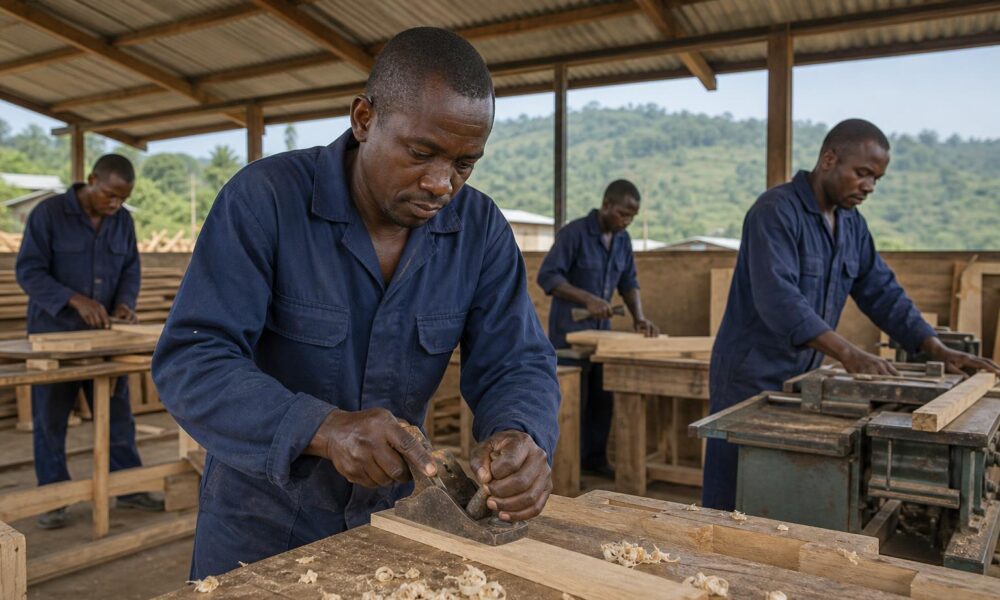
Former members and commanders of the Democratic Forces for the Liberation of Rwanda (FDLR) are returning to Rwanda and undergoing rehabilitation at the Mutobo Demobilisation and Reintegration Centre in Musanze.
The returnees have cited different reasons for leaving the armed group, including disillusionment with its ideology, contact with family members, concerns about personal safety and changing views about their future.
The FDLR emerged after the 1994 genocide against the Tutsis. Following the genocide, members of the former Rwandan armed forces and militia groups fled to what was then Zaire, now the Democratic Republic of the Congo, where the armed group operated.
The Rwandan government accuses the FDLR of carrying out attacks against Rwanda and contributing to insecurity across the border. Those allegations are presented as government claims.
Reasons for leaving
Jean Claude Hategekimana, a former FDLR captain, said he joined the group in 2018 and later fought in the area around Goma. He said that after the group was defeated, he fled to Masisi before deciding to return to Rwanda because he believed he was fighting without purpose.
“After realising that I was fighting for nothing, I decided to return to Rwanda,” Hategekimana said. He said he returned on February 24, although the year was not specified.
Major-General Anastase Munyaneza, a former commander who eventually led the FDLR’s South Kivu sector, said news about his family’s life in Rwanda made him question his continued presence in the forest. He said learning that relatives were alive, attending school and working encouraged him to consider returning.
Munyaneza said personnel from the United Nations Organisation Stabilisation Mission in the Democratic Republic of the Congo transported him from South Kivu to Bukavu and then to the Congolese-Rwandan border. He subsequently travelled to Mutobo.
Lieutenant-Colonel Idrissa Bizimana, who was responsible for ideology, propaganda and recruitment within the FDLR, said he left after losing faith in the ideology he had promoted. He said information about developments in Rwanda also influenced his decision. According to Bizimana, a MONUSCO general helped organise his return after he sent his location and intended date of departure using a GPS-equipped satellite phone.
Colonel Augustin Nshimiyimana, a former FDLR intelligence commander, said he returned in 2022 after another commander accused him of working with Rwanda following a disagreement over a mission in Bujumbura. Nshimiyimana said the accusation made him fear for his safety.
Support at Mutobo
The Mutobo centre was established in 2001 to receive members of the FDLR and other Rwandan armed groups returning from the DRC, according to Francis Musoni, secretary-general of the Rwanda Demobilisation and Reintegration Commission.
The programme provides medical care, psychosocial support, civic education, education and practical assistance designed to prepare former fighters for civilian life. Returnees can contact relatives and friends through a telephone service, while written permission may allow them to spend one or two weeks visiting their communities during rehabilitation. Transport for those visits is facilitated.
Febronie Mukankiko, a teacher at the centre, said teaching the returnees requires specialised methods because many are adults who grew up in the forest. Teachers receive additional training to help them work with the students.
The average stay at Mutobo is five months, followed by a formal discharge process. After leaving, returnees may receive financial assistance, vocational training, formal education or support to establish income-generating activities.
The Rwanda Demobilisation and Reintegration Commission also follows up with former residents to assess how they are adjusting to community life. The transition can nevertheless involve difficulties, including finding work, reconnecting with relatives and adapting to civilian society.
Musoni said the programme aims to help returnees build confidence and trust, reconnect with their families and contribute to their communities after years spent in the armed group.



No Comment! Be the first one.