
ODM Struggles to Define Its Future After Raila Odinga’s Death
Kenya’s Orange Democratic Movement is facing an internal dispute over cooperation with President William Ruto, exposing competing views about the party’s identity after Raila Odinga’s death.

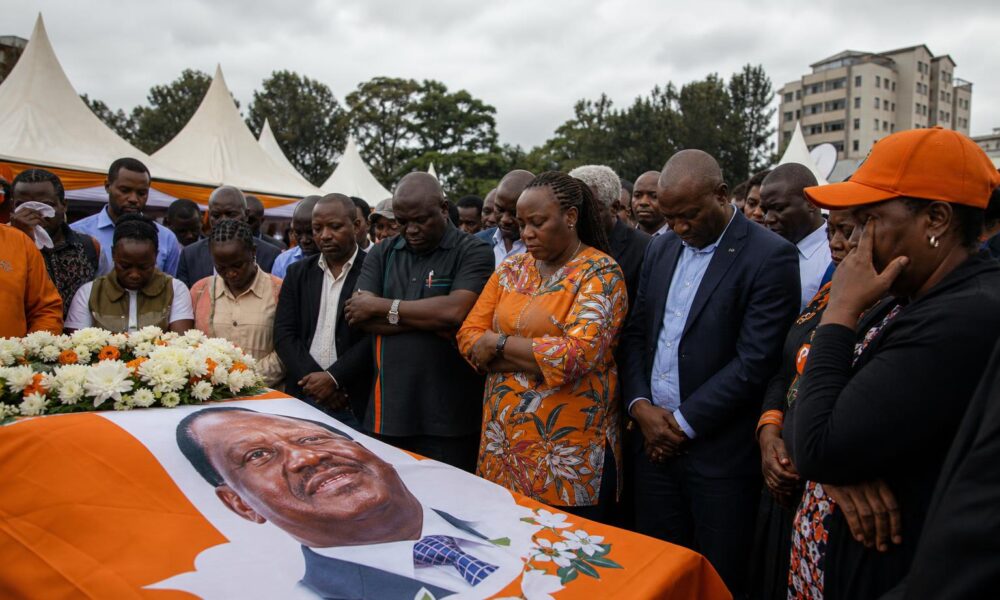
NAIROBI, Kenya — Kenya’s Orange Democratic Movement is facing a dispute over its cooperation with President William Ruto’s administration, exposing divisions about the party’s identity, independence and future one year after the death of its longtime leader, Raila Odinga.
The disagreement intensified after ODM removed Secretary-General Edwin Sifuna, who had opposed closer cooperation with the president. Catherine Omanyo, a member of Parliament, was identified as the party’s new secretary-general.
At the centre of the dispute is whether ODM can work with the government while preserving its ability to scrutinise and challenge it. The issue has become a test of how the party will operate without Odinga’s personal authority, political networks and negotiating influence.
A party searching for direction
Odinga’s death prompted tributes and commemorations of a political career associated with Kenya’s reform movements, including campaigns linked to multiparty democracy, constitutional reform, freedom of expression and social justice.
Professor Herman Manyora said Odinga’s absence had created a leadership vacuum that the opposition had not been able to fill. He described the wider opposition as being in disarray and said there was no figure around whom people could rally.
“One year after Raila’s death, he is larger than life. I think there’s a way in which people thought Raila was not going to die. We had immortalised Raila,” Manyora said.
Manyora also argued that Odinga’s cooperation with Ruto had been decisive for the administration during the nationwide protests against the Finance Bill in 2024. “What happened then was that Raila came to the rescue of President William Ruto because, had he not come to rescue Ruto, I think the government would have collapsed,” he said. The assessment remains debatable.
Odinga’s decision to work with Ruto during that period has continued to shape perceptions of ODM. The protests were driven in large part by young Kenyans and reflected anger over taxation, governance and political accountability, with many participants operating outside traditional political structures.
Questions over cooperation
Joshua Okayo, who identifies with Kenya’s Gen Z generation, said Odinga’s cooperation with Ruto left him feeling betrayed despite his respect for the former opposition leader’s long political record.
“As a Gen Z, I recognise the kind of politics he fought for. I recognise the years he put into fighting for social justice, democracy, rule of law, constitutionalism, and many good things. But I also have a spot in my heart where I feel he betrayed the generation,” Okayo said.
Omanyo defended the party’s cooperation with Ruto, saying it was based on a 10-point agreement signed by Odinga rather than personal loyalty to the late leader.
“ODM’s identity was never just a seat on one side of Parliament. It is democracy, devolution, social justice and the rights of ordinary Kenyans. Raila signed a 10-point agreement with President Ruto. That agreement, not personal loyalty, is the basis of our cooperation with the president,” she said.
She added that cooperation should not prevent ODM from speaking out when necessary. “Cooperation that cannot speak up would betray Raila’s legacy. Cooperation that delivers for Kenyans honours it,” Omanyo said.
The party’s partnership with the administration will therefore be judged by whether the commitments in the agreement produce measurable progress for Kenyans and whether ODM retains the independence to challenge government decisions. The full contents, implementation status and outcomes of the agreement have not been established.
For ODM, the dispute is more than an internal leadership disagreement. It reflects the broader challenge of maintaining a political movement built around Odinga’s legacy while deciding how closely it should work with the government he once opposed.




No Comment! Be the first one.