
IUCN Warns 96% of Coral Reef Systems Face Critical Risk
The IUCN has classified 96 percent of the world's coral reef systems as critically endangered and warned that almost all shallow-water reefs face an extremely high risk of collapse within 50 years.

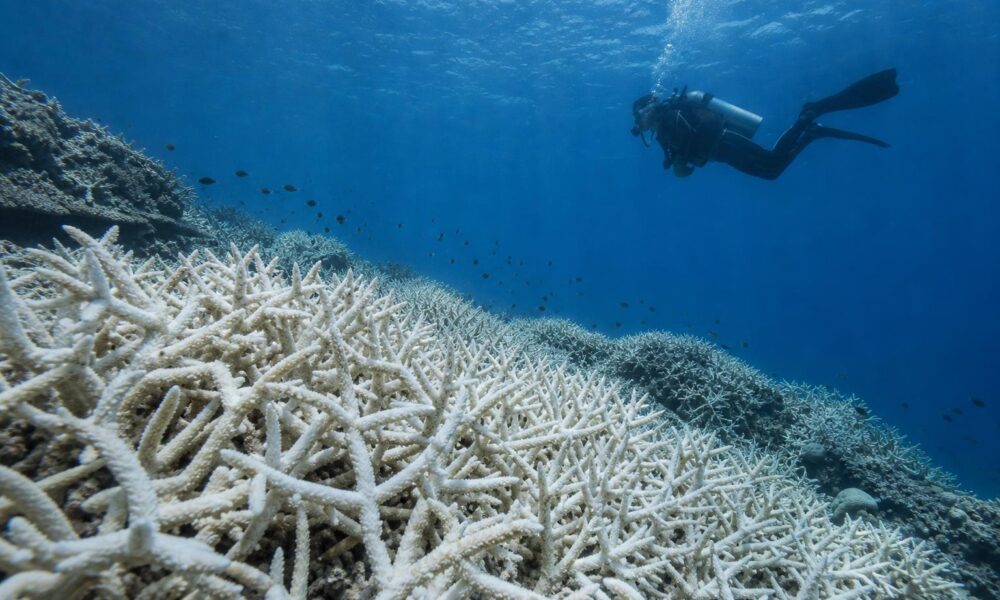
The International Union for Conservation of Nature has issued a stark warning about the future of coral reefs, classifying 96 percent of the world’s coral reef systems as critically endangered.
Table Of Content
The global assessment says almost all shallow-water coral reefs face an extremely high risk of collapse within the next 50 years. It also states that total extinction of coral reef systems is possible by 2075, although that outcome is not presented as certain.
The IUCN said reefs in most parts of the world are not yet lost, leaving room for conservation and recovery efforts in areas where resilient coral communities remain.
Assessment covers 127 reef systems
The analysis examined 127 tropical and subtropical coral systems covering 188,362 square kilometres. It used a middle-of-the-road climate scenario from a United Nations panel of climate experts, under which global temperatures are projected to rise by 2.7 degrees Celsius above pre-industrial levels by 2100.
Corals are highly sensitive to heat. Rising ocean temperatures linked to human-driven climate change can increase the frequency and intensity of bleaching events, weakening reefs and threatening their ability to recover.
Mishal Gudka, the scientific lead of the IUCN Red List of Coral Reef Ecosystems assessment, said the climate threat facing reefs is severe.
“The future threat of climate change is looming and severe, and that poses a very high risk to the survival of these ecosystems,” Gudka said.
Famous reef systems included
The assessment found that most of the world’s well-known reef systems are critically endangered. Those identified include Australia’s Great Barrier Reef, reefs in the Coral Triangle, the Mesoamerican Barrier Reef System and coral reefs in the Red Sea.
Gudka also said the emergence of a super El Nino presents an additional risk to corals. The assessment does not quantify the potential impact of such an event.
Coral reefs support about one quarter of marine species and provide seafood and tourism opportunities. They also help buffer coastlines against erosion and storms. When a reef collapses, hard corals can disappear and be replaced by algae, rubble and sponges, leaving a less diverse environment for marine life including invertebrates and reef fish such as grouper.
Resilience remains possible
Despite the findings, the IUCN said coral reefs in most parts of the world “are not yet lost”. Gudka said some surviving reefs have demonstrated an ability to recover after severe bleaching events.
“Coral reefs have shown a remarkable ability to bounce back from devastating bleaching events,” Gudka said.
She added that “pockets of surviving, resilient coral reefs can still remain in the future, so we must do everything within our reach to set them up for success.”
The warning follows a separate IUCN study published in Nature, which found that nearly 44 percent of reef-building coral species face an elevated risk of extinction because of climate change. A survey cited in the assessment also found that 84 percent of the ocean’s reefs had been affected by harmful coral bleaching during the most intense such event recorded.




No Comment! Be the first one.