
Former FDLR Officers Describe How Anti-Tutsi Ideology Endured in Eastern DRC
Four former FDLR officers have described how anti-Tutsi narratives developed in Rwanda before the 1994 genocide, survived among exiles in Zaire and later influenced the armed group's activities in...

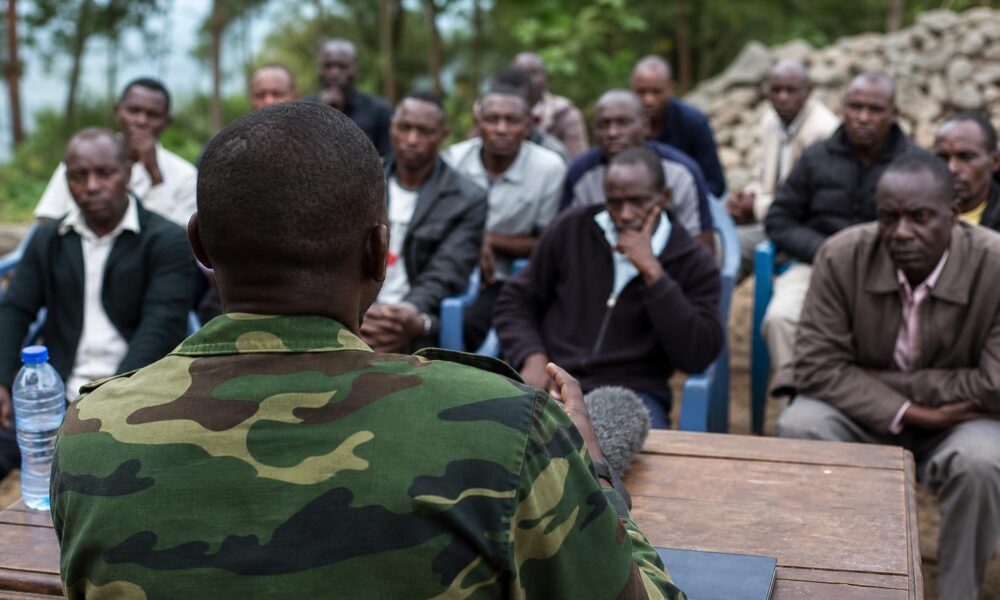
Four former senior officers of the Democratic Forces for the Liberation of Rwanda (FDLR) have described how anti-Tutsi narratives developed before the 1994 genocide against the Tutsi, continued among Rwandan exiles and influenced the group’s formation and activities in eastern Democratic Republic of the Congo.
Table Of Content
Al Jazeera reported that the former officers had defected, returned to Rwanda and undergone rehabilitation at the Mutobo demobilisation centre. Their accounts describe the transmission of an ideology through political, educational and military institutions before 1994, followed by its continuation among former soldiers and militia members in exile.
The accounts are attributed to the former officers and were not independently verified by the source.
Accounts of pre-genocide indoctrination
Anastase Munyaneza, a former FDLR major general, said anti-Tutsi ideas were present in the military. “In the army, we were taught that the Tutsi were our enemy,” he said.
Lieutenant Colonel Idrissa Bizimana, another former FDLR officer, said hostility was reinforced from childhood. “When the RPF attacked in 1990, we were told that the same Inyenzi had attacked the country. We grew up being taught to hate them,” he said. Inyenzi means “cockroaches”, a term used in anti-Tutsi propaganda.
Munyaneza said the ideology portrayed Tutsis as “snakes”, explaining that the analogy presented them as a danger that had to be killed before they could strike. The source also reported that anti-Tutsi messages were spread through schools and military structures before the genocide.
Historical background cited in the report includes the formalisation of Hutu, Tutsi and Twa identities under Belgian colonial rule through identity cards introduced in the early 1930s. The report also said Radio Television Libre des Mille Collines broadcast messages inciting violence against Tutsis, while the Interahamwe participated in massacres alongside the Presidential Guard and army, according to the UN tribunal for Rwanda.
From exile to the FDLR
After the Rwandan Patriotic Front took control of Rwanda in July 1994, former government officials, soldiers and militiamen fled into Zaire. Former members of the ex-FAR took effective control of refugee camps, especially around Goma, and resumed military activity in eastern Zaire, according to the UN refugee agency and Munyaneza.
“That was where we resumed our military activities,” Munyaneza said.
The former Rwandan soldiers and militia members continued organising in exile. Al Jazeera reported that their activities and alliances helped establish the foundations of the FDLR. Munyaneza said the organisation was formally created in May 2000 by former Rwandan army commanders and politicians, after armed groups operating in exile had adopted several names, including the Army for the Liberation of Rwanda.
He said a significant alliance emerged in 1998, when Congolese President Laurent-Desire Kabila fell out with Rwanda and sought the help of former Rwandan forces. “Kabila asked us to defeat the Tutsis who had attacked him, promising in return to help us defeat the Tutsi-led government in Rwanda,” Munyaneza said.
Alleged links and revenue in eastern DRC
The former officers also described continued relationships between the FDLR and other armed actors. Augustin Nshimiyimana, a former FDLR colonel, said the FDLR, the Armed Forces of the Democratic Republic of the Congo and Wazalendo groups lived and fought together, occupied the same positions and received the same uniforms. Those claims were not independently verified.
Emilien Mpakaniye, a former FDLR lieutenant colonel, said the organisation passed its ideology to Congolese armed groups it trained or allied with and acted as a coordinator among armed groups in eastern DRC.
Munyaneza said the FDLR raised money through roadblocks, taxes on miners and mine owners, cannabis, timber, charcoal and elephant ivory. He also said the group maintained close ties with the Congolese government and received financial and logistical support. These remain attributed claims.
The FDLR has continued to deny the genocide against the Tutsi, according to Munyaneza. Its stated political narrative describes its objective as removing what it calls “foreign Tutsi”, while Munyaneza said officers understood their mission differently. Former FDLR leader Ignace Murwanashyaka separately denied in a 2005 interview that the organisation as a whole had participated in the genocide.
Recent efforts to address the group
The FDLR remains a security concern and a source of tension between Kigali and Kinshasa. In February 2025, the UN Security Council called on the Congolese army to stop supporting armed groups, particularly the FDLR.
Under the Washington Accords signed in 2025, Kinshasa committed to neutralising the FDLR, while Rwanda agreed to lift its defensive measures. In July 2026, the Congolese government announced that an FDLR faction had signed a protocol covering disarmament, demobilisation and cantonment.
Rwanda rejected the arrangement and accused Kinshasa of evading its commitments. The implementation of the protocol, and whether it would lead to wider FDLR disarmament, remained uncertain.



No Comment! Be the first one.