
Microsoft Outage Exposes Gaps in African Banks’ Digital Continuity Plans
A Microsoft outage that affected users in 74 countries disrupted email and related operations at African banks, a Nairobi hospital and public-sector organisations, raising concerns about the...

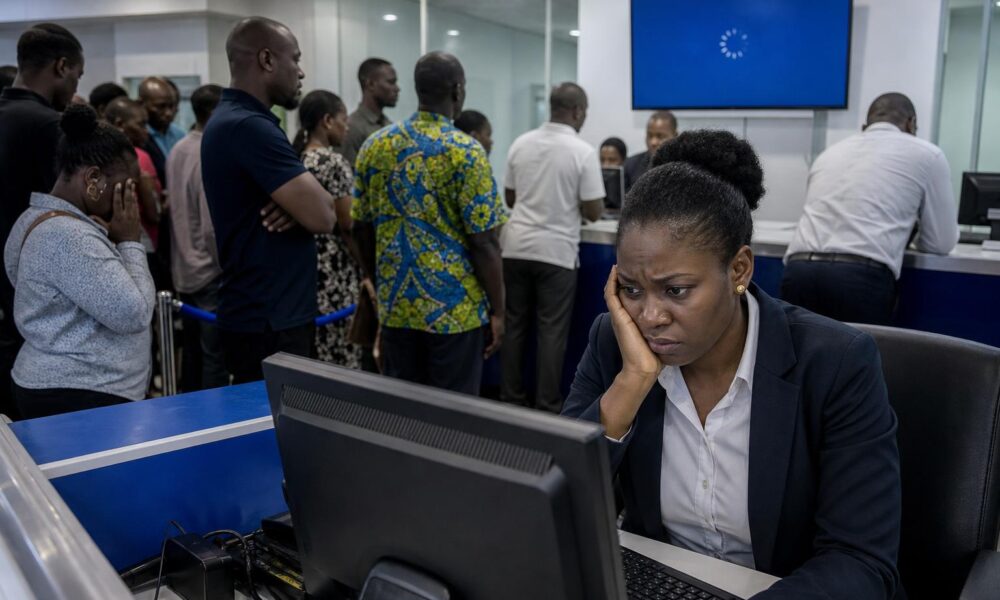
A Microsoft outage disrupted email and other business operations at organisations across Africa, highlighting the dependence of banks and public institutions on external technology providers.
The disruption began at about 4 p.m. GMT on Thursday and affected users in 74 countries. Reports of problems increased between 8 a.m. and 11 a.m. local time on Friday, as offices across Africa opened.
Downdetector counted the incident as the largest outage across all services it monitored in 2026.
Banks turn to alternative channels
Kenyan lenders including Equity, Standard Chartered, Stanbic, UBA, I&M, Loop and NCBA’s digital bank issued notices about the disruption. Wema Bank and Stanbic IBTC also told customers in Nigeria that their email services were experiencing problems.
In Kenya, the lenders named in the reports did not indicate interruptions to payments or mobile banking. However, email-dependent activities such as loan applications, bank statements and customer complaints were affected.
Some banks directed customers to phone lines, WhatsApp, Instagram or relationship managers. Wema advised customers with urgent requests to use its phone lines, WhatsApp and Instagram.
More than 15 hours passed between Microsoft acknowledging the problem and some lenders informing customers where they could seek assistance, according to the report.
The use of WhatsApp provided an immediate alternative but did not remove banks’ reliance on outside technology companies. WhatsApp is operated by Meta, meaning that shifting customer communication there transferred dependence to another major platform rather than creating a fully independent backup.
Impact beyond banking
At Avenue Hospital in Nairobi, patients faced delays because insurance approvals depended on systems running on Microsoft. The hospital’s insurance-approval process was affected while those systems were unavailable.
In South Africa, Absa, Eskom, FlySafair and the SABC were among the organisations reported to have been affected. The South African Revenue Service also warned taxpayers that the outage was affecting its services.
The immediate consequences described were mainly delays lasting several hours. Clinics remained open, bank branches continued serving customers and people used call-centre staff, receptionists and bankers handling WhatsApp messages to maintain operations.
Microsoft’s Copilot service also went down on Friday.
Questions over resilience
Microsoft attributed the outage to settings applied to servers after an update. The company said a process used to establish secure connections became overwhelmed, causing servers to stop handling requests, and that it began rolling back the change.
The incident has prompted renewed scrutiny of business-continuity arrangements at African banks. The report argues that many institutions relied on Microsoft for core communication and on other external platforms for backup contact with customers, leaving their fallback procedures exposed when a major provider failed.
It also questions whether continuity plans that direct customers to a phone number or another platform provide sufficient resilience for services increasingly built around cloud systems and artificial-intelligence tools.
The report calls on bank boards and central banks to use the outage to review how their fallback procedures work in practice, rather than relying only on plans filed with regulators or approved by auditors.





No Comment! Be the first one.