
Fuel Shortages Disrupt Daily Life and Drive Up Costs in Sudan
Sudan’s worsening fuel shortage is disrupting travel and work, while higher transport costs and expensive imports push up prices for food and other essentials.

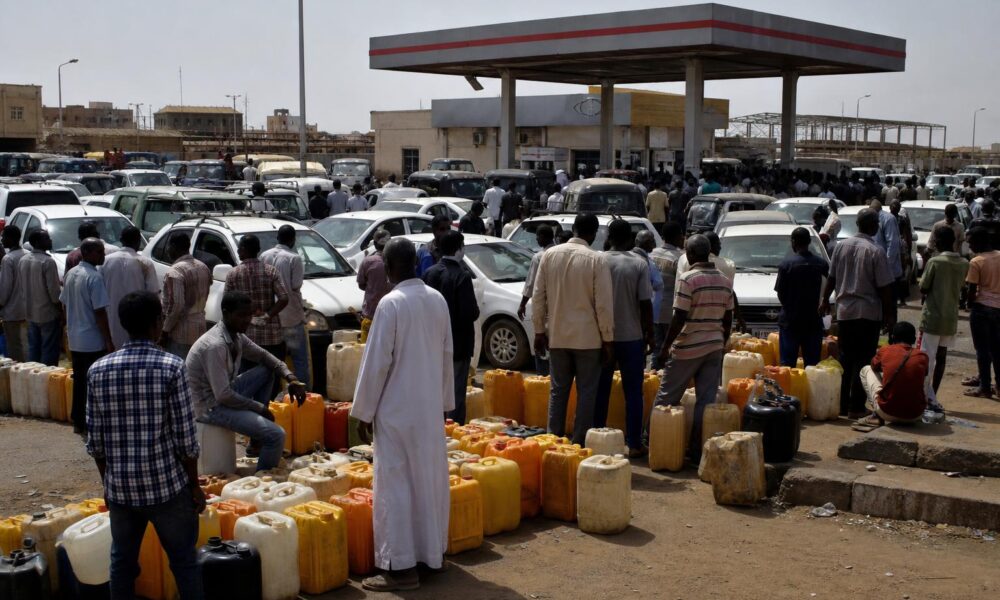
Fuel shortages are increasingly disrupting daily life and economic activity across Sudan, with long queues forming at the few petrol stations that remain open.
Table Of Content
Residents in Khartoum say obtaining petrol has become a daily struggle, as limited supplies and rapidly changing prices affect travel, work and household spending.
Osman Faisal, a Khartoum resident, said he began waiting for petrol at 7am and had remained in the queue for more than two hours when he spoke. “I don’t know how much longer I’ll have to wait. I haven’t been able to fill up for a week,” he said.
Faisal also reported that gasoline was selling for about $58 per gallon, an increase of more than $8 over several days. The price and increase were given as his account of conditions at the time.
Refinery and oil-field disruptions
Domestic fuel production has been severely affected by drone attacks targeting infrastructure and energy and fuel sources. The Khartoum refinery has closed, while several oil fields are offline.
The refinery previously supplied about 70 per cent of Sudan’s national fuel needs. With the facility closed and oil production disrupted, the country is relying almost entirely on imported fuel.
The shutdowns follow clashes between the Sudanese Armed Forces and the Rapid Support Forces, which began in April 2023 and have forced major oil fields to close, according to the source report.
Transport and food costs rise
The shortage has increased transportation and delivery costs. Those higher expenses are feeding into the prices of food and other daily necessities, adding pressure to people already facing the effects of the wider economic crisis.
“Every morning when we wake up, we are forced to make a choice – go to work or queue for petrol,” said Adnan Osman, another Khartoum resident.
Petrol station operators are having to recalculate their rates repeatedly and frequently shut down pumps, reflecting the uncertainty around supply and pricing.
Alrazy Mohamed, a resident, said the cost of basic food items was also increasing. “The prices of food, including vegetables and bread, are also on the rise. The life of everyone in this country is being severely affected,” Mohamed said.
Pressure from global prices and currency weakness
Sudan’s import bill has also been affected by international energy market conditions. Conflict in the Middle East since late February has contributed to significant fluctuations in global energy prices.
At the same time, depreciation of the Sudanese pound against the US dollar has made imported shipments more expensive. The combined pressure is raising the cost of bringing fuel into the country and contributing to higher prices throughout the supply chain.
The worsening shortage is affecting the economy and adding to Sudan’s humanitarian crisis, as transport difficulties and rising prices make it harder for residents to access fuel, food and other necessities.


No Comment! Be the first one.