
China Party Plenary Highlights Discipline as Commentary Draws Lessons for Sierra Leone
The Fifth Plenary Session of the Communist Party of China’s 20th Central Committee reviewed Party self-governance, official oversight and future planning, while commentary on the meeting examined...

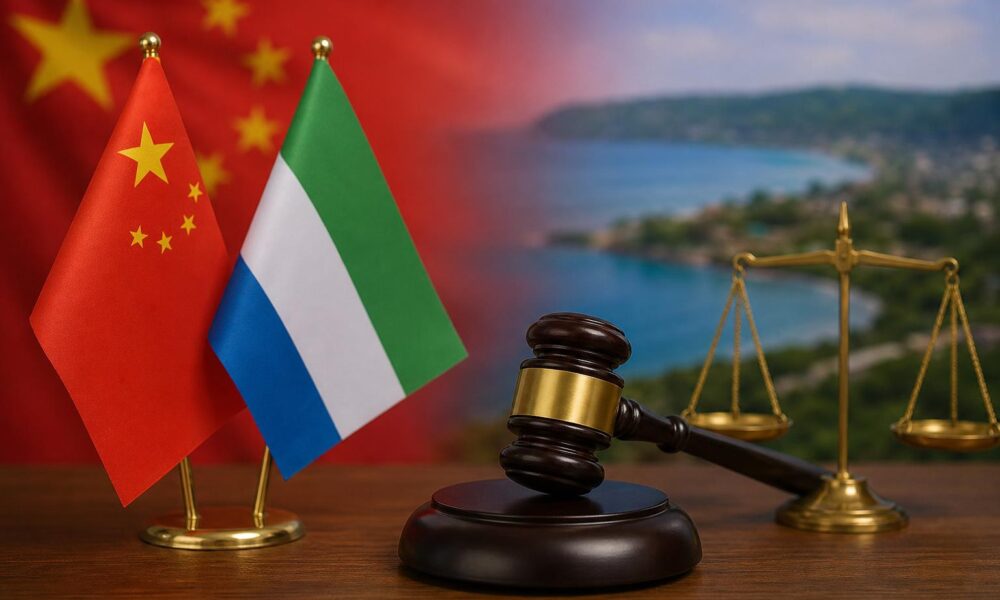
The Fifth Plenary Session of the Communist Party of China’s 20th Central Committee met in Beijing in late October, reviewing the work of the Political Bureau since the previous plenary session and assessing progress in Party self-governance.
Table Of Content
According to a commentary published by The Calabash Newspaper, the meeting also set rules for the recruitment, appraisal and supervision of officials and fixed the 21st National Congress for 2027.
Focus on official conduct and oversight
The session’s stated theme was “Persevering with Full and Rigorous Party Self-Governance.” The commentary presents the meeting as part of a broader emphasis on discipline, internal correction and institutional accountability.
It describes the standard for officials as having “no audacity, no opportunity and no desire to commit corruption.” The commentary also highlights the phrase “Whole-process management”, referring to controls that span entry standards, rotation, appraisal, audit and exit throughout an official’s career.
The source does not provide the full text of the session’s communique or rules. It presents the governance implications as analysis rather than as independently verified findings.
Possible relevance to Sierra Leone
The commentary argues that Sierra Leone cannot import China’s political arrangements, but that certain administrative disciplines can operate within Sierra Leone’s constitutional system. These include traceable spending, separate approvals, registers and audit trails.
It links those practices to the work of Sierra Leone’s Anti-Corruption Commission and Audit Service Sierra Leone, which the source says have operated for nearly two decades and depend on ministries responding to their questions. The commentary’s central argument is that enforcement, procedural safeguards and professional culture must work together to support anti-corruption efforts.
“A public post is a public trust,” the author writes, presenting the principle as applicable to public administration in Sierra Leone.
Governance and development cooperation
The source also connects institutional continuity with development planning. It says projects need to withstand changes of minister and notes China’s use of five-year plans to maintain continuity, while cautioning that China’s growth owes more to economic reform and investment than to any single institutional device.
At the 2024 Forum on China-Africa Cooperation summit, China and African states agreed to a three-year programme covering 2025 to 2027. The areas identified in the commentary include trade, industrial chains, ports and roads, agriculture, health, skills and people-to-people exchange.
The source says implementation is a joint responsibility and depends partly on the institutional capacity of receiving countries. In Sierra Leone, it points to ministries and public agencies that test exports, issue documents and maintain records needed to support confidence among buyers and partners.
Growing Sierra Leone-China links
Sierra Leone and China established diplomatic relations in 1971. In remarks reported in August 2026, China’s ambassador Zhao Yong said two-way trade reached USD 2.3 billion in 2025, almost 30% higher than the previous year.
The commentary describes tariffs on Sierra Leonean goods entering China as zero and says discussions have covered palm oil, coffee and cocoa. It also reports that more than 6,000 Sierra Leoneans travelled to China in 2025, identified in the source as the China-Africa Year of People-to-People Exchanges.
The author says they studied national development at the Institutes of South-South Cooperation and Development and Peking University. From that experience, the commentary argues that durable cooperation requires rules, records and institutions capable of carrying plans beyond the officials who initially sign them.



No Comment! Be the first one.