
Dakar Youth Olympics close with breakdancing finals amid wider tensions
The Dakar Youth Olympics ended in Senegal with breakdancing finals, as young athletes competed against a backdrop of political tensions, colonial history and logistical challenges.

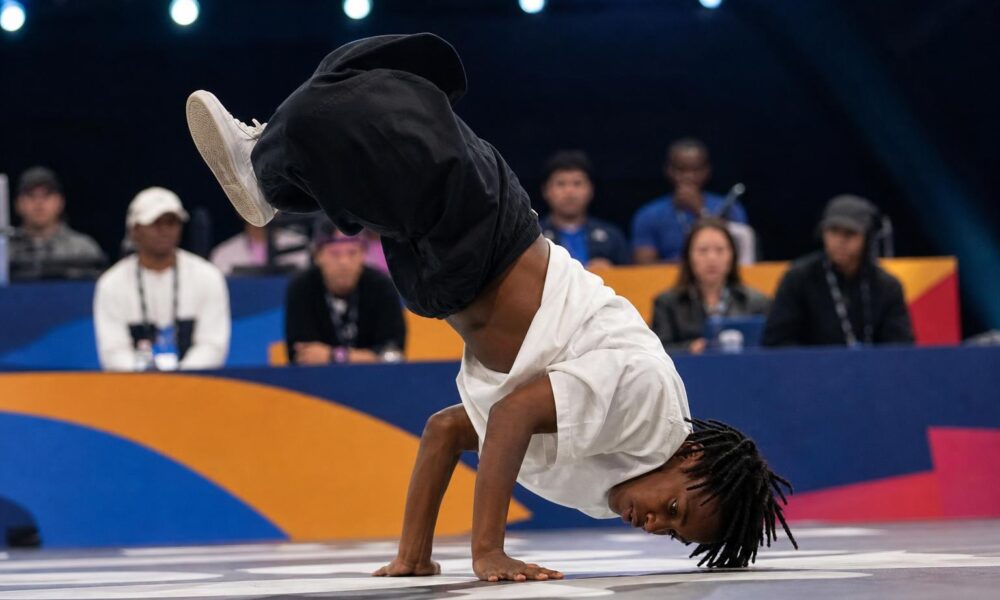
The Dakar Youth Olympics concluded in Dakar, Senegal, after two weeks of competition, with breakdancing serving as the final event of the Games.
Table Of Content
Japan’s Hiyo won the women’s breakdancing gold medal, followed by Ukraine’s Nikastar with silver and Spain’s Mini Ali with bronze. The competition brought together teenaged breakers and offered a closing display of sport and creativity at an event that also drew attention to political and historical issues.
China leads medal table
China finished at the top of the medal standings with 18 gold medals. Japan placed second with 11, while Russia was third with eight. Senegal ended the Games in sixth place with five gold medals.
Senegal became the first African country to host an Olympic event, according to the source report. France’s development agency lent the country 80 million euros, or $88 million, for sporting facilities connected to the Games. Before the competition, 80 Senegalese athletes travelled to China for training, an effort described in the source report as part of China’s soft diplomacy.
Russian swimmer Serafima Fokina, 17, won gold and sang Russia’s national anthem during a medal ceremony. The source report said the Russian flag and anthem had returned to an Olympic event for the first time since Russia was suspended following its full-scale invasion of Ukraine in 2022.
Sport alongside political tensions
Israel competed at the Games, while a Senegalese man was arrested over a video opposing Israel’s participation. Authorities described the video as threatening, although the source report did not provide the man’s identity, details of the charge or the outcome of the case.
Palestinian swimmer Alma Shaat spoke about the importance of representing Palestine and addressed children in Gaza. “She’s not doing it only for herself, but she’s doing it for the people in Gaza and in Palestine,” Shaat said.
She added: “Any little girl in Palestine right now, specifically Gaza, I would tell her … to continue following her dreams.”
The International Olympic Committee has maintained that political neutrality is central to the Olympic spirit. It also said that “Youth athletes should not be held accountable for the actions of their governments,” explaining its position on allowing young competitors to take part despite political conflicts.
During the breakdancing finals, Chinese and Taiwanese teenagers competed in the same arena. One spectator remarked, “Imagine if their leaders could do the same.”
Access and history in focus
The Games faced practical difficulties involving heat, accommodation, access and transport. Athletes stayed in university dormitories at the Olympic village without air-conditioning. Some events sold out, while transport was costly, limiting access for some spectators.
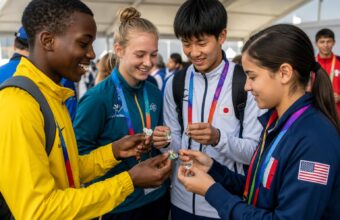
Neighbourhood sports activities offered another way for residents to join the celebrations. Athletes also used Instagram and TikTok to share their experiences and reach audiences beyond television networks.
The event also prompted reflection on Senegal’s colonial history. A statue at Dakar railway station depicts two bronze soldiers: Demba, an African figure representing colonial troops who fought and died for France during World War I, and Dupont, a French figure.
Dupont rests an arm on Demba’s shoulder. While the gesture is presented as one of fraternity, some view it as an expression of colonial paternalism.
At her final news conference of the Games, Kirsty Coventry said: “I am so proud. I’m so grateful.”

No Comment! Be the first one.