
Zimbabwe platinum communities say mining wealth has not improved basic services
Residents in Zimbabwe's platinum-producing areas say mining revenues have not delivered adequate infrastructure and essential services, despite the sector's strong export performance.

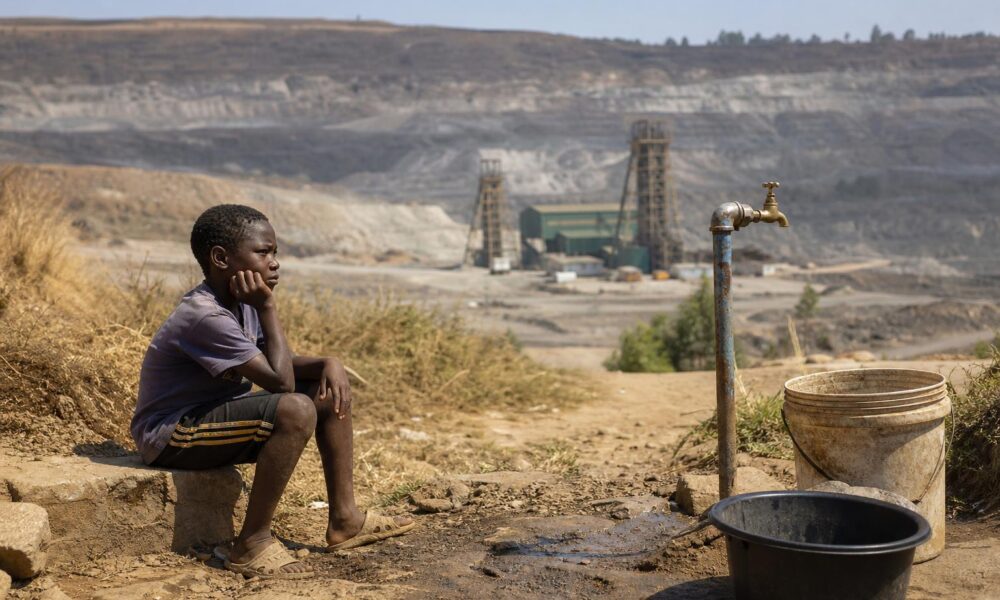
Residents in communities surrounding Zimbabwe’s major platinum operations say mining wealth has not translated into reliable roads, schools, water supplies and other basic services.
Table Of Content
The concerns have emerged as the country’s mining sector records strong export earnings. Zimbabwe has the world’s second-largest known deposits of platinum group metals after South Africa, and mining accounts for about 75 percent of the country’s exports and 14.5 percent of gross domestic product, according to the United States International Trade Administration.
John Musekiwa, then-president of the Chamber of Mines of Zimbabwe, said the sector generated a record $8.5 billion in export earnings in 2025, compared with $5.9 billion the previous year. The increase was attributed to strong output and favourable prices, particularly for gold and platinum group metals.
Platinum prices reached an all-time high of $2,923 an ounce on January 26, according to the World Platinum Investment Council.
Residents seek roads and schools
In Mhondoro-Ngezi, where Zimplats operates mines, concentrators and processing facilities, residents and local officials described gaps in education and transport infrastructure.
Al Jazeera saw pupils at Turf Primary School studying under trees during a visit on September 7. Emmah Chikwai, a councillor for Ward 3, said children from Jompani, Majoki, Maleti and Makwavarara walk between 15km and 25km to attend Musinambi Secondary School.
“My appeal is for the mines to assist in setting up a satellite secondary school in Makwavarara,” Chikwai said.
Ernest Denhere, headman of Denhere village in Ward 3, called on Zimplats and other mining companies to build a road linking Kadoma and Kwekwe with Turf, Benhura, Mamina, Murambwa and Kadhani, and connecting to the Harare-Masvingo highways.
“We need to see a lasting legacy for our communities,” Denhere said.
Some residents also described economic hardship. Sakina Lice, who collects plastic, said the work supports her family of 11 children and nine grandchildren. She said reselling the material can earn her about $20 a month and called for mining companies to support projects for women.
Concerns over water and relocation
Residents near the Ngwazani River alleged that sewage from the mining area had entered the waterway, affecting its use for household activities and small gardens. The allegations were not independently verified in the source.
Edson Mabure, whose family was relocated when the mine expanded, said his new village lies across the river from the mining area. “From our new village, I cross the Ngwazani River, which is now flooded with sewage coming from the mine,” he said.
Agnes Handidikundiona said the water was previously used for washing clothes and watering gardens. She also said flooding sometimes prevents children from reaching school and called for a footbridge over the river.
Nhomboka Kurebwa Javangwe, a Ward 11 councillor, said the population had grown as mine workers and their families moved into the area, increasing pressure on available facilities. “We do not have direct access to the mine to raise the concerns of our people,” Javangwe said.
Unki outlines community spending
In Shurugwi, residents’ representatives also called for greater investment in local infrastructure. Bulle Madzitire, chairman of the Shurugwi Residents Association, urged Unki Platinum Mine to help provide classroom blocks, water and sanitation facilities and roads.
Unki said it had invested an average of $1.5 million a year in community development over the previous five years, covering education, healthcare, water and sanitation, agriculture and infrastructure.
Evelyn Mawimba, Unki’s public relations manager, said the company had built 63 boreholes, supported 32 schools through its STEP-UP programme and contributed $2.75 million towards land purchases and development of the Impali housing estate.
Mawimba also said Unki paid about $130,000 a year in municipal levies to Shurugwi Town Council and contributed about $850,000 annually to Tongogara Rural District Council.
Residents in Shurugwi and Zvishavane have nevertheless called for further infrastructure investment, reflecting wider concerns that local services have not kept pace with mining activity.
Mimosa Platinum Mine did not respond to Al Jazeera’s questions despite several attempts to contact the company. Hama Saburi, Zimplats’ head of corporate affairs, said he would respond but had not done so by publication.





No Comment! Be the first one.