
Sierra Leone Intensifies Ebola Checks at Borders and Airport
Sierra Leone has increased Ebola surveillance at Freetown International Airport and official land crossings after reports of seven cases, including one death, in Kenya.

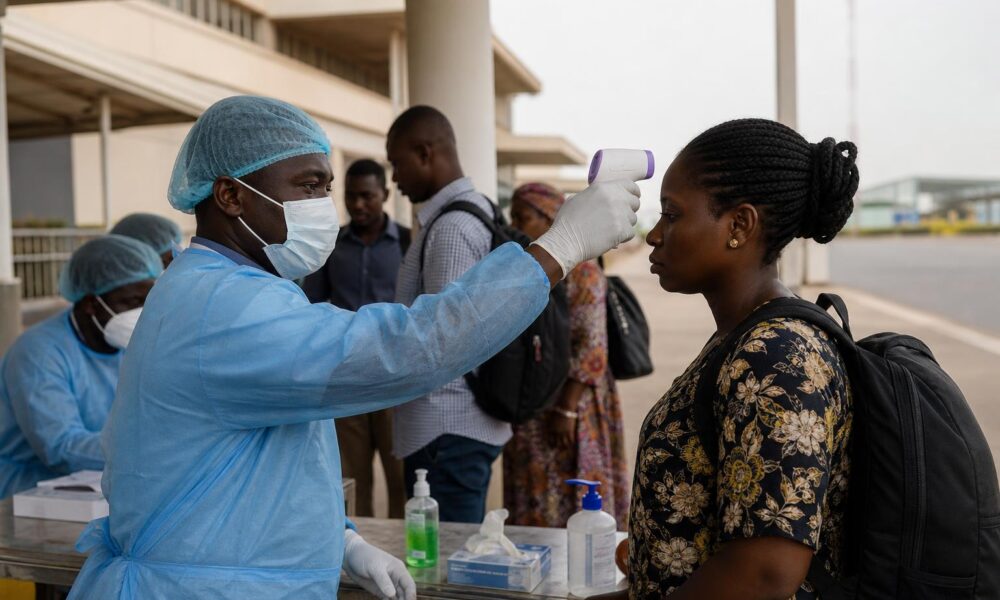
Sierra Leone has stepped up Ebola surveillance and preparedness at its airport, land borders and other points of entry following reports of cases in Kenya.
The National Public Health Agency announced the measures in a public notice issued on 18 October 2026. The agency said it was working with the Ministry of Health, the Sierra Leone Civil Aviation Authority and other relevant institutions to strengthen monitoring and prevention activities.
Enhanced screening at entry points
Health screening and monitoring procedures have been reinforced at Freetown International Airport and official land border crossings. Travellers arriving from Kenya, the Democratic Republic of the Congo and other affected areas have been advised to monitor their health for 21 days after entering Sierra Leone.
The agency also urged travellers to cooperate with Port Health officials and provide accurate information about their health, recent travel and any possible exposure. Anyone who develops symptoms after travelling from an affected country, or after contact with a suspected Ebola patient, should call Sierra Leone’s national emergency toll-free number, 117.
Travellers entering or leaving Sierra Leone must also complete the official online health declaration within 72 hours before travelling.
Reported cases in Kenya
The National Public Health Agency said reports from Kenya indicated seven confirmed Ebola cases, including one death. Kenyan health authorities reportedly announced four additional cases on 17 October, involving three healthcare workers who treated the first patient and a relative of that patient.
According to the information cited by the agency, the reported infections were the first documented instances of person-to-person transmission within Kenya. Kenyan authorities indicated that the affected individuals were already in quarantine and that there was no current evidence of widespread community transmission.
The reported cases have been linked to the ongoing Ebola outbreak in the Democratic Republic of the Congo. The National Public Health Agency said that outbreak involves the Bundibugyo strain, for which no vaccine has been specifically approved.
Public health advice
Healthcare workers have been instructed to follow infection prevention and control procedures, use appropriate personal protective equipment and report suspected cases. The public has been advised to maintain good hygiene, avoid contact with bodily fluids or contaminated belongings and refrain from handling the bodies of people suspected to have died from Ebola.
Ebola symptoms generally appear between two and 21 days after exposure. Possible symptoms include sudden fever, severe weakness, headache, muscle pain, sore throat, vomiting, diarrhoea and abdominal discomfort. Bleeding can occur in some patients but is not always present.
The agency said early detection, prompt medical care and effective infection prevention remain important to limiting transmission. It urged people who know they have been exposed to an Ebola patient to report the exposure immediately, whether or not they have symptoms.
Brigadier General Professor Foday Sahr reaffirmed the Government of Sierra Leone’s commitment to disease surveillance, early detection, emergency preparedness and coordinated response mechanisms. The agency also said it would continue monitoring developments in affected countries and provide updates.
It appealed to the public to remain calm, avoid rumours and misinformation, and rely on verified information from the National Public Health Agency and the Ministry of Health. “Early reporting saves lives. Stay alert, follow health guidance and call 117 if you suspect Ebola,” the agency said.




No Comment! Be the first one.