
Christina Koch Links Space Exploration to Cooperation and Lessons from Ghana
American astronaut Christina Koch says her time in space and a study-abroad experience in Ghana shaped her views on shared responsibility, diversity and international cooperation.

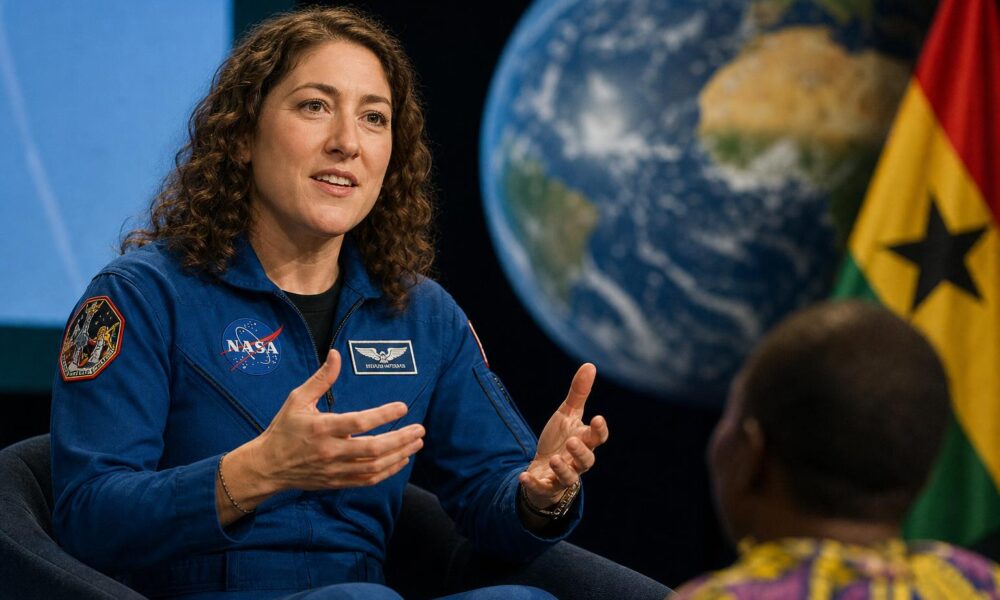
American astronaut Christina Koch has used her experience in space and her connection with Ghana to underline the importance of cooperation, diversity and shared responsibility in humanity’s future beyond Earth.
Table Of Content
Koch was awarded the Princess of Asturias Award for Concord in Spain. On the sidelines of the ceremony, she spoke to Africanews about her time aboard the International Space Station, the Artemis mission and the lessons she drew from seeing Earth from space.
A changed view of Earth
Koch said observing Earth from orbit altered the way she understood humanity and the planet’s vulnerability. The experience, she explained, highlighted both the fragility of Earth and the responsibility shared by people across national borders.
She also described being struck by the darkness surrounding the planet. In reflecting on her return from space, Koch said people should not take what they have for granted and should recognise their collective ability to make responsible choices.
Her preparation for spaceflight included studying possible risks in detail and mentally rehearsing how she would respond to different situations. That process, she said, helped her prepare for fear and uncertainty.
Ghana and a broader understanding of happiness
Koch said her connection with Africa began during a study-abroad exchange in Ghana. She described the experience as her first major shift in perspective and said returning to Ghana challenged assumptions she had carried from the United States.
The experience also influenced her understanding of happiness. Koch said she met people in Ghana who appeared happier than some people in the United States who possessed more material goods. “Happiness is a choice that we make,” she said, adding that it is rooted in appreciating the present rather than in material wealth.
Cooperation in a competitive space sector
Koch argued that collaboration should remain central even as space exploration becomes more competitive. She pointed to the International Space Station as an example of countries contributing satellites, modules, astronauts, science and technology to a shared effort.
She also discussed the Artemis Accords, which aim to establish common standards for responsible and sustainable exploration. Koch said hundreds of countries have contributed to the science and technology development connected with the work discussed in the interview.
Describing the value of the accords, she said countries should be asked what strengths and capabilities they can contribute so that exploration can advance as a team.
Diversity and the future of exploration
Koch said diversity is important to spaceflight because teams made up of people with different backgrounds and ways of thinking are better placed to identify solutions, reduce risk and avoid failures of imagination.
She said she hopes to support the next generation of astronauts and contribute to future NASA missions in technical ways. Koch is also focusing on her family and restoring a sailboat with special significance to them.
Koch is described as the first woman to have travelled around the Moon. Her reflections in Spain placed that achievement within a wider argument for international partnership and inclusive participation in future missions.




No Comment! Be the first one.