
Lagos Fashion Week Links African Heritage with Fashion Industry Growth
Lagos Fashion Week brought together African design, artistic experimentation and industry-focused discussions on creating a more sustainable and commercially viable fashion sector.

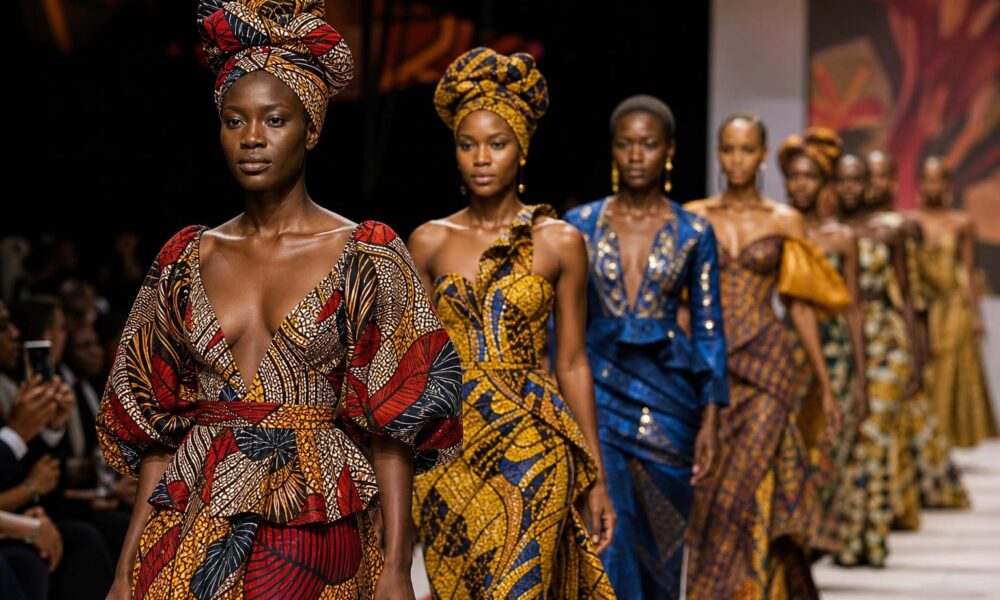
Lagos Fashion Week presented African fashion as both a vehicle for cultural expression and a platform for strengthening the industry behind it, with designers combining heritage, performance and new creative approaches during the five-day annual event.
Table Of Content
The runway presentations featured bold looks and storytelling that reflected the diversity of African design. Alongside the shows, conversations examined issues including business financing, intellectual property rights and worker welfare.
Fashion meeting art and performance
On the final day, Bubu Ogisi presented a show that brought together performance, installation and spirituality. Her label, IAMISIGO, explores the space between fashion and art, producing handcrafted, one-of-a-kind pieces with materials sourced across Africa.
Ogisi said the work was intended to challenge established approaches. “I think we’re just showing people how to sort of disrupt and disassociate yourself from the status quo,” she said. “Strategies have already been in place but also can be created afresh, so I think that’s what we’re also presenting to everyone.”
The presentation illustrated the wider character of the event, where garments were used not only as clothing but also as elements of visual storytelling and artistic exploration.
A distinctive visual language
Hubert Crabieres said the event stood out for its use of colour and the architectural construction of its garments. He contrasted the visual approach with what audiences might commonly see in Europe.
“What I found incredible here, first of all, is the use of colour, which I think is quite different from what we might be used to seeing in Europe,” Crabieres said.
He added that the colours and construction of the garments were “much more expressive and not necessarily at all about achieving something very minimal.” He said the approach reflected his experience of Lagos, where “all our senses are constantly being stimulated.”
The event’s scale and scope were presented as evidence of Africa’s growing influence on the global fashion industry. Lagos Fashion Week also celebrates local brands and provides them with a market.
Focus on a stronger industry
Beyond the runway, the event addressed the conditions needed for fashion businesses and creative teams to develop over the long term. Its discussions connected financing, intellectual property protection and worker welfare with the broader goal of making the industry sustainable and commercially viable.
That focus placed the creative work within a wider industry context. The designers’ originality and cultural references were central to the shows, while the accompanying discussions considered how the people and businesses behind those designs could be supported.
Amina Ladymya, a Senegalese content creator and designer based in Milan, said the work at Lagos Fashion Week carried an emotional force she believes is missing from certain Western luxury brands.
“Right now, when we see with [certain Western] luxury brands what is happening, there is that lack of ‘wow,’” Ladymya said. She described the Lagos presentations as offering the feeling of seeing something that can “really touch you inside,” adding that the designers were highly talented.
With its combination of heritage, experimentation and industry debate, Lagos Fashion Week positioned African fashion as a creative field with both cultural significance and commercial ambitions.





No Comment! Be the first one.