
ICJ set to rule on Myanmar genocide case over Rohingya crackdown
The International Court of Justice is scheduled to deliver its verdict on whether Myanmar committed genocide against the Rohingya during the 2017 military crackdown.

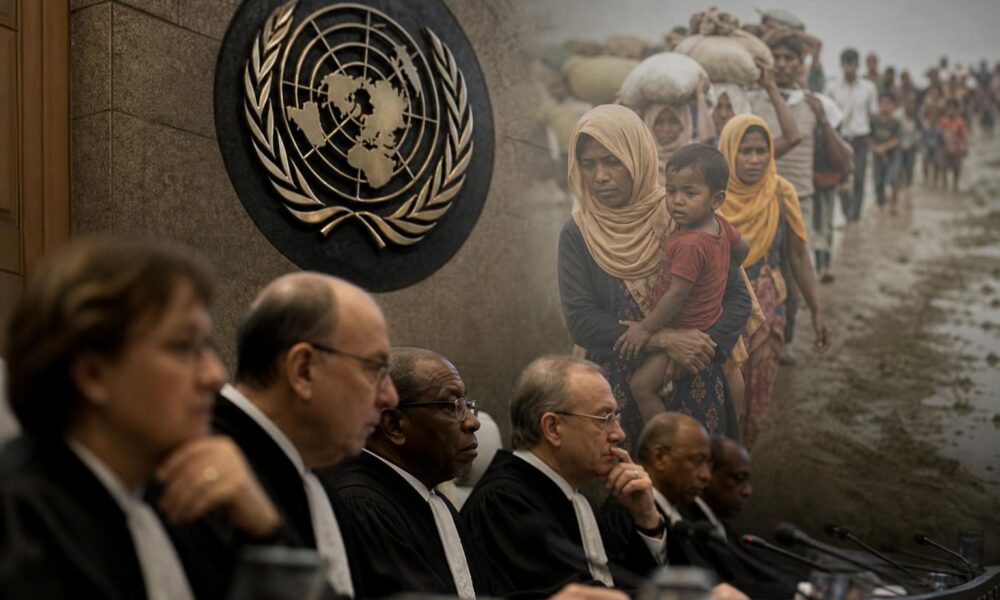
The International Court of Justice is scheduled to deliver its verdict on Thursday in a genocide case brought by The Gambia against Myanmar over the military crackdown on the Rohingya in 2017.
Table Of Content
The judgment in The Hague will determine whether Myanmar, as a state, violated the 1948 Genocide Convention by committing genocide against the Rohingya Muslim population. It will not decide whether individual soldiers or commanders are criminally guilty.
The ruling would be the court’s first judgment on the merits of a genocide case in more than a decade. The case is also being closely watched for its possible effect on four other genocide cases pending before the ICJ.
Competing accounts of the 2017 operation
The Gambia, which filed the proceedings in November 2019 on behalf of the 57-member Organisation of Islamic Cooperation, says Myanmar sought to destroy the Rohingya during its military campaign in Rakhine State.
Myanmar has rejected that accusation. Its position is that the military was carrying out a legitimate counterterrorism operation against fighters from the Arakan Rohingya Salvation Army after attacks on police posts, rather than targeting the Rohingya population as a whole.
UN investigators have reported that soldiers destroyed hundreds of villages, carried out mass killings and repeatedly committed rape and gang rape against Rohingya women, girls and boys. The investigators said the sexual violence indicated genocidal intent.
Under the Genocide Convention, the court must establish not only that prohibited acts occurred but also that there was a specific intention to destroy, wholly or partly, a national, ethnic, racial or religious group.
Legal proceedings and possible remedies
In January 2020, the ICJ ordered Myanmar to take emergency measures to prevent genocidal acts. Two years later, judges ruled that The Gambia could bring the case because both countries are parties to the Genocide Convention.
Hearings on the merits took place in January, with seven states, including Canada, France and the United Kingdom, backing The Gambia.
The Gambia is seeking orders requiring Myanmar to support the safe return of displaced Rohingya, provide compensation and replace or rebuild destroyed homes and property. It remains uncertain whether the court will grant those requests, in full or in part, and how any order would be implemented.
Michael Becker, an expert cited in the case’s discussion, said a genocide finding could formally recognise the harm suffered by the Rohingya but might have limited short-term impact on people facing violence and displacement. He said that even far-reaching relief could be difficult to realise because of Myanmar’s political conditions.
Continuing displacement
The 2017 campaign forced hundreds of thousands of Rohingya to flee to Bangladesh. The United Nations estimates that about 10,000 people were killed and approximately 740,000 escaped during the military operation.
The Rohingya have faced exclusion from Myanmar’s recognised ethnic groups since 1982, and nearly all have been denied citizenship. The group is described as the world’s largest stateless population.
Most Rohingya refugees in Bangladesh live in crowded camps in Cox’s Bazar District and depend on international aid. The United Nations says more than 155,000 Rohingya entered Bangladesh from early 2024, bringing the refugee population there to about 1.2 million.
The security situation has also remained unsettled in Rakhine State. The Office of the UN High Commissioner for Human Rights has said both the Arakan Army and Myanmar’s military committed widespread and systematic abuses against the Rohingya after fighting resumed in 2023.
Potential wider significance
William Schabas said the judgment could have significant consequences for other genocide cases before the ICJ, particularly the proceedings brought by South Africa against Israel. He described The Gambia’s requested measures as “robust” and said their effect would depend on Myanmar implementing the court’s conclusions.
However, the implications for other cases remain an expert assessment rather than an established outcome. The immediate question before the court is whether Myanmar breached its obligations under the Genocide Convention during the 2017 crackdown.



No Comment! Be the first one.