
Borno Reports Sharp Rise in School Enrolment Despite Ongoing Education Barriers
Borno State says school enrolment rose from 766,551 learners in 2017-2018 to 1,418,279 in 2025, although violence, displacement, poverty and safety concerns continue to keep many children out of...

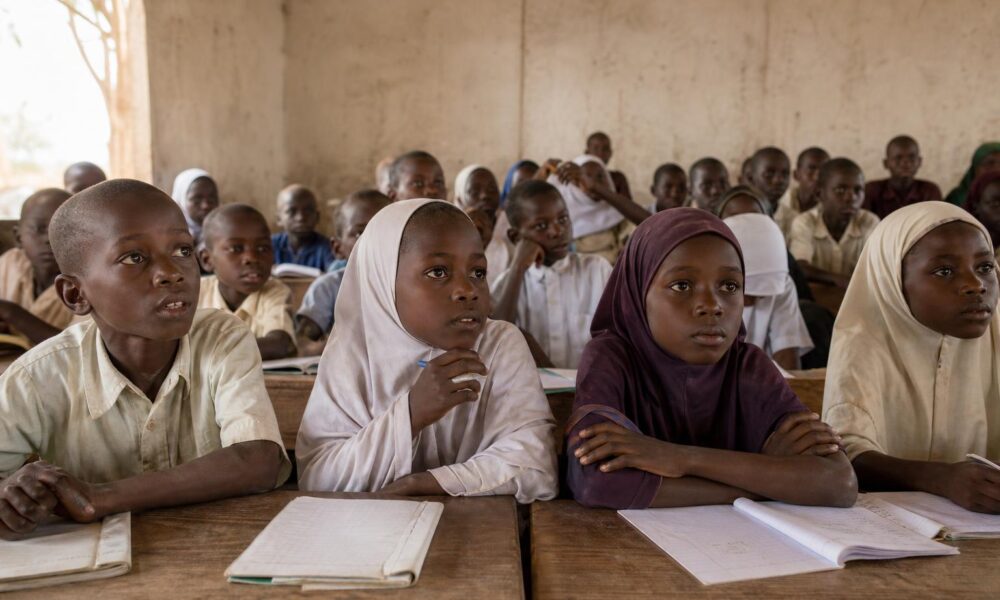
Borno State in northeastern Nigeria has reported a substantial increase in school enrolment since the height of the Boko Haram conflict, while officials acknowledge that hundreds of thousands of children remain outside formal education.
Table Of Content
Government figures show that 1,418,279 learners were enrolled in the state’s public and private schools in 2025, compared with 766,551 during the 2017-2018 academic session.
Borno authorities have linked the rise to the repair and construction of schools, as well as efforts to encourage families to send their children back to classrooms. However, the figures cover different categories and do not by themselves establish a precise growth rate or show whether attendance, teaching quality or learning outcomes have improved.
Rebuilding schools after conflict
Borno has been at the centre of Boko Haram violence since the armed group launched its campaign in northeastern Nigeria in 2009. Attacks and displacement forced families from their homes, while schools closed and teachers and pupils fled in some communities.
The state government has made reconstruction a priority, reporting that schools and related facilities damaged by conflict and flooding have been repaired. Governor Babagana Umara Zulum said the administration had constructed 104 new schools and rehabilitated 2,931 classrooms and related facilities.
“In response, our administration has constructed 104 new schools and rehabilitated 2,931 classrooms and related facilities,” Zulum said during the commissioning of educational projects in Maiduguri in March.
In Baga, in Kukawa Local Government Area, the Higher Islamic College was forced to close during years of violence, disrupting education for families affected by the conflict. Maryam Umar, a teacher associated with the college, said educational activities were resuming and that efforts to reopen schools and supply learning materials were helping restore education in communities affected by the crisis.
Hundreds of thousands still out of school
Despite the reported progress, Borno State officials estimate that almost 800,000 children remain out of school. Governor Zulum has said the figure fell from about 2.2 million at the height of the crisis.
Violence, displacement, poverty, long distances, safety concerns and limited resources continue to obstruct regular schooling. Residents at a town hall meeting in Gubio Local Government Area also raised concerns about children who remain outside formal education. Bukar Abdullahi, 49, highlighted the need to enrol more children.
Lawan Abba Wakilbe, the state commissioner for Education, Science, Technology and Innovation, described the enrolment increase as a sign of renewed confidence among parents and communities.
“When you look at where we started, 766,551 learners in 2017-2018, and see where we are today, this is not just a number. It is evidence that parents and communities once again trust our schools with their children’s future,” Wakilbe said.
Expansion of Islamic education
The government is also expanding educational opportunities through Arabic and Islamic institutions. The Borno State Arabic and Sangaya Education Board is being used to integrate aspects of traditional Islamic learning into an education system offering recognised qualifications and routes to further study.
Zulum said Higher Islamic Colleges use a curriculum approved by the National Board for Arabic and Islamic Studies, allowing students to pursue recognised qualifications.
“This intervention reflects our commitment to building an inclusive education system that integrates spiritual development with academic and vocational advancement,” he said.
The reported enrolment gains provide evidence of a recovery effort, but important questions remain about how evenly the increase is distributed between urban and rural communities. The available figures also do not show whether children returning after prolonged interruptions are catching up with their peers or whether schools have enough teachers and learning materials.



No Comment! Be the first one.