
Zambia bans protest over proposed removal of presidential term limits
Zambian authorities barred a planned protest against proposals to remove presidential term limits, while organisers appealed for another date amid a wider dispute over President Hakainde Hichilema's...

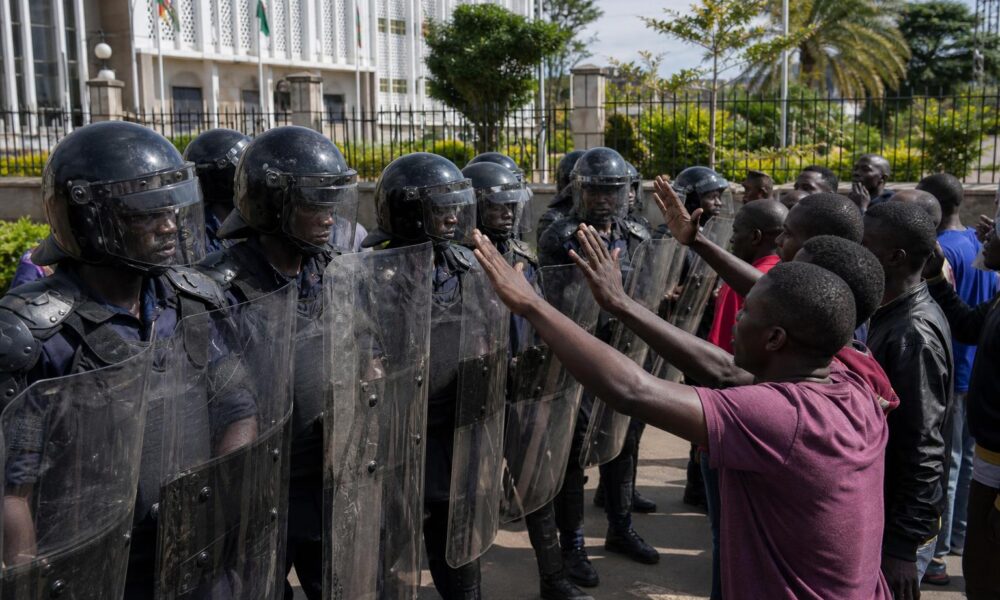
Zambian authorities have banned a planned demonstration against proposals to remove presidential term limits, citing the possibility of clashes between opposing groups.
Table Of Content
The protest, scheduled for November 25, was organised by civil society organisations and human rights defenders who oppose the proposed constitutional changes. Police acted after a pro-government youth alliance announced plans for a rival demonstration supporting the removal of term-limit restrictions.
Home Affairs and Internal Security Minister Clement Andeleki defended the decision, saying the authorities cancelled the demonstrations because of the risk of confrontation. He also rejected the suggestion that President Hakainde Hichilema was seeking a third term, saying, “there is no third term that the president [Hichilema] wants”.
Organisers appeal the decision
Linda Kasonde, a former president of the Law Association of Zambia and one of the protest organisers, said the groups had challenged the police decision.
“We have seen that we are being blocked from protesting and so, we have written to the police to give us an alternative date,” Kasonde said. She added that the organisers had also appealed to the minister of home affairs.
The planned demonstration followed a petition by three organisations aligned with the governing United Party for National Development to the National Assembly. The petition called for constitutional restrictions on presidential terms to be removed.
The campaign has drawn opposition from the Catholic Church, civil society organisations and the Law Association of Zambia. Some have called for the debate over extending presidential tenure to end.
Government and opposition positions
Hichilema’s office said the president would respect the constitution and citizens’ freedom of expression. Presidential communications official Clayson Hamasaka said the president respected those rights “at all times”.
Justice Minister Jack Mwiimbu also said Hichilema would respect any constitutional amendments. “We’ll not allow individuals threatening others who are exercising their rights to express themselves freely,” Mwiimbu told journalists in Lusaka.
Mark Simuuwe, the UPND’s head of media, rejected claims that the campaign was specifically designed to secure a third term for Hichilema. He said the party was instead seeking to remove restrictions that it considered undemocratic and that limited voters’ ability to choose a president.
Kasonde, however, argued that the proposed changes were intended to consolidate power after what she described as a decline in legitimacy following a controversial election.
Hichilema won more than 61 percent of the vote in August, according to the report, but observers including the European Union Election Observation Mission reported irregularities. Those observers cited a six-hour suspension of vote counting and the announcement of results, the deployment of soldiers and the removal of opposition and independent monitors.
Opposition figures remain detained
The term-limit debate has also unfolded alongside the prolonged detention of opposition figures. Brian Mundubile, who finished second in the presidential race, his running mate Makebi Zulu and several other opposition figures had been held for more than 100 days over allegations of attempting to overthrow the government and engaging in seditious activities.
The accused say the charges are politically motivated. Muhabi Lungu, secretary-general of the Tonse Alliance, alleged that the prosecutions were intended to weaken the opposition ahead of possible constitutional changes. Defence lawyer Sakwiba Sikota said the trial was expected to begin in 2027.
A constitutional amendment would require the support of at least two-thirds of parliamentarians, although further procedures may apply to changes affecting presidential tenure. The UPND does not hold a two-thirds majority in the National Assembly and could need backing from independent legislators and other members of parliament.
The source does not establish whether the November 25 demonstration ultimately took place after the ban or whether the appeal for an alternative date was successful.




No Comment! Be the first one.