
Supercoin Plans Rand-to-Shilling Stablecoin Payments Between South Africa and Kenya
Supercoin has applied for a Kenyan licence to issue a shilling-backed stablecoin that would support cross-border payments between Kenya and South Africa without routing transactions through the US...

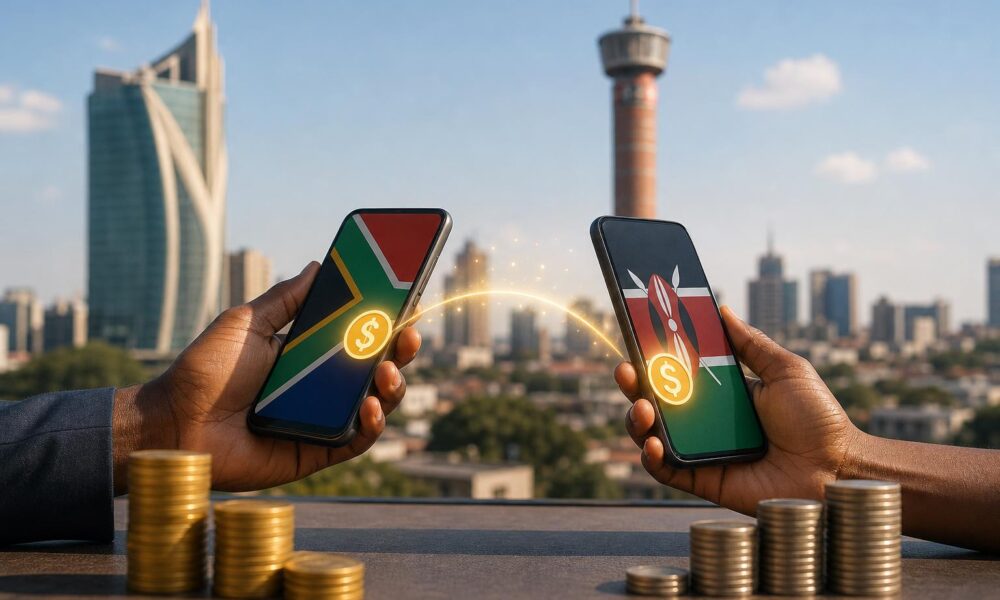
Supercoin plans to use a Kenyan shilling-backed stablecoin to facilitate payments between South Africa and Kenya, creating a proposed settlement route that would not require transactions to pass through the US dollar.
Table Of Content
The company said it has applied to the Central Bank of Kenya for a licence to issue the proposed KESsc token. The planned service would operate alongside Supercoin’s rand-backed ZARsc stablecoin and is expected to begin serving payment companies in the first half of 2027, subject to regulatory approval.
Proposed cross-border payment rail
Under Supercoin’s model, a remittance company could receive rand in South Africa, exchange ZARsc for KESsc and arrange a local-currency payout in Kenya. The proposed direct swap is intended to avoid the need to buy and sell US dollars during the transaction.
Gideon Greaves, who discussed the plan on behalf of Supercoin, said the company would need sufficient liquidity in the rand-to-shilling token pair before the service could operate at scale.
“If we can provide enough liquidity to the ZAR-KES pair in our stablecoin, then we can start selling that rail for instant payments between South Africa and Kenya,” Greaves said.
Supercoin plans to initially target remittance companies, fintechs and payment networks. The company would provide tokens for settlement, while payment firms would remain responsible for reaching recipients who want funds in mobile wallets, bank accounts or cash collection points.
Off-ramps remain essential
Although blockchain transfers can be completed within seconds, recipients generally need an off-ramp to convert digital tokens into local fiat currency. Supercoin said it has signed an off-ramp agreement with a partner in Kenya, although the partner’s identity was not provided.
Discussions about access to a mobile-money off-ramp for fiat payouts were still exploratory. Greaves said local payout infrastructure would remain important even where a stablecoin is used for settlement.
“Even when there is a venue where the stablecoin exists, and someone’s making a payment from stablecoin somewhere else—let’s say to Zimbabwe, for example—for a cash collection at a kiosk, it’s settling in fiat. So it’s still going through those banking rails,” he said.
Work on a Kenyan consumer wallet is expected in the second half of 2027. Greaves described the wallet as secondary to Supercoin’s main focus of issuing and operating the stablecoin payment rail.
Regulatory and liquidity hurdles
Kenyan virtual asset rules, as reported, require stablecoin issuers to maintain KES 300 million ($2.3 million) in paid-up capital and reserves sufficient to cover every outstanding token. Issuers must also hold at least 30% of funds received for tokens in segregated trust accounts at Kenyan commercial banks, with the balance invested in eligible assets in Kenya.
The rules prohibit issuers from paying interest to stablecoin holders or granting interest through stablecoin-related services. Supercoin is also considering a naira-backed stablecoin, although those discussions remain exploratory.
The commercial viability of the Kenya-South Africa proposal will depend on whether Supercoin can provide enough rand and shilling liquidity at competitive rates and with speed comparable to existing payment providers. Thin token markets or costly local payouts could limit the benefits of direct settlement.
Supercoin’s expanding platform
Supercoin, owned by Super Group, launched Supercoin Mint in November. The service allows approved businesses to deposit rand in exchange for ZARsc and redeem the tokens for rand paid into bank accounts.
ZARsc had surpassed 10 million tokens in circulation since its September 2025 launch, according to Greaves. Luno, VALR and OVEX serve as distribution venues, while customers on VALR can borrow ZARsc using cryptocurrency holdings as collateral.
Supercoin currently draws on Super Group’s balance sheet for liquidity. The company wants to expand ZARsc beyond cryptocurrency trading and into corporate and merchant payments.






No Comment! Be the first one.