
Belt and Road energy ministers call for stronger green-transition cooperation
The Fourth Belt and Road Energy Ministerial Conference concluded in Qingdao with calls for cooperation on clean energy, energy security and resilient power systems.
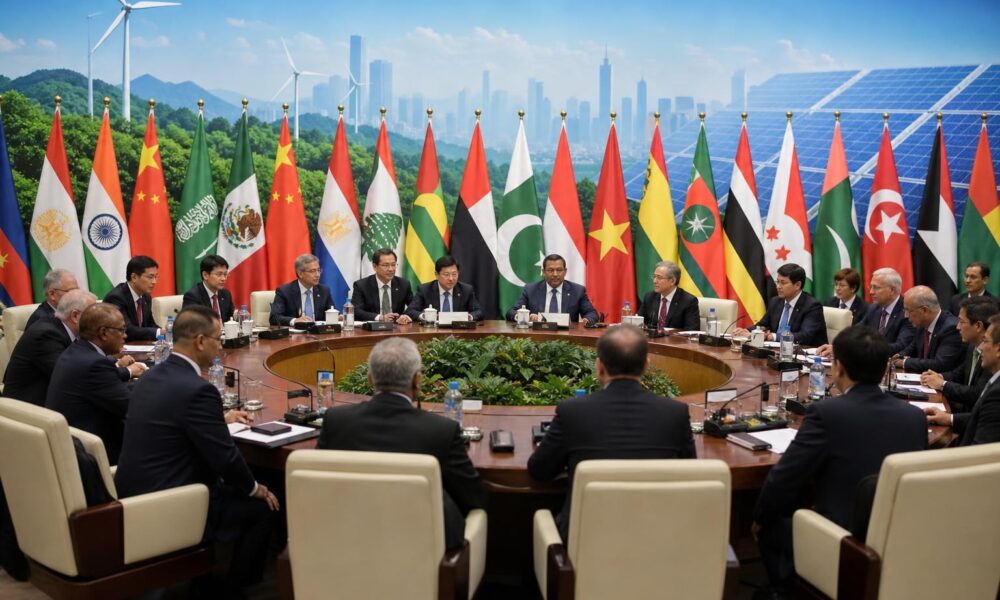
The Fourth Belt and Road Energy Ministerial Conference has concluded in Qingdao, east China, with participating countries calling for closer cooperation on energy transition, security and system resilience.
Table Of Content
The two-day meeting was held under the theme “Sharing innovation outcomes, advancing energy transition, building a secure future together.” Energy ministers and other participants discussed ways to support a green, low-carbon shift across industrial and supply chains while maintaining reliable and affordable energy systems.
Blue Book outlines different transition paths
The conference released a Blue Book focused on green, low-carbon transition and security resilience in developing countries. The publication sets out a four-dimensional evaluation system and groups developing countries into 16 energy-system types.
Zhou Yi, director of the China Electric Power Planning and Engineering Institute, said countries should design energy-transition roadmaps according to their own circumstances rather than follow one standard model.
“There is no single model for the energy transition. Countries need to set roadmaps based on their own conditions, balancing green and low-carbon goals, energy security, system resilience and economic affordability,” Zhou said.
He added that the Blue Book recommends broadening international cooperation beyond construction projects to include planning consultation, standards alignment, digital and intelligent empowerment, and measures to improve resilience against risks.
Energy partnership expands
The meeting also formally established the Governing Board of the Belt and Road Energy Partnership, a multilateral energy cooperation platform under the Belt and Road Initiative.
The partnership has expanded to 35 BRI member countries, while its cooperation network now brings together nearly 300 enterprises, according to the conference information.
Wang Hongzhi, administrator of China’s National Energy Administration, said China is accelerating the development of a new energy system. He said the country aims by 2030 to have a cleaner, low-carbon system with a better energy mix, stronger resilience and greater innovation.
Participants also highlighted existing energy links between China and other Belt and Road countries. Kazakhstan’s Energy Minister Yerlan Akkenzhenov said the energy sector was central to cooperation between Kazakhstan and China, covering hydrocarbons exports, renewable-energy projects, raw-material processing and energy infrastructure construction.
“Kazakhstan is a big new exporter of the hydrocarbons to the Chinese market. The energy sector is the fundamental of our cooperation,” Akkenzhenov said.
Officials highlight technology sharing
Al-Mutasim Ibrahim, Sudan’s minister of energy and petroleum, said China was playing a leading role in energy transformation and sharing technology and advances with Belt and Road partners.
“We think that China is leading the way to the transformation, that is sharing the advancement and the technology, also enhancing the cooperation between the members of the [Belt and Road] Initiative,” Ibrahim said.
Rafael Bekshentayev, head representative in China of the EXia Energy Research Center, pointed to the spread of household solar installations outside China’s major cities. He said farmers were installing panels for household use and selling electricity to the grid.
The Qingdao conference concluded on Friday, with its discussions focused on linking innovation and clean-energy development with energy security and resilience.



No Comment! Be the first one.