
US Seeks to Rebuild Influence Across Sahel Amid Russian and Chinese Expansion
The United States is seeking to restore diplomatic ties with military-led governments in the Sahel as Russia expands its security role and China deepens its economic presence across Africa.
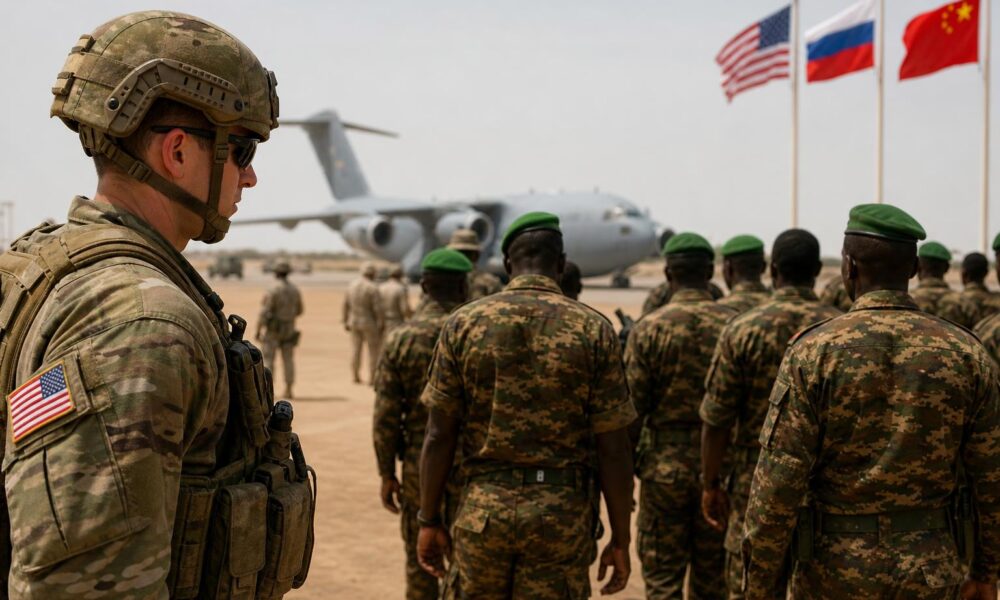
The United States is working to rebuild relations with military-led governments in the Sahel, less than two years after completing its military withdrawal from Niger and amid growing Russian security involvement and Chinese economic influence in the region.
Table Of Content
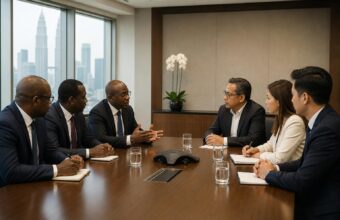
Senior US State Department official Nick Checker visited Mali, Burkina Faso and Niger earlier this year as Washington pursued renewed diplomatic engagement with authorities whose relations with Western governments deteriorated following military coups.
Re-engagement after Niger withdrawal
The United States completed its withdrawal from Niger in September 2024, ending a security presence that had lasted about a decade. The departure included the handover of Air Base 201 near Agadez and involved approximately 1,000 US troops.
Niger’s military government ended its military cooperation agreement with Washington after overthrowing elected President Mohamed Bazoum in July 2023. Under former President Joe Biden, the United States restricted assistance to Niger and called for a return to constitutional rule.
The outreach has taken place under the administration of Donald Trump, which has signalled a willingness to engage directly with governments led by military authorities. The approach reflects a changing regional landscape shaped by political upheaval, persistent insecurity and the erosion of traditional Western influence.
Russia and regional realignment
Russia has expanded its security presence in the Sahel through the Wagner Group and, later, Africa Corps. Moscow has presented itself as a partner focused on national sovereignty and security assistance without making comparable demands for democratic reforms.
Mohamed Mouttii, a political researcher at the Arab Center for Research, said Russia’s growing influence was not simply a military advance but also the result of deteriorating relations between Sahelian governments and their traditional Western partners.
“Russia’s growing influence should be understood not simply as a military expansion, but as the result of a political opening created by the deterioration of relations between Sahelian governments and their traditional Western partners,” Mouttii told Al Jazeera.
However, armed-group violence has continued, raising questions about the effectiveness of the new security partnerships. Groups affiliated with al-Qaeda and ISIL have continued to expand their reach despite years of international counterterrorism operations.
Mali, Burkina Faso and Niger formed the Alliance of Sahel States in September 2023. The grouping, created as a mutual defence pact, became a confederation in July 2024. The three countries subsequently withdrew from the Economic Community of West African States.
China’s economic role
While Russia’s involvement has been most visible in military cooperation and arms supplies, China has expanded its economic presence across Africa over the past two decades through investment in infrastructure, telecommunications, mining and energy.
The Sahel’s natural resources remain central to the competition for partnerships. Niger has substantial uranium resources, gold mining is a major activity in Mali and Burkina Faso, and lithium deposits offer opportunities linked to demand for batteries and advanced technologies.
Ahlam Qafas, an economics professor in Kenitra, Morocco, said international partnerships should be judged by their contribution to domestic industrialisation, job creation and economic diversification. She also warned that resource extraction delivers limited developmental benefits when it fails to build local production capacity or leaves African countries without a meaningful share of the economic gains.
Questions over Washington’s offer
The restructuring of US foreign assistance and the dismantling of the US Agency for International Development have complicated Washington’s effort to restore influence. Development programmes, educational exchanges and institutional partnerships had historically supported American diplomatic and military engagement in Africa.
The renewed US approach also faces uncertainty over whether Washington will continue pressing for democratic reforms while seeking security and commercial cooperation with military-led governments. No specific US funding package, security agreement or formal policy commitment has been identified.
Mary Joyce Takali, cofounder and executive director of the Malkia Africa Network, said the success of the outreach would depend on whether the United States could offer a dependable partnership aligned with African governments’ political and economic priorities.
“Washington’s renewed engagement will depend on whether it can offer consistent partnerships that respond to African governments’ political and economic priorities, rather than approaching the continent primarily through the prism of great-power competition,” Takali said.
Sahel governments, according to the report, are seeking to diversify their international relationships rather than replace one external partner with another. Whether the latest US engagement produces lasting influence or concrete agreements remains uncertain.


No Comment! Be the first one.