
Dangote plans Africa-wide energy expansion after Nigerian refinery IPO
Dangote Group is seeking to extend its refinery business beyond Nigeria, with plans for an expected Africa-leading IPO and potential energy infrastructure projects across several markets.
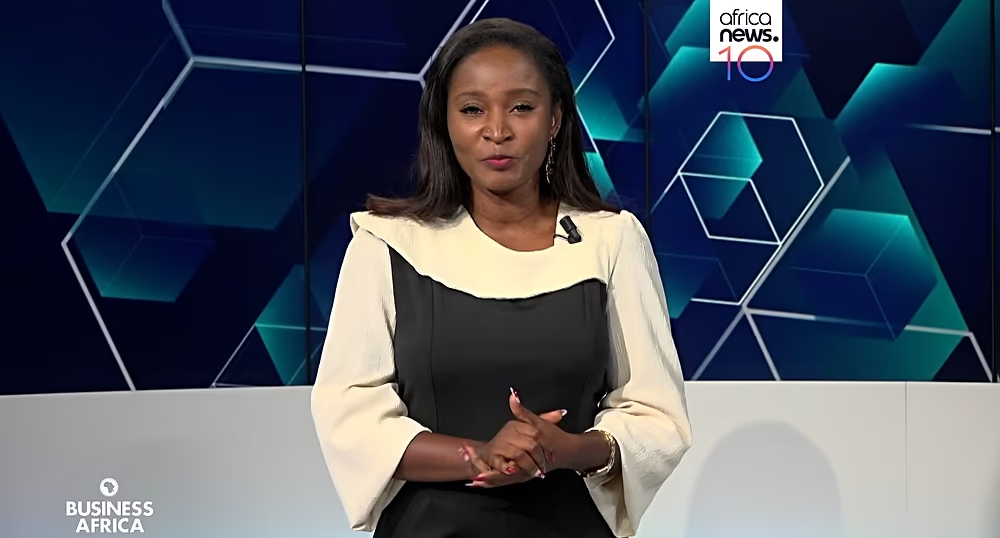
Dangote Group is preparing to expand its energy operations beyond Nigeria, with the company exploring a broader network of refineries, storage terminals and fuel pipelines across several African markets.
The group also plans to open its flagship refinery to public investors through an initial public offering that is expected to be Africa’s largest-ever, according to the source material. No date, valuation, exchange listing or investor eligibility details have been provided for the proposed offering.
Expansion plans
The proposed expansion would take Dangote’s refinery business into a wider cross-border energy operation. The projects under consideration include additional refining capacity, fuel storage facilities and pipelines linking markets across Africa.
David Bird, the chief executive officer and managing director of Dangote Refinery, joined discussions on the planned IPO and the group’s wider ambitions.
The expansion comes amid wider questions about fuel supplies, price stability, domestic energy needs and the possibility of exports across the continent. However, the available information does not confirm specific locations, financing arrangements, regulatory approvals or timelines for the proposed projects.
Financing and infrastructure challenges
Building an Africa-wide energy network could involve significant challenges, including raising capital, managing currency risks and operating under different regulatory systems. Cross-border infrastructure also presents logistical and coordination demands.
The planned IPO is intended to open the refinery to ordinary investors, although details of the structure and scale of public participation have not been disclosed.
Regional energy pressures
Energy access remains a major challenge in parts of Africa. In South Sudan, less than 10 percent of the population is connected to a formal power grid, while frequent blackouts are placing pressure on small businesses.
Solar power is becoming increasingly important for entrepreneurs in the country. Solar systems can help businesses stay open during outages, reduce dependence on generators and provide a more predictable electricity supply, according to the source.
The source also links the continent’s business prospects to Nigeria’s broader economic ambitions. Nigeria’s global cultural influence includes Afrobeats, Nollywood, fashion, food and digital content, but international popularity alone does not guarantee sustainable businesses or jobs.
Nigeria is seeking to expand its creative economy by 2030. Access to finance, technology, skills, intellectual-property protection and international markets will be important for young entrepreneurs pursuing that growth.





No Comment! Be the first one.