
Young Tigrayans Leave Homes Amid Disputed Forced Recruitment Reports
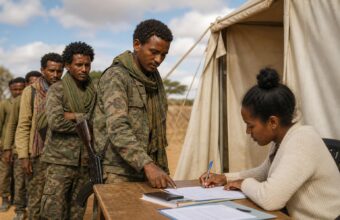
Young men interviewed by Al Jazeera say they have left or relocated within Tigray because they fear being forcibly recruited amid rising political and military tensions.


Young men are leaving or relocating within Ethiopia’s Tigray region amid fears of forced recruitment and renewed fighting, according to accounts reported by Al Jazeera.
Table Of Content
Three men interviewed by the news organisation described decisions to move to Addis Ababa or to another location within Tigray as tensions rose between Ethiopia’s federal government and the Tigray People’s Liberation Front (TPLF). Both sides have accused the other of military mobilisation.
Accounts of fear and relocation
Gebru, 27, said he was taken from his neighbourhood to a local administration office with other young men. He said his parents secured his release by paying 20,000 Ethiopian birr in cash.
Afterward, Gebru left Tigray for Addis Ababa because his parents feared he could be taken again. “My parents were afraid that if I stayed, I would be taken again. They told me to leave Tigray and save myself,” he said.
Shewit, 24, also moved to Addis Ababa. His departure meant leaving his family, studies at Mekelle University and a language-class business he had operated for about a year.
“I had already survived one war. I didn’t want to go through another,” Shewit said. He added that he did not want to return to Tigray and hoped eventually to bring his family and siblings to Addis Ababa.
Gebrehiwot, 28, took a different path, moving from his hometown to Mekelle. He said he had fought in the previous war and feared being identified and taken back to the army after hearing that some former combatants had been forcibly taken.
“I know what the battlefield looks like. I don’t want to go back there and risk not coming home,” he said.
Human Rights Watch allegations
Human Rights Watch has reported alleged forced recruitment involving former combatants, civilians, young men and boys. The organisation said cases included children as young as 15 and that people were allegedly taken from streets, homes, workplaces and gold-mining areas.
Human Rights Watch also said a mobilisation proclamation introduced in June criminalised desertion and attempts by relatives to prevent people from being conscripted. Laetitia Bader, the organisation’s Horn of Africa director, said young people continued to try to leave the region because of alleged forced conscription and the humanitarian situation.
The TPLF has disputed the allegations, saying young people were joining voluntarily and describing claims of forced recruitment as a mistaken narrative. Al Jazeera contacted TPLF spokesman Michael Asgedom for a response but reported that he did not answer calls or text messages.
Unresolved post-war tensions
The African Union-brokered Pretoria Agreement of November 2022 ended two years of war in Tigray. However, contested territory, the return of displaced people and the disarmament of Tigrayan forces remained unresolved, according to the report.
Heavy fighting was also reported near Ethiopia’s border with Sudan in August, while broader tensions between the federal government and the TPLF continued to rise.
Muauz Gidey Alemu, an assistant professor of political science and lead researcher at the Tigray Institute of Policy Studies, said the reported recruitment should be viewed as part of a wider political and security crisis linked to the incomplete implementation of the Pretoria agreement.
He said the accord had stopped large-scale warfare but had not settled all the political and security issues of the post-war period. Continued mobilisation, he warned, could create a cycle in which insecurity encourages recruitment and recruitment deepens insecurity.




No Comment! Be the first one.