
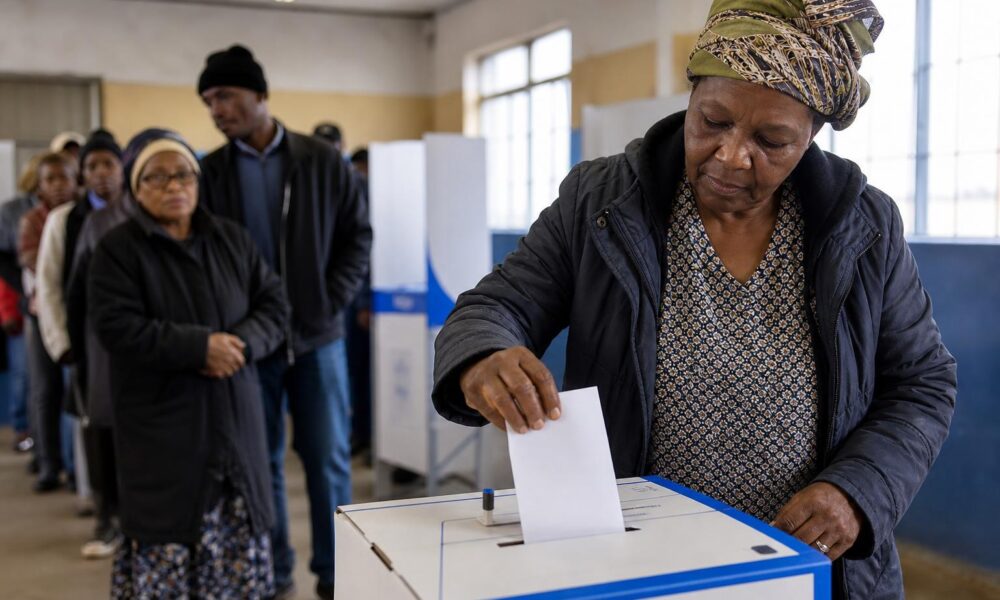
South Africa’s African National Congress has suffered a major setback in municipal elections, winning just over 30 percent of the national vote after all ballots were counted on Sunday.
The ANC remained the country’s largest party, but its support fell by roughly 14 percentage points compared with the 2021 local elections. It failed to win an outright majority in any of South Africa’s eight major metropolitan areas, including Johannesburg and Pretoria.
The outcome means the ANC and the Democratic Alliance will need to negotiate with smaller parties or seek coalition agreements in municipalities where no party secured more than half of the vote. The final composition of several city governments was not yet known.
DA leads in Johannesburg
Nationally, the Democratic Alliance won about 25 percent of the vote, while former President Jacob Zuma’s uMkhonto weSizwe party placed third with about 10 percent.
In Johannesburg, the DA led with about 35 percent, compared with 20 percent for the ANC. The result could give Helen Zille a strong chance of becoming mayor, although that will depend on the outcome of coalition negotiations.
Political parties have 14 days to reach agreements before city councils are formed.
Parties prepare for coalition talks
ANC Secretary-General Fikile Mbalula described the result as “catastrophic” for the party. Speaking on Saturday, he said: “When the people tell us we have fallen short, … the honest answer is not to argue with them but to go home and put our house in order.”
Mbalula also said the ANC would not go begging for positions when coalition discussions began.
The ANC’s declining support in local elections has been linked to voter frustration over corruption, unemployment and failures in basic services, including water and electricity. The unemployment rate cited in the election coverage was above 34 percent.
The DA said it would begin discussions with political parties that share its commitment to “clean and accountable government, rooting out corruption, service delivery for all, the rule of law, and non-racialism.”
With negotiations still ahead, the election results leave South Africa’s largest party in a weakened position as it seeks to retain influence over municipal governments across the country.


No Comment! Be the first one.