
DR Congo Begins Ebola Vaccinations for Frontline Workers in Ituri
Ebola vaccination has begun in Bunia, northeastern Democratic Republic of the Congo, with about 50,000 health and frontline workers targeted for the Ervebo programme.

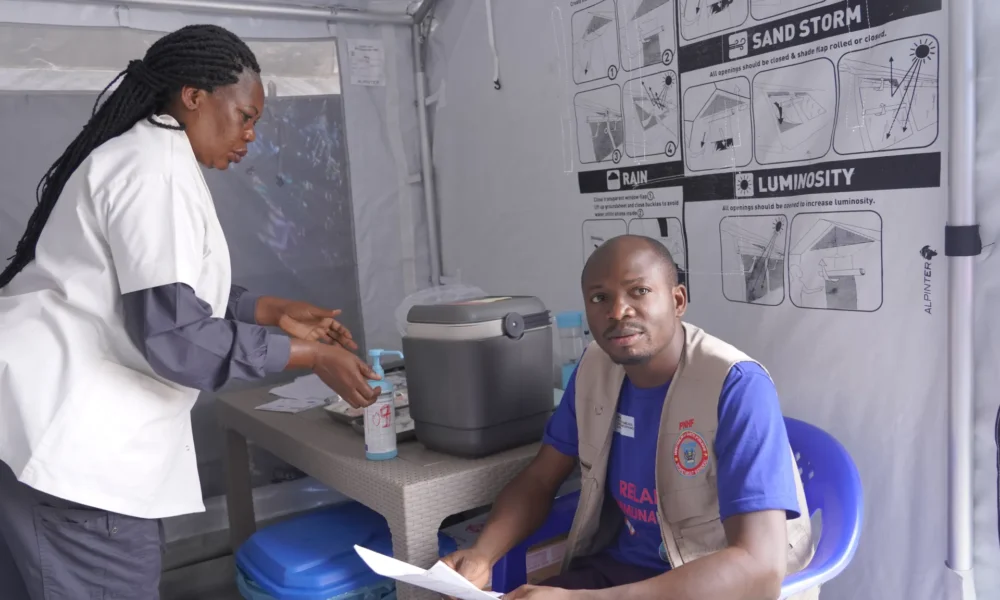
Health and other frontline workers in the Democratic Republic of the Congo have begun receiving Ebola vaccinations as authorities respond to an outbreak caused by the Bundibugyo virus.
Table Of Content
The rollout started in Bunia, the capital of Ituri province, and is backed by the World Health Organization and Doctors Without Borders, also known as MSF. The programme is expected to reach about 50,000 workers in Bunia and other affected areas, including North Kivu, where health authorities say cases have been rising sharply.
Protection against current strain remains uncertain
The vaccine being administered is Ervebo, which was developed for the more common Zaire strain of Ebola. Its effectiveness against the Bundibugyo strain responsible for the current outbreak has not been established.
Steve Ahuka, a Congolese official serving on the health task force, said: “We don’t know to what degree it might be effective against the Bundibugyo strain.”
WHO experts have said early evidence, particularly from animal trials, indicates that Ervebo could provide some protection. Its performance will be monitored in 20,000 recipients for up to one year.
The vaccine is being used through a compassionate-use programme, which allows a medical product to be administered in serious disease situations even when it has not been specifically approved for that use. The WHO approved 70,000 Ervebo doses for use in the country in August. Clinical trials are continuing in the search for a licensed vaccine for the latest outbreak.
Frontline workers prioritised
Ituri Governor Major-General Gaby Kasongo Mulumba said health workers in the province were “particularly exposed and deeply involved in the response”.
Dr Jeannot Elua, speaking at a health facility in Bunia, described the vaccine as “beneficial”. He said healthcare workers would receive it despite the uncertainty surrounding its protection against the current strain.
“We healthcare workers don’t really have a choice. We are going to receive it,” Elua said.
He added that some workers had previously received another Ebola vaccine, including himself, because it was mandatory at the time.
Conflicting assessments of outbreak trends
Local authorities have reported that at least 3,639 people have died from the virus since May, while 7,541 people have been infected and 1,823 have recovered. Those figures have been attributed to local authorities.
WHO officials have pointed to “encouraging signs” that transmission may be slowing. MSF, however, has warned that there is no clear evidence the epidemic is coming under control.
The vaccination campaign therefore expands while questions remain over how much protection Ervebo can provide against Bundibugyo Ebola and how the outbreak will develop in Ituri and North Kivu.


No Comment! Be the first one.