Bio Urges Stronger African Voice in Global Decision-Making
President Julius Maada Bio has called for stronger African representation in global institutions and renewed trust in multilateralism during his address to the 81st United Nations General Assembly.

President Julius Maada Bio has urged a stronger African role in global decision-making, saying international institutions must become more representative, accountable and responsive to the needs of developing countries.
Table Of Content
Bio made the call on 22 September while addressing the general debate of the 81st session of the United Nations General Assembly at the UN Headquarters. His speech covered international peace and security, economic reform, reparatory justice, climate change, technology and Sierra Leone’s international commitments.
Push for Security Council reform
The president said Africa’s absence from a permanent seat on the United Nations Security Council undermines the Council’s legitimacy and effectiveness. He backed the common African position calling for at least two permanent seats and five non-permanent seats for the continent.
Bio said Sierra Leone would continue advancing that position in its role as coordinator of the African Union Committee of Ten. He also highlighted Sierra Leone’s 2024 and 2025 membership of the Security Council, including its role in convening a high-level debate on the historical injustice against Africa and co-drafting Resolution 2807 with Guyana.
He also called for changes to international financial institutions, including fairer voting power, stronger representation for developing countries, increased capital, affordable financing, concessional resources and more equitable debt treatment.
Trust, peace and international law
Bio presented Sierra Leone’s experience with disarmament, elections and peacebuilding as an example of what international cooperation can achieve after conflict.
“We know what international cooperation can make possible because we have lived it,” he said, referring to the country’s progress since it completed disarmament and formally ended its civil war nearly 25 years ago.
He argued that confidence in multilateralism depends on governments honouring their commitments, institutions serving their people and international law being applied consistently. “Trust is the currency of multilateralism,” Bio said.
On conflicts in the Middle East, Sudan and the eastern Democratic Republic of the Congo, he called for civilian protection, humanitarian access and accountability. He also supported a Sudanese-led political process and said the Palestinian people’s right to self-determination should be realised through a viable State of Palestine living alongside Israel in peace and security.
Bio linked terrorism in West Africa and the Sahel to poverty, exclusion, unemployment and weak institutions. He said military action alone could not establish lasting peace.
Development, reparatory justice and climate
The president supported reparatory justice in connection with the trafficking and racialised chattel enslavement of Africans. He said the legacy of those practices continues to be reflected in disparities in wealth, power and opportunity.
He also called for African countries to process critical minerals at source, secure fairer value chains, obtain technology transfers and build local industries. “The green transition must not reproduce the extractive terms of the past,” he said.
Bio urged accessible and predictable climate finance, stronger adaptation support and effective arrangements for loss and damage. He referred to families in Shenge who, he said, are facing the loss of land, fishing grounds and ancestral graves as the sea advances.
In discussing domestic priorities, he cited Feed Salone, Free Quality School Education and Sierra Leone’s 2024 Prohibition of Child Marriage Act. He said developing countries must also help shape the standards governing technologies that affect their populations, noting that artificial intelligence could support education, healthcare, agriculture and public administration while also widening inequality.
Sierra Leone’s international commitments
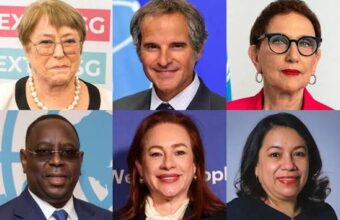
Bio expressed support for the UN80 Initiative and broader reforms aimed at improving the United Nations’ effectiveness, accountability and responsiveness. He also called for a woman to be entrusted with the office of UN Secretary-General.
He said Sierra Leone would continue contributing personnel to UN peace operations, supporting mediation and peacebuilding, defending the rights of women and girls, and backing international justice.
Sierra Leone has nominated Professor Charles Chernor Jalloh for election as a judge of the International Court of Justice and asked member states to support his candidacy on 3 November. The speech did not state the outcome of the proposed election.



No Comment! Be the first one.