
Sierra Leone Advances Conflict Prevention Agenda Through New York Engagements
Hawa Sally Samai held discussions with United Nations and New York University officials in New York as Sierra Leone pursues a more institution-led approach to conflict prevention.
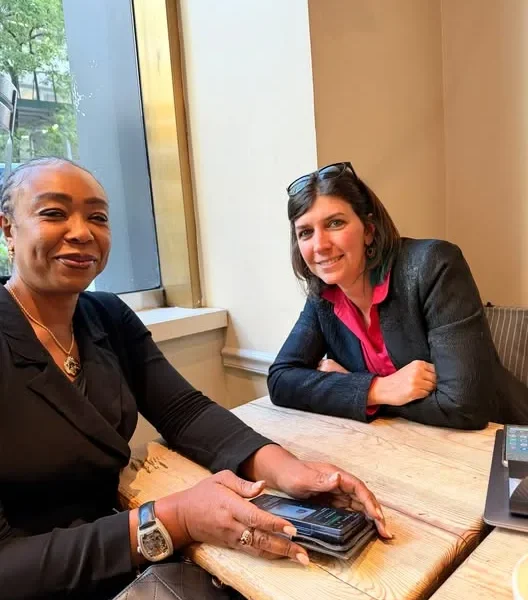
Hawa Sally Samai, Executive Secretary of Sierra Leone’s Independent Commission for Peace and National Cohesion, held a series of high-level engagements in New York focused on strengthening the country’s conflict prevention efforts.
Table Of Content
The discussions took place on 23 and 24 September 2026 on the margins of the 81st Session of the United Nations General Assembly. They included meetings with United Nations Peacebuilding Fund officials and experts from New York University, as well as participation in the 2026 International Forum on African-Caribbean Leadership.
Peacebuilding Fund support
On 24 September, Samai met Brian J. Williams, Chief of the Peacebuilding Fund, at the United Nations Secretariat in New York. The discussions covered Sierra Leone’s reported renewed eligibility for support from the United Nations Secretary-General’s Peacebuilding Fund for another five years, through the end of 2030.
The renewed partnership is reported to include an initial allocation of US$3 million to help develop and implement Sierra Leone’s first National Prevention Strategy. The work is expected to be carried out with the United Nations Development Programme, the United Nations Children’s Fund and UN Women.
The proposed support is intended to cover conflict prevention, social cohesion, women’s and young people’s participation, cross-border cooperation, and security risks associated with climate change and environmental pressures.
Samai said conflict analysis conducted by the Independent Commission for Peace and National Cohesion and the United Nations system helped inform Sierra Leone’s application for renewed eligibility. Williams welcomed the emphasis on national ownership and sustainability.
According to the report, the Peacebuilding Fund has invested approximately US$84 million in Sierra Leone since 2007, supporting areas including institution building, conflict prevention, social cohesion, dialogue, community peacebuilding, and the empowerment of women and young people.
Focus on prevention and national ownership
Sierra Leone’s approach seeks to move beyond treating peace simply as the absence of war. Samai has described the objective as building institutions and communities able to identify risks early and address grievances through peaceful means.
The planned prevention system is expected to connect early warning mechanisms with mediation, community peace structures, women’s and youth networks, traditional leaders and national institutions. The Independent Commission for Peace and National Cohesion works with communities, institutions and other stakeholders through dialogue, mediation and reconciliation to address emerging disputes.
“Peace is not an event; it is a process that must be continuously protected, invested in and owned by the people,” Samai said during the leadership forum.
She also stressed the importance of national responsibility in partnerships with international organisations. “International partners can bring resources, expertise and solidarity, but Sierra Leoneans must own the peace, lead the process and build the institutions that sustain it,” she said.
University and leadership forum discussions
On 23 September, Samai held discussions with Céline Monnier of New York University’s Center on International Cooperation. The engagement included discussion of continued collaboration to strengthen Sierra Leone’s peace structures and national conflict prevention approaches.
On 24 September, Samai participated as a special guest and panelist at the 2026 International Forum on African-Caribbean Leadership. She joined the panel on Social Development, Gender and Strategic Partnerships.
During the forum, Samai argued that women should be recognised as decision-makers, peacebuilders and leaders, rather than only as beneficiaries of peace and development programmes.
“The lesson is: build the relationships and institutions that prevent conflict before the conflict becomes a crisis,” she said.
Work on the prevention agenda is expected to continue with the United Nations Country Team in Freetown and the United Nations Peacebuilding Commission in New York.


No Comment! Be the first one.