
Ethiopia Fighting Spreads Beyond Tigray as Opposition Alliance Emerges
Renewed fighting in northern Ethiopia has spread from Tigray into Amhara and Afar, while seven armed and political groups have announced an alliance seeking to remove Prime Minister Abiy Ahmed's...

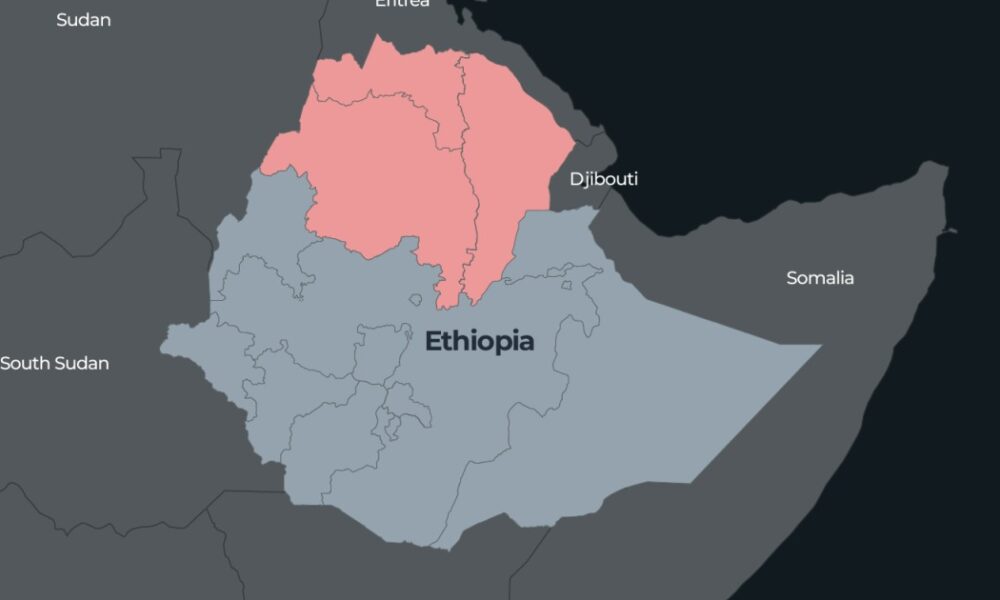
Renewed fighting in northern Ethiopia has spread beyond Tigray into the Amhara and Afar regions, with several fronts involving Tigrayan forces, federal troops and allied armed groups.
Table Of Content
Government-aligned forces said they captured Alamata in southern Tigray on September 28, although the reported change in control has not been independently verified. The town is about 120km south of Mekelle and serves as a supply hub near Tigray’s border with Amhara.
Another front has opened near the Tekeze River in western Tigray, an area disputed by Tigray and Amhara. Fighting has also been reported in northern Amhara around Kobo, Gidan and Sekota. Government forces said they retook Sekota on September 27.
Fighting reaches Afar
Tigrayan forces and the Afar armed group Ugugumo have advanced into Afar, with clashes reported along the Tigray-Afar border and around Erebti and Abala.
The movement could threaten the Semera-Djibouti corridor, Ethiopia’s main route for imports including fuel. Ethiopia is landlocked and relies on regional transport links for access to external markets and supplies.
Telecommunications have been cut across much of Tigray, while commercial flights have been suspended. Tigrayan forces seized airports in Mekelle, Axum and Shire and pushed into Afar and Amhara during a sharp escalation on September 23.
The conflict monitor ACLED said clashes between Tigrayan and federal forces began near the Sudanese border on August 1, followed by federal drone strikes and the deployment of Tigrayan troops. In September, Tigrayan forces moved tanks and artillery south amid reports of renewed recruitment and forced mobilisation in Tigray.
ACLED also reported that between 15 and 17 drone strikes hit Alamata on September 22, including several schools and a hospital. The account is attributed to ACLED and has not been independently verified.
Alliance seeks political change
On September 20, seven armed and political groups announced the Ethiopian Peoples’ Forces Alliance for Survival. The alliance said it wanted to remove Prime Minister Abiy Ahmed’s government and establish an inclusive transitional administration.
Its founding statement said a transitional government would seek to end the country’s wars, protect rights and open a national dialogue. The statement also accused the government of “dictatorial rule”.
The alliance’s membership remains contested. The Gumuz Peoples’ Democratic Movement denied joining, while the Ogaden National Liberation Front is divided over its position. The Oromo Liberation Army has indicated that its main interest is removing the government rather than conducting coordinated military operations with the other groups.
The Sidama National Liberation Front said on September 25 that it would also join the alliance. However, ACLED assessed that as of September 26 only the Tigray People’s Liberation Front, the Amhara Fano National Movement and Ugugumo were actively fighting federal forces.
Competing accounts and regional accusations
The Ethiopian government described the TPLF’s actions as an “all-out offensive”. The TPLF said it was fighting a “defensive war” and accused federal forces of attacking with aircraft, drones and artillery.
Ethiopia’s army chief has accused Eritrea, Sudan’s army and Egypt of backing armed groups. The countries named rejected the allegations. Egypt said it strictly respects the sovereignty of neighbouring states.
The renewed fighting follows a peace deal that ended a two-year war in Tigray nearly four years earlier. Political and territorial disputes between the TPLF and the federal government remain unresolved, including disagreements involving security and contested territory.





No Comment! Be the first one.