
Sierra Leone Presents Community-Based Peacebuilding Approach at UN Event
Sierra Leone has outlined its shift toward community-based conflict prevention and nationally owned peacebuilding at a high-level UNGA81 side event in New York.

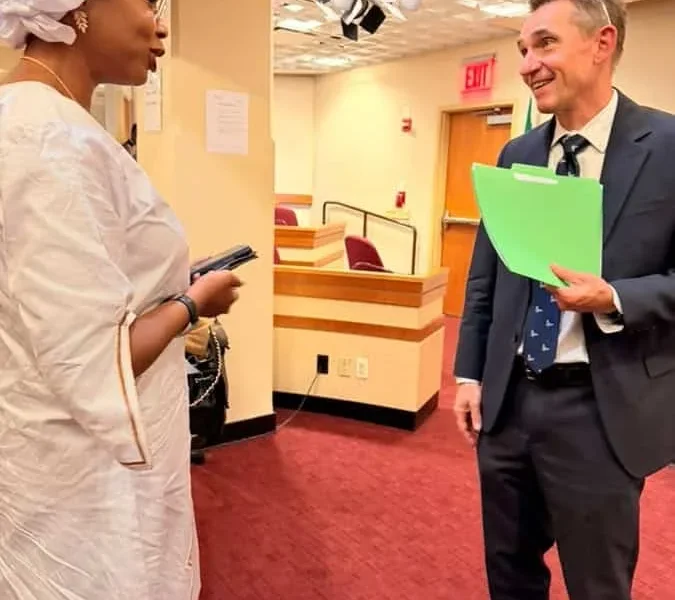
Sierra Leone has presented its prevention-focused approach to peacebuilding at a high-level ministerial side event held during the 81st session of the United Nations General Assembly in New York.
Hawa Sally Samai, Executive Secretary of the Independent Commission for Peace and National Cohesion, represented Sierra Leone on the panel at the 25 September 2026 event, which examined African leadership, partnerships, national peace infrastructures and conflict prevention.
Focus on prevention and local participation
The event, titled “African Leadership and Partnerships for Prevention and Peacebuilding: Advancing National Peace Infrastructures,” took place at the African Union Mission in New York. It was convened by Egypt and Kenya in collaboration with the United Nations Peacebuilding and Peace Support Office and the African Union.
Representatives from African governments, the United Nations, the United Nations Peacebuilding Fund, Open Society Foundations and other development partners attended the engagement. Discussions covered African-led peacebuilding mechanisms, early responses to disputes and grievances, and ways to translate the outcomes of the 2025 Peacebuilding Architecture Review into national interventions.
Samai described Sierra Leone’s peacebuilding priorities as having moved beyond the immediate post-war focus on reconciliation and institution-building toward preventing future instability. The country’s broader post-war efforts included rebuilding state institutions, strengthening democratic governance, promoting human rights and restoring confidence among affected communities.
She said conflict prevention cannot depend only on national institutions based in the capital. According to Samai, peacebuilding structures must reach communities where grievances and tensions first emerge.
Samai also identified women, young people, traditional authorities and civil society organisations as important participants in recognising early warning signs because of their direct engagement with communities. She called for stronger national and community-level mechanisms to identify and address tensions before they develop into violent conflict.
Call for national ownership and sustained financing
Sierra Leone has received support from the United Nations Peacebuilding Fund for peacebuilding initiatives since 2007. The cooperation has covered areas including reconciliation, governance, human rights, social cohesion, conflict prevention and resolution, as well as programmes supporting the participation and empowerment of women and young people.
While acknowledging the value of international assistance, Samai stressed that lasting peace should not remain dependent on externally driven interventions. She urged partners to support institutions and capacities that continue functioning after individual projects and funding arrangements end.
“Peacebuilding works when it is nationally owned but internationally supported,” Samai said.
She added: “We are not asking you to build peace for Sierra Leone. Sierra Leoneans have built the peace. We are asking you to help us sustain it.”
Samai called for predictable, flexible and long-term financing aligned with national prevention priorities, rather than an exclusive focus on short-term interventions. Her presentation placed community participation, national ownership and sustained institutional capacity at the centre of Sierra Leone’s approach more than two decades after the end of the country’s civil war.



No Comment! Be the first one.