
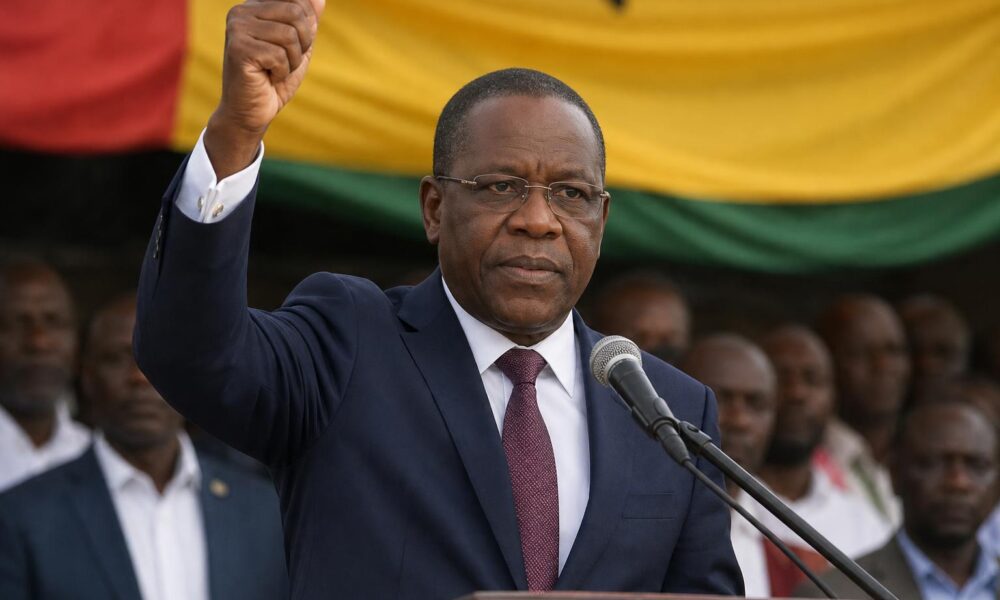
Former Guinea-Bissau President Umaro Sissoco Embalo has announced that he will return to the country and contest the presidential election scheduled for December 6.
Table Of Content
Embalo, who was removed from office in a military coup, told Agence France-Presse that he would come back and “will be a candidate in the presidential election.” He did not specify when he planned to return.
Election process suspended after coup
The Guinea-Bissau army seized power on November 26, shortly after a presidential vote and one day before provisional results were due to be announced. The takeover overturned Embalo and suspended the electoral process.
The junta has since scheduled presidential and legislative elections for December 6, saying the polls are intended to restore civilian rule. The year of the election was not specified in the available report.
General Horta N’Tam is serving as transitional president under the arrangement established by the junta. The country’s transitional charter bars him from standing for president.
The military said it acted to preserve national order after the alleged discovery of a plot to destabilise the country involving drug lords. Many observers, however, suspected Embalo of orchestrating the coup to halt an election process he appeared to be losing. That suspicion has not been independently established.
Questions over Embalo’s return
Political analyst Malam Cisse said there was no legal obstacle to Embalo’s return, arguing that he had been removed through a coup and had not signed any document renouncing power.
“Legally, nothing stands in the way of Umaro Sissoco Embalo’s return to Guinea-Bissau. He was ousted from power by a coup d’etat,” Cisse told AFP.
History professor Bassirou Sadio said political participation should remain open once legal requirements were met and existing rules respected.
“Once the legal conditions are met, everyone should be able to participate in the political contest while respecting established rules,” Sadio said.
N’Tam said last week that any Guinean could return if they had nothing to be ashamed of, including people who had criticised him on social media.
Political uncertainty
Activists have posted on social media that they were preparing for Embalo’s return on a Sunday, although no date for those activities was provided. The opposition has urged voters to boycott the electoral process.
Voters approved a constitutional referendum in August that introduced changes giving the president greater powers. The junta said the reform would help stabilise state institutions before the December elections.
Guinea-Bissau has faced repeated political upheaval since gaining independence from Portugal in 1974. The country has experienced five coups and several attempted overthrows, alongside persistent poverty, corruption and drug smuggling.






No Comment! Be the first one.