
Traoré’s Four Years in Power Rekindle Debate Over Sankara’s Legacy
Captain Ibrahim Traoré has led Burkina Faso for four years, matching the period Thomas Sankara spent in power. Both leaders rose as young army captains promising sovereignty and economic...
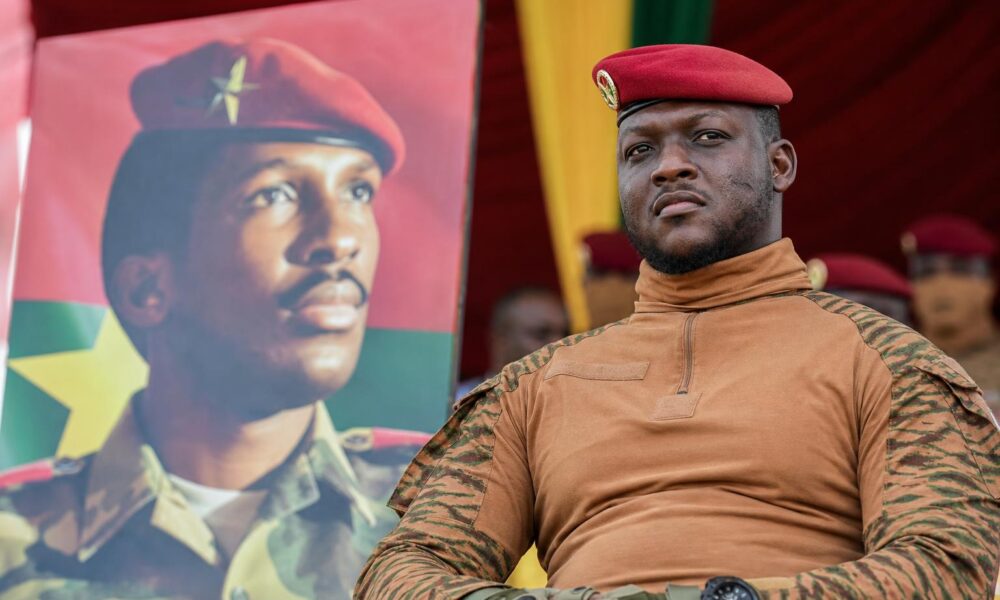
Captain Ibrahim Traoré has led Burkina Faso for four years, a period that matches the length of Thomas Sankara’s rule and has renewed comparisons between the two military leaders.
Table Of Content
Both came to prominence as young, red-beret-wearing army captains who promoted national sovereignty, Pan-Africanism and greater economic independence. Traoré has said he is advancing Sankara’s legacy, though under markedly different circumstances.
A programme shaped by self-reliance
Traoré’s government has nationalised gold mines, promoted local industries and launched Faso Mebo, a major infrastructure programme designed to build roads and develop cities using local resources.
Those measures have drawn comparisons with Sankara’s programme after he seized power in 1983 and described his project as a “democratic and popular revolution.” Sankara’s agenda placed emphasis on education, women’s empowerment, self-reliance and local production.
Sankara was assassinated in 1987, but his political image remains influential in Burkina Faso and across Africa. His focus on national ownership and reduced dependence on foreign powers continues to shape the way Traoré’s government presents its policies.
Security and political pressure
The security environment facing Traoré is significantly different from the period associated with Sankara. Burkina Faso remains under pressure from jihadist groups, with large parts of the country affected by violence and some towns facing blockades.
The account of Traoré’s rule also describes restrictions on political opposition. It says journalists, magistrates and civil society figures have been forcibly recruited and sent to front-line areas. These claims are presented as part of the government’s political approach.
The continuing violence has placed national sovereignty and security at the centre of Traoré’s leadership, while also creating difficult conditions for the economic and infrastructure initiatives associated with his administration.
Changing regional and international ties
Traoré has moved Burkina Faso away from France and strengthened relations with Russia. He has also joined Mali and Niger in a new regional confederation, reflecting a broader realignment among the three countries.
The shift has accompanied a stronger emphasis on regional cooperation and independence from traditional external partners. The confederation’s specific name and institutional structure were not identified in the account.
After four years in power, Traoré’s leadership is therefore being judged through two contrasting lenses: the symbolism of Sankara’s example and the realities of a country confronting armed violence, political restrictions and major changes in its international alliances.


No Comment! Be the first one.